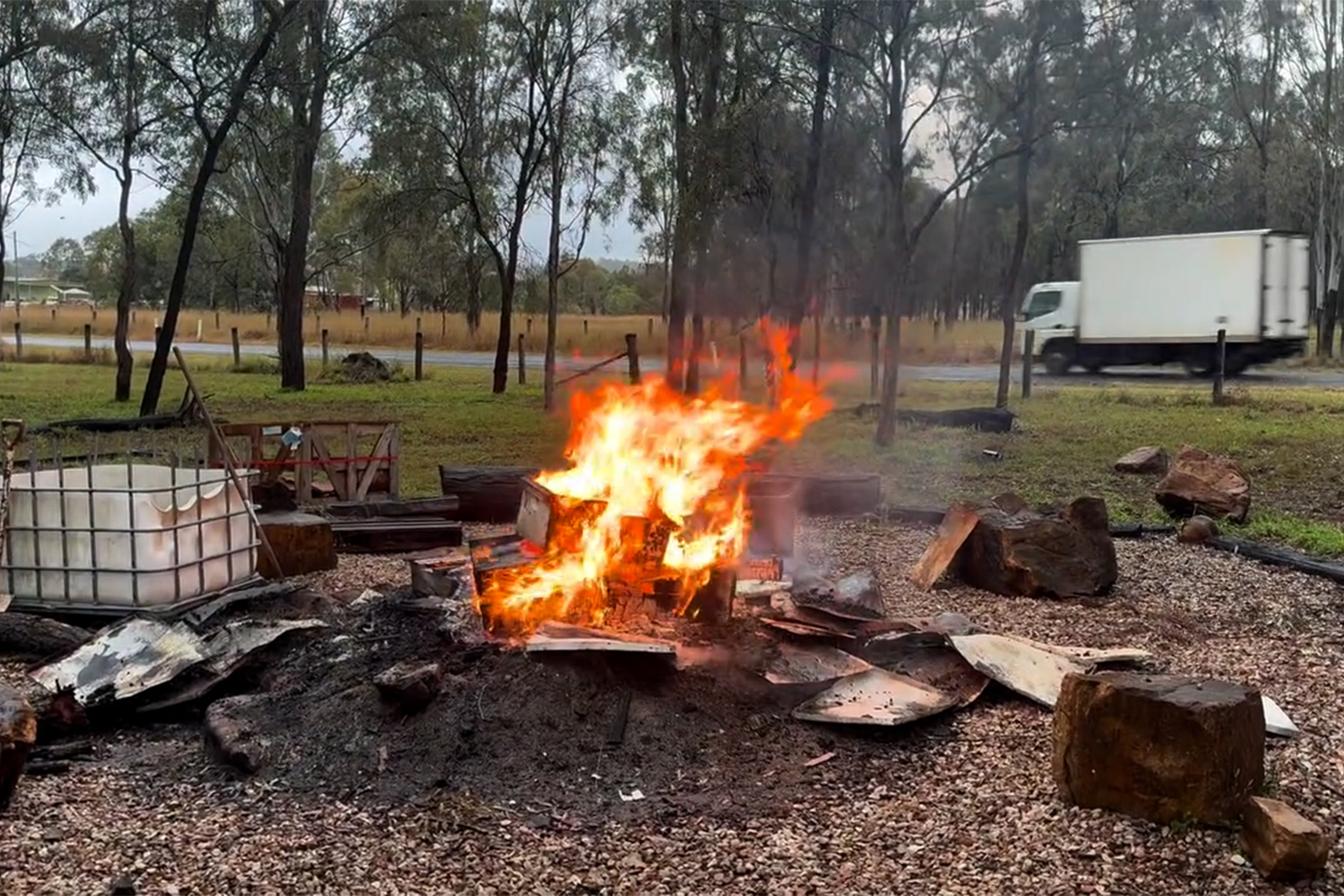
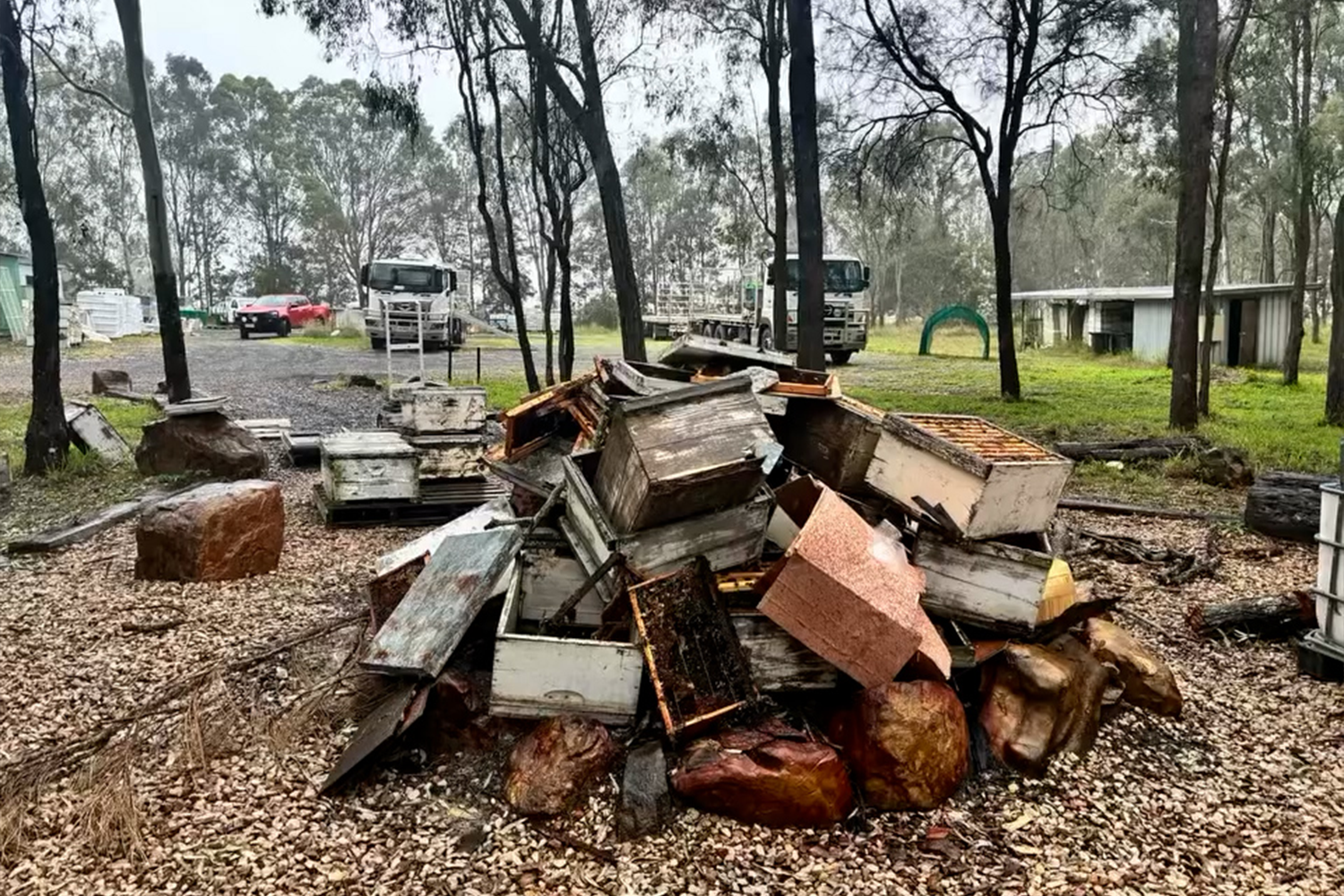
A Queensland farmer has photographed the “sobering day” he began torching the broken remnants of beehives that were once worth $100,000.
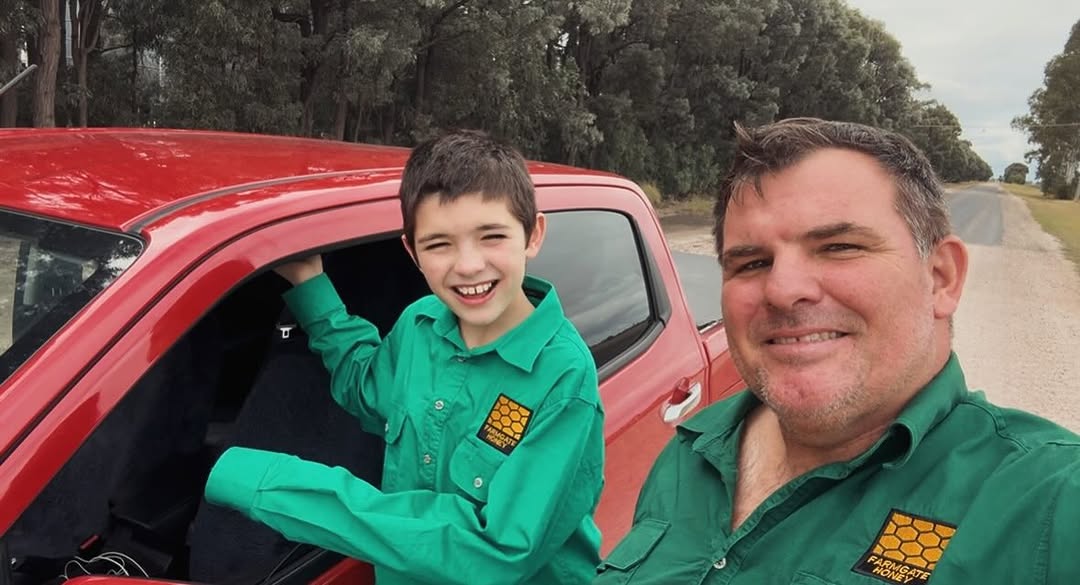
Murray Arkadieff’s business, Farmgate Honey, has been ravaged by the arrival of an invasive parasite, the varroa mite.
“Some of our hives were 20 or 30 years old, which my dad would have made,” he told Yahoo News.
“My grandfather would have made some in the 1950s, a lot of them are very old.”
From a peak of 1,500 hives, Arkadieff is now down to 1,200.
“No one wants to burn years of effort. Just devastating,” he said on social media on Tuesday.
Disgusting reason hives can’t be cleaned
Varroa mite was detected in the NSW Port of Newcastle in June 2022, and by September the following year, the Commonwealth had conceded eradication was no longer possible.
The tiny parasite has now also been detected in South Australia, Victoria, the ACT and Queensland.
Varroa mites trigger a process that kills bees and leaves their hives soaked in sticky liquid that’s near-impossible to remove.
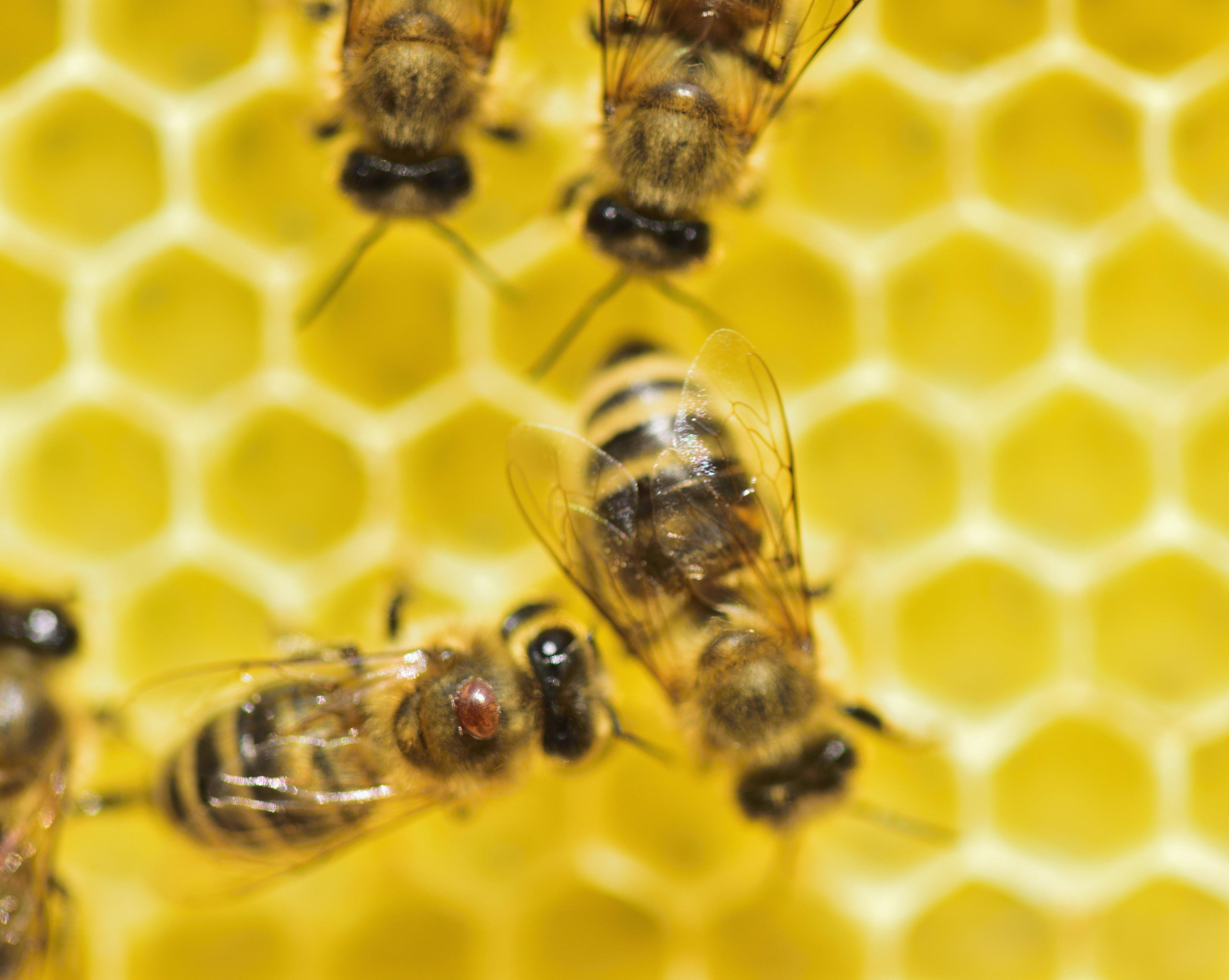
The pests kill by spreading bacteria and fungus to bees, draining their fat reserves, and destroying their immune systems.
The weakened colonies are then susceptible to another invasive species, the small hive beetle, which lays its eggs in the wax and frames.
“There are hundreds of thousands of them when they get going, and they leave a real sticky slime behind, and that’s why we have to burn so many frames and boxes,” he said.
“You can wash some of them, but it’s a long process, and it takes a lot of energy.”
Farmers struggle with mental health as millions of bees die
Arkadieff’s story is far from isolated — his mates in the industry have been even harder hit, with one losing 600 of his 1,200 hives.
“Another guy rang me yesterday saying there were millions of bees just all over the ground dead,” he said.
Because his family has been on the land for generations, he expects to be able to withstand the impact of varroa mites longer than those newer to the industry, who could lose their businesses.
And despite Australian honey becoming more scarce, a flood of imports have driven wholesale prices down for local supplies from $6kg in 2004 to $5 in 2026.
Asked if he’s worried about the mental health of the farming community, his response is frank.
“Big time,” he said.
“I’m also worried about my own.”
Why shoppers will face higher food prices
Chemical treatments aren’t working as they have overseas, and if the impact of varroa mite is to be mitigated, Arkadieff believes more money needs to be invested in science by the state and federal government.
Because it’s not just beekeepers who are being impacted.
As the pest spreads, wild honeybee colonies living in trees and sheds are dying.
RELATED
Ordinarily, they’d pollinate crops, but now farmers are increasingly forced to hire commercial beekeepers to complete the process.
This adds an extra cost to food production, and Arkadieff warns that consumers will likely face higher supermarket prices.
How beekeeper stays resilient
Arkadieff concedes that he sometimes feels “helpless” about the situation.
But he’s found that keeping busy and lobbying government, talking to other farmers, and trying to help advocate for the industry “helps” his mental health.
Varroa mite is not the first major challenge he’s faced. At the age of 40, when he had kids aged three and five, his first wife died.
“I got remarried. And I’m a pretty resilient bugger,” he said.
“You don’t know a good time until you’ve been through a bad time.
“And when you’re going through a bad time, you’ve just got to keep going.”
You can also follow us on Facebook, Instagram, TikTok, X and YouTube.
This article originally appeared on Yahoo News Australia at https://au.news.yahoo.com/devastating-100000-loss-as-tiny-invader-spreads-across-australia-sobering-day-025153065.html