New Insights into 55 Cancri e
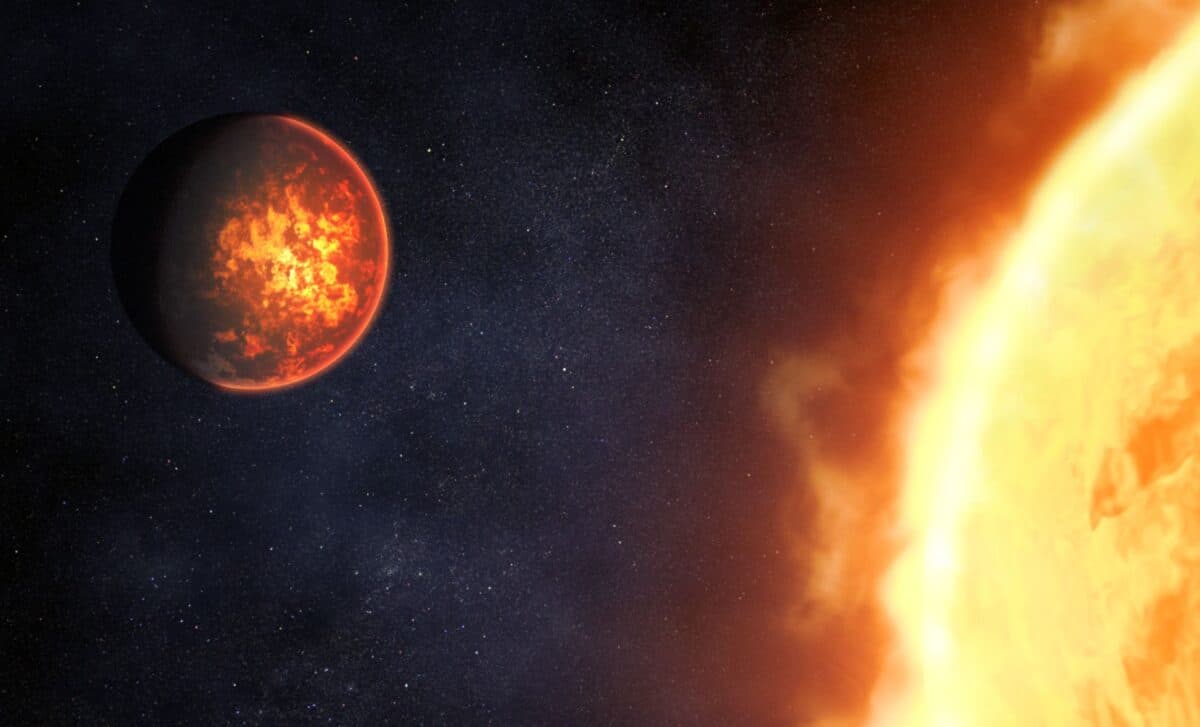
New observations from NASA’s James Webb Space Telescope have provided intriguing insights into the exoplanet 55 Cancri e, a rocky world located approximately 41 light-years away. These findings suggest that the planet has a hydrogen-rich atmosphere, which is believed to be connected to its molten interior. Researchers used the telescope to observe five eclipses of 55 Cancri e and compared the data with existing models of rocky exoplanets.
The results indicate that the atmosphere of 55 Cancri e is not a static layer but rather shaped by gases escaping from the planet’s interior. This discovery adds to the growing field of research on lava planets, which are increasingly being studied as more of these extreme worlds are identified. The study, submitted to Nature Astronomy, focuses on how the atmosphere of 55 Cancri e is linked to the chemistry beneath its surface.
A Super-Earth with Extreme Conditions
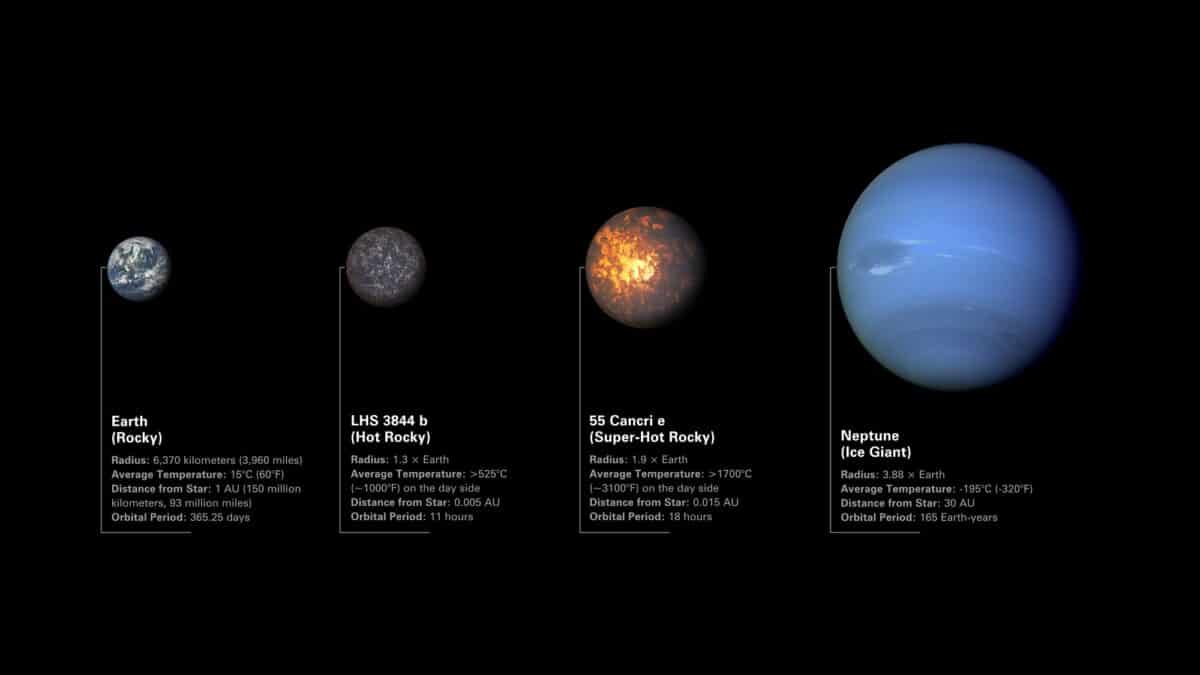
55 Cancri e is about 1.88 times Earth’s radius and roughly eight times more massive. It orbits a Sun-like star once every 0.7 days, making it tidally locked so that one side always faces its star. NASA suggests that the planet’s orbit is so tight that temperatures may be high enough to melt parts of its surface.
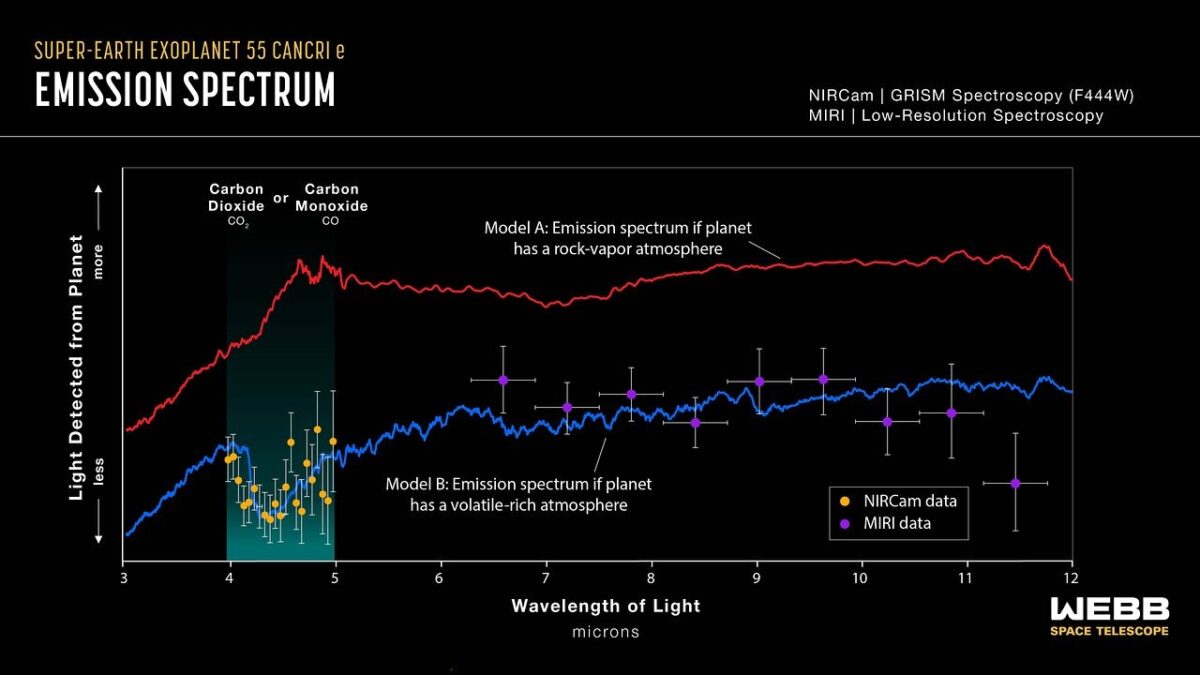
To study the planet, scientists observed five secondary eclipses using JWST. They compared these observations with long-standing models that predict what the atmospheres of lava worlds should look like. The study, published in arXiv, reports that these models generally expect large amounts of carbon monoxide and carbon dioxide.
Unexpected Atmospheric Composition
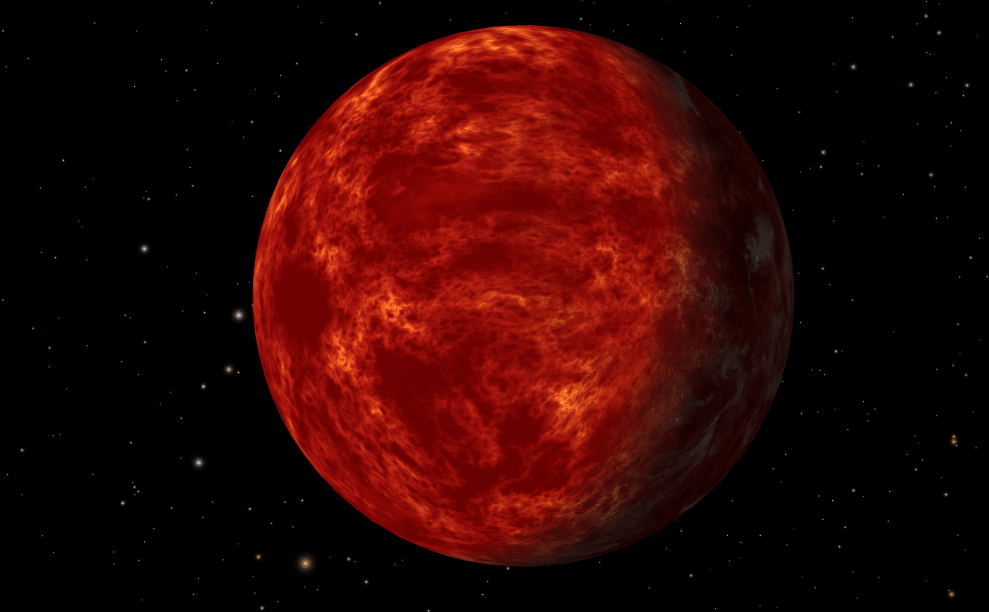
Instead, the observations reveal an atmosphere primarily composed of carbon monoxide, along with smaller amounts of carbon dioxide and abundant hydrogen. The paper also notes that the differences seen during the five eclipses may be caused by outgassing or by clouds formed from those gases. These clouds could temporarily cool the surface before disappearing as fresh gases are released.
Glimpsing the Molten Interior
The gases detected around 55 Cancri e may offer a glimpse into the chemistry of its molten interior. “Since secondary atmospheres of rocky planets are set by the composition of the interior and subsequent outgassing, the composition of their atmospheres is directly linked to their interior redox states,” the researchers write.
The source explains that the planet’s interior contains much more hydrogen than oxygen. “The preference for hydrogen-rich models, together with the steep inversions they produce, therefore suggests an interior with relatively low oxygen fugacity, consistent with outgassing from a reduced magma ocean.”
Chemical Balance and Atmospheric Influence
The authors note that this chemical balance aligns with the atmosphere detected by JWST and supports the idea that gases escaping from the molten interior continue to shape its atmosphere.
Growing Interest in Lava Worlds
Although 55 Cancri e was discovered in 2004, it is now part of a growing group of known lava exoplanets. Other planets in this category include K2-141 b, L 98-59 d, TOI-561 b, HD 63433 d, and CoRoT-7 b. All of them orbit extremely close to their stars and are tidally locked, exposing them to intense heat. Their orbital periods range from about 6.7 hours to 7.5 days.
Like 55 Cancri e, these planets experience temperatures high enough to create vast molten regions. The source notes that while 55 Cancri e likely has lava concentrated on its star-facing side, planets such as L 98-59 d may be covered by a global magma ocean.
Distinguishing Lava Exoplanets from Other Worlds
These planets differ from Jupiter’s moon Io. Io’s volcanoes are powered by tidal heating created by Jupiter’s gravity, while lava exoplanets owe their volcanic activity to the intense heat generated by orbiting extremely close to their host stars.