New Insights into Bee Behavior and Emotions
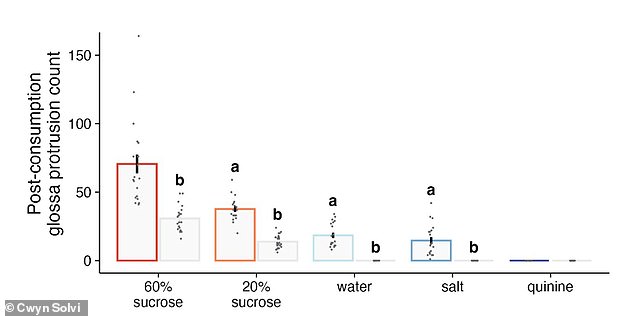
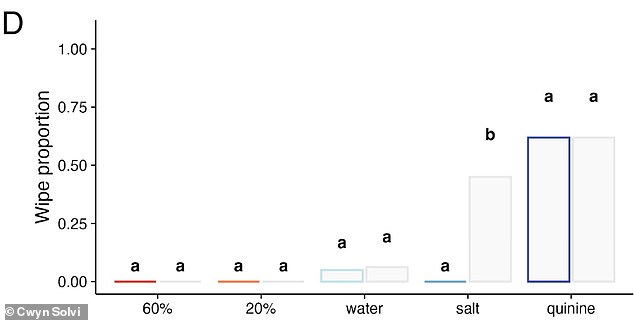
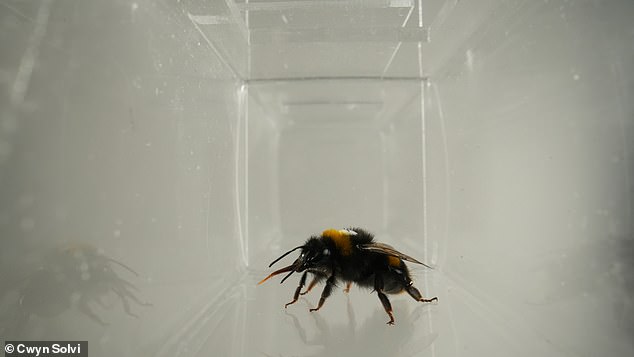
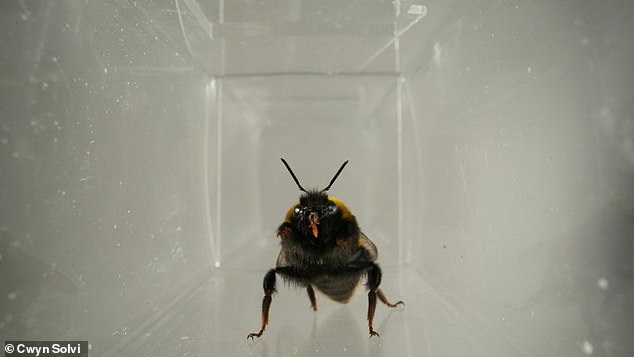
Recent research has uncovered fascinating new insights into the behavior of bumblebees, revealing that they display facial expressions similar to those seen in mammals. Scientists have observed that when bumblebees taste something sweet, they extend their tongues and “lick their lips.” However, when exposed to salty or bitter substances, they shake their heads in disgust and attempt to wipe their mouths.
This is the first time scientists have documented an insect reacting to food in a way that suggests it can distinguish between what it likes and dislikes. These findings suggest that bees may have inner lives more complex than previously thought, challenging the long-held view of insects as simple, mechanical creatures.
The Role of Facial Expressions in Understanding Bee Minds
Professor Andrew Barron, co-author of the study from Macquarie University, emphasizes that these tiny facial expressions could be key to understanding bee minds. He explains, “There’s always been a tension between thinking of insects as animals or some sort of mini robots. This is another step towards showing there’s an inner life to being a bee.”
The study involved feeding bumblebees water with different concentrations of sugar, salt, or quinine. After tasting the sweet solution, the bees extended their glossa—a tongue-like structure used for sucking up liquids—repeatedly. The sweeter the solution, the more often the bees protruded their glossa. In contrast, salt and quinine caused them to shake their heads.
Interestingly, the bees also extended their tongues when drinking fresh or saltwater if they had been kept in a hot environment without anything to drink. This suggests that their behavior isn’t just a reaction to the presence of sugar but might indicate actual enjoyment of the drink.
Emotional Responses and Neural Pathways
In experiments published in the journal PNAS, researchers used pharmacological techniques to explore these behaviors further. They found that the tongue-sticking behavior was not linked to the dopamine-driven feeding motivation systems. Instead, it appeared to be enhanced by a neural endocannabinoid pathway associated with emotional or affective evaluation in mammals.
This discovery is significant because it challenges previous assumptions about bee cognition. While their brains are small and simple compared to human brains, studies have shown that bees are surprisingly capable. They can solve complex puzzles, use tools, recognize human faces, count up to four, and even understand the concept of zero.
These abilities are often explained in mechanical terms, as if bees were tiny biological calculators rather than creatures with a subjective experience of the world. However, the observation that bees display emotion-like behaviors when eating something they like or dislike could mark a shift in how we view bee psychology.
Implications for Bee Psychology and Future Research
Professor Barron states, “We don’t yet understand what the bees truly experience, but we can observe emotion-like behaviours. What’s important is we’ve now got a practical read on their inner life that we can work with experimentally.”
The research also suggests that the bee brain can support a form of inner life more complex than previously assumed. Many people accept that insects can sense, learn, and make decisions, but fewer are comfortable saying they may evaluate things as pleasant or unpleasant. Professor Barron adds, “Our findings push on that intuition.”
Looking ahead, the researchers hope to investigate the connection between brain activity and subjective experience. This could eventually explain how inner life arises from neural processes, bridging the gap between the physical and the mental.
If their theories are proven correct, this could have significant implications for how we perceive and interact with the natural world. As Professor Barron concludes, “In terms of how the brain is organised, there’s no major difference between a bee and a fly – this means there’s more to consider in terms of how we might treat or react to insects.”