
The vibrant street food scene of Thailand is renowned for its bold flavours and satisfying sweetness, a characteristic that has captivated locals and tourists alike for decades. From the creamy richness of iced Thai tea to the myriad of other sweet concoctions, these drinks are a beloved part of daily life. However, this ingrained preference for sugar is now facing a significant challenge as the Thai government embarks on a nationwide campaign to curb excessive sugar consumption and improve public health.
Tackling the Sweet Tooth: A National Initiative
Thailand’s love affair with sugar is undeniable. On average, Thai people consume a staggering 21 teaspoons of sugar daily, a figure that far surpasses the World Health Organization’s recommended limit of six teaspoons. Sugary drinks, in particular, have been identified as a major contributor to this epidemic, with Thailand historically being one of Asia’s largest consumers of calories from sweetened beverages.
Recognising the urgency of the situation, the Thai government has implemented a multi-pronged approach. One of the key measures has been the introduction of a sugar tax, phased in gradually from 2017 and fully implemented last year. This tax specifically targets pre-packaged sugary drinks.
Pojjana Hunchangsith, an assistant professor at Mahidol University, highlights the impact of this tax. “One of the biggest impacts has been product reformulation, with many manufacturers lowering sugar levels to avoid higher tax rates,” she explains. This has led to a noticeable reduction in sugar content in many commercially available drinks.
The Unregulated Sweetness of Street Vendors and Cafes
While the sugar tax has proven effective for pre-packaged goods, it does not extend to the countless street vendors and independent cafes that dot the Thai landscape. These establishments offer an enticing array of sweet beverages, from popular boba milk teas and rich iced cocoa to refreshing lemon teas and the uniquely Thai “pink milk” made with sala syrup.
“They are very important sources of sugar intake in Thailand,” notes Pojjana, adding that the very nature of freshly made drinks makes them far more challenging to regulate.
This is where the latest government initiative comes into play, focusing on some of the country’s largest cafe chains. Many of these establishments already offer customers a choice of sweetness levels, typically ranging from 0% to 100%. The new campaign aims to redefine what constitutes “normal” sweetness. For certain drinks, the 100% sweetness option will now contain half the amount of sugar it previously did, effectively retraining customers’ palates.
Shifting Preferences: A Journey Towards Healthier Choices
The move to reduce sugar is not without its proponents. Ann Thumthong, a 55-year-old taxi driver in Bangkok, welcomes the government’s efforts. She admits that avoiding sweet treats can be a challenge in Thailand, where they are often readily available with meals and snacks. Thumthong’s personal journey reflects a growing health consciousness: “For me, in the past, when I finished the meal I went straight for the desert, but now I opt for fruits instead.” She believes that it is possible to retrain one’s taste preferences to require less sugar.
Phumsith Mahasuweerachai, an associate professor at the faculty of economics in Khon Kaen University, has explored behavioural economics to encourage healthier choices. His research suggests that simple nudges can significantly influence consumer behaviour. In a study, he found that merely offering customers the option to choose their preferred sweetness level prompted them to select less sugary drinks. Interestingly, providing calorie information alone did not have a substantial impact on their decisions.
“If we don’t nudge [customers] or prompt them, it’s difficult for them to make the change,” Phumsith explains. “They go to the coffee shop and it’s automatic.” This highlights the importance of actively guiding consumers towards healthier alternatives.
Tradition Meets Modernity: The Case of Auntie Nid’s Iced Tea
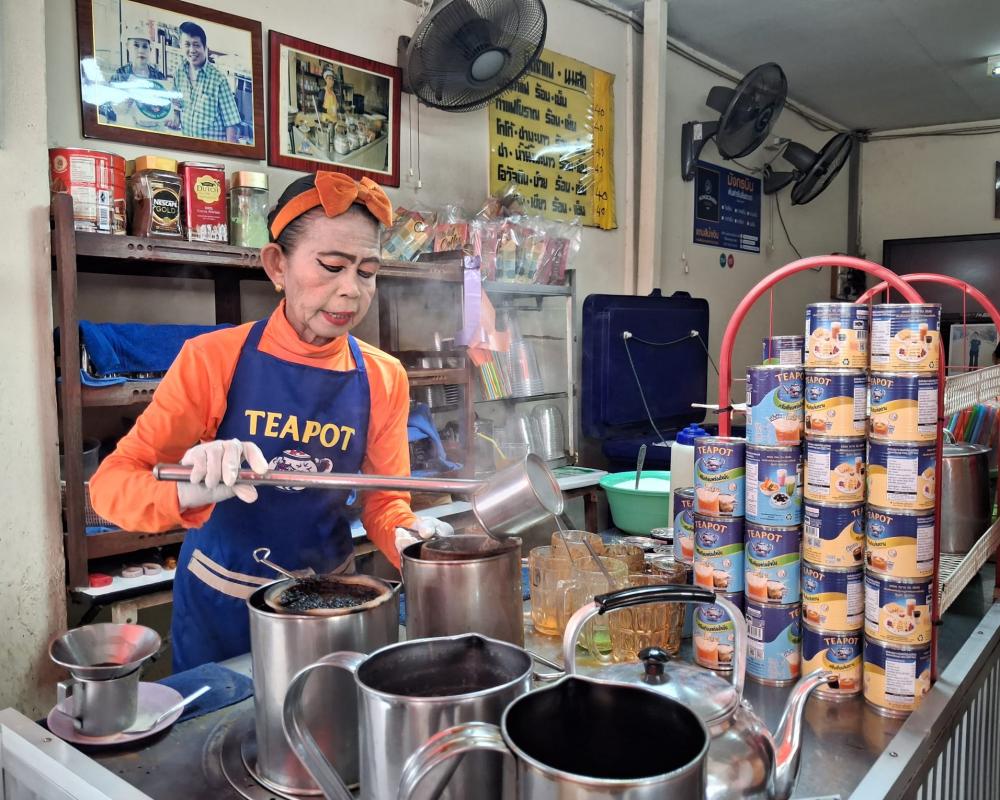
Despite the government’s push for reduced sugar, some, like the beloved Auntie Nid, remain steadfast in their traditional recipes. For 30 years, her small shop in Bangkok’s old town has been serving up its signature iced Thai tea, a concoction of condensed milk, three heaped tablespoons of sugar, and freshly strained tea, poured over ice in a plastic bag.
A crowd of customers, holding phones aloft, watch intently as Auntie Nid mixes up her bestseller: an iced Thai tea.
Condensed milk is poured into a glass, followed by three heaped tablespoons of sugar, and then freshly strained tea. The end product – a deep orange, creamy treat – is poured into a plastic bag filled with ice.
“I want to spoil my customers,” says Auntie Nid, 68, who prefers to be known by her nickname.
Her establishment, a favourite among locals and increasingly popular with tourists thanks to social media, continues to draw long queues. Auntie Nid is unyielding in her stance: “No, no, no,” she exclaims when asked about altering her recipe. She firmly believes that the intense flavour that draws customers, particularly foreigners, is inextricably linked to the sugar content. “The reasons why these drinks are popular is because of their strong, intense taste,” she asserts. “Without sugar, the coffee and tea will be bland and bitter.”
This sentiment underscores the cultural significance of sweetness in Thai cuisine and the inherent challenge in balancing tradition with public health goals. While the government’s initiatives aim to create a healthier future, the deeply ingrained love for sugar and the cultural practices surrounding it present a complex landscape to navigate. The success of these campaigns will likely depend on a combination of regulatory measures, industry cooperation, and the gradual evolution of consumer preferences, perhaps starting with small nudges and a growing awareness of the long-term benefits of reduced sugar intake.