In the heart of Geelong, a city with a storied rock’n’roll past, a different kind of music festival is not just surviving, but thriving. While larger, more established events grapple with financial collapse, a humble hobbyist’s initiative has blossomed into a significant cultural happening, proving that passion and community can triumph over economic uncertainty.
A Night of Controlled Chaos
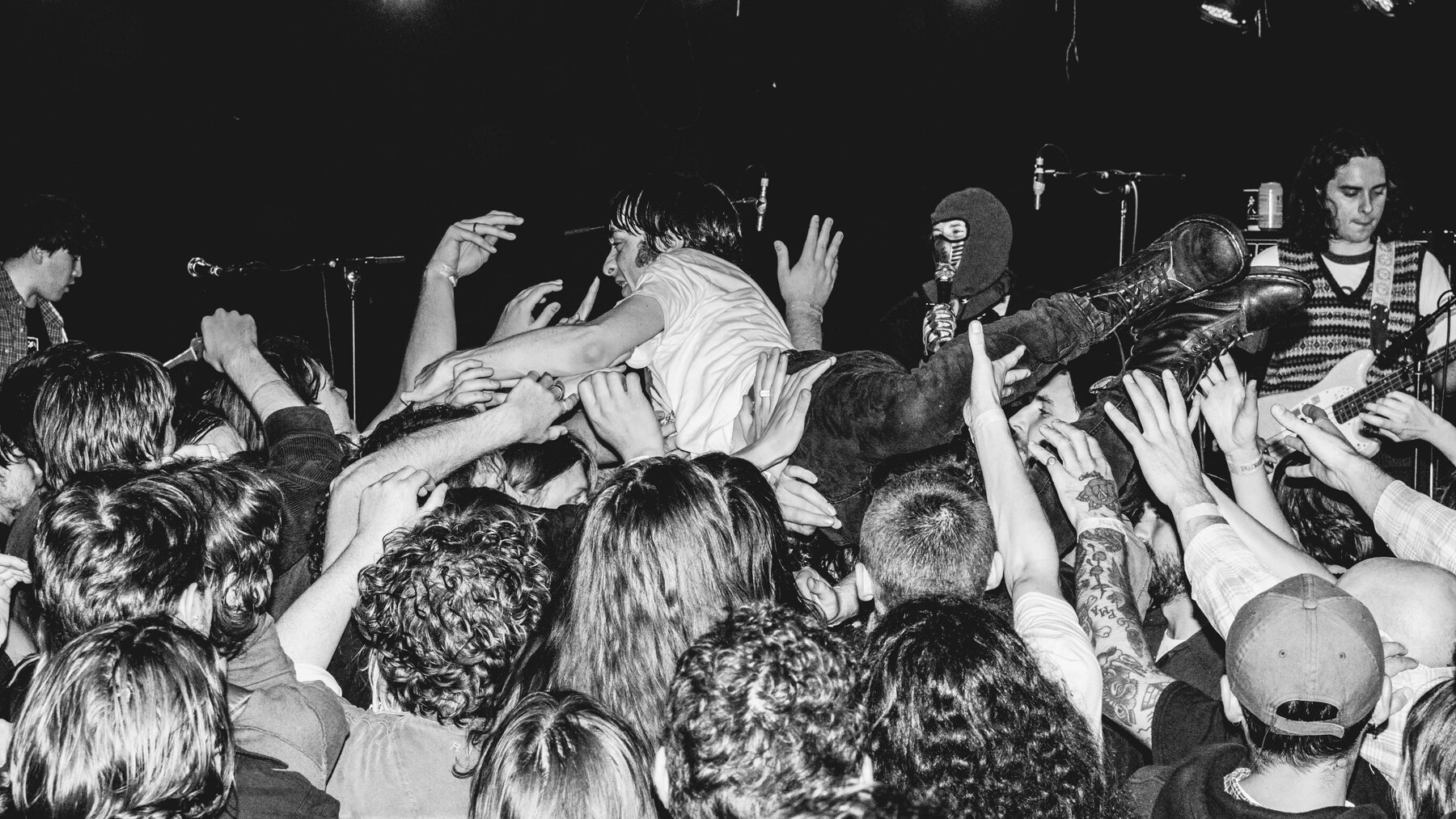
On a recent Saturday evening, the air vibrated with a raw, unadulterated energy. Inside a packed venue, a palpable fuggy microclimate had formed, a testament to the sheer kinetic force of the crowd. Limbs flailed, sweat dripped, and a joyous, if slightly chaotic, catharsis unfolded. Bodies collided, only to be immediately lifted back to their feet by fellow revellers. On stage, Brendan Huntley of Eddy Current Suppression Ring belted out “Insufficient Funds,” an anthem that resonated deeply with a generation facing economic pressures. His wail of “There’s no money there!” echoed through the room, a raw expression of shared experience. Overseeing this well-natured mayhem, with a serene expression, was the man responsible for it all.
From Warehouse Shelves to Festival Director
Just a fortnight prior to this scene of musical fervour, Billy Gardner, the organiser, was diligently arranging products on warehouse shelves during his 9-to-5 job. For the 33-year-old, his day job is a stable foundation, but his true passion lies in the vibrant, often loud, world of independent music. Gardner is the proprietor of Anti Fade, a record label that has quietly cultivated an influential catalogue of abrasive and compelling sounds. Complementing this is Jerkfest, an alternative music festival he founded in his hometown of Geelong.
While these ventures might not command the attention of mainstream audiences, they hold immense significance for a dedicated community. Buzz Clatworthy of the Sydney band RMFC, a regular at Jerkfest and a recipient of its support, attests to its impact. “If it wasn’t for Jerkfest, we wouldn’t have got the audience we have,” he explains. “It matters a lot more to me than any of those bigger festivals.”
The Collapsing Giants and the Resilient Underdogs
The music festival landscape in Australia has been facing significant challenges, with several prominent events faltering. This has sparked a national conversation about the sustainability of large-scale festival models in the current economic and cultural climate. In stark contrast, Jerkfest recently celebrated its 11th year – a testament to its enduring appeal, especially considering a pandemic-induced hiatus would have made it the 12th.
With approximately 550 attendees and a ticket price well under $90, Jerkfest operates on a scale vastly different from the thousands of patrons required for major festivals to turn a profit. Unlike the highly publicised cancellations that leave attendees out of pocket and suppliers with unsellable stock, Jerkfest’s success seems to lie not in massive scale, but in meticulous dedication.
The sustainability of Jerkfest appears to hinge on the immense personal investment of its organiser. The time and effort Gardner dedicates to both his record label and the festival could easily constitute a full-time commitment. Yet, he humbly characterises his involvement as a “hobby.”
Kate Berry, the organiser of the independent OK Motels festival in regional Victoria, shares Gardner’s passion but laments the financial realities. “It just drives me nuts all the time,” she says. “The big dogs sit at the top of the pile and do the least amount of work. People like Billy and the bands that drive to Geelong with their freaking [gear] in their boot are eating packet noodles.” Berry believes Australia often values its music culture retrospectively, and she yearns for a reality where musicians and organisers can make a living from their craft in the present.
For those immersed in the counterculture that Jerkfest champions, the pursuit of financial gain has never been the primary motivation. “I just think if you’re coming to the music industry to make money, you come into it for the wrong reasons,” Gardner states, also a musician himself. While economic prosperity might be absent, these initiatives are undeniably rich in community.
Berry highlights a key difference: “A lot of those bigger festivals try and be everything for everyone, that’s why they end up folding. They’re not created by someone who could be on stage later that night.” She praises Gardner’s approach, stating, “Billy is a true champion of his community – that’s why it works. There’s no line between who is on stage and who is watching, they are all peers.”
Geetroit Rock City: A Legacy of Loud
Geelong, situated southwest of Melbourne, possesses a distinct identity, marked by an undercurrent of underdog spirit within its cultural fabric. Grant Gardner, Billy’s father and a former bassist for the revered late-1980s Geelong punk band Bored, reflects on the city’s musical heritage. “Geelong’s got a great history of rock’n’roll,” he says. “We’re hardcore in Geelong. It’s been that way for a real long time.”
He recalls the early days of his band, describing a “rock’n’roll army of kids, they were just full on.” Archival recordings of Bored playing at the Barwon Club Hotel showcase the raw energy of that era. Over three decades later, Grant sat in the same pub’s front bar, beaming with pride as he watched the sold-out crowd his son had assembled. “In the very early days, he was telling me about this concept and I’m going, ‘You’re joking me. How are you gonna pull this off?’” he remembers. “But someone’s gotta do it. I’m very proud.”
Jerkfest’s commitment to nurturing Geelong’s local music scene, rather than solely focusing on Melbourne or Sydney, is a significant part of its charm. The festival draws attendees from across Australia, with many travelling from interstate and regional areas, or catching the V-Line train from Melbourne. The sentiment is captured in an Instagram comment: “Time to head back to Geetroit Rock City,” a playful nod to the KISS song and movie. Crucially, it also cultivates a growing base of younger Geelong fans.
This year, 22 bands graced the pub’s two stages, with a seamless transition between sets. Photographer Jamie Wdziekonski, who has been documenting Jerkfest since 2017, credits the festival, Anti Fade, and Gardner for his introduction to the broader Geelong band scene. Bridie Coughlin, a venue booker with over a decade of experience at the pub, notes the timely nature of the festival’s bookings. “Some of these bands, we’re kind of capturing at the right time,” she explains. “Give it another year, and some of these bands will move on to bigger capacity venues, bigger festivals. Billy is really good at catching bands just before they kind of explode.”
This foresight is not mere hyperbole. Amyl and the Sniffers, who played Jerkfest in 2018 on the outdoor stage, went on to global success, supporting AC/DC at the MCG and commanding attention at Federation Square. “I used to help scout bands to get them to play and try and convince Melbourne bands that Geelong was worth coming to. Now people beg Billy to play,” says Jake Robertson, a friend and collaborator. “The important part is finding bands that are new, or doing something different.”
The Enduring Importance of Community Spaces
These formative experiences, once common in house party settings, are becoming increasingly rare. “People can’t afford to live in houses that could be a house party house,” Robertson observes, noting he hasn’t played a house party in a decade. This shift underscores the growing importance of spaces where community can coalesce, evolve, and thrive.
“It feels so important to maintain that connection and keep the culture thriving down there,” says Mikey Young of Eddy Current Suppression Ring. The energy at Jerkfest is palpable, creating an expectant atmosphere for every act, from the raw intensity of Station Model Violence and the vibrant Afro-disco of Wrong Way Up to the enduring indie pop sounds of The Cannanes.
“Every time we play it’s like the best show we’ve ever done,” says Buzz Clatworthy, who grew up in Ulladulla. “There’s such a specific energy to playing here.” This energy can feel almost overwhelming, as if the entire venue might detonate. Then, the tension breaks, erupting into a joyous, collective release. Billy Gardner sums it up with a smile: “Every year has a lot of moments. I’m just there, smiling.”
Photography:
Jamie Wdziekonski