Star Trek’s Legacy Lands at London’s Science Museum for 60th Anniversary
London’s iconic Science Museum is set to transport visitors into the final frontier with a special exhibition celebrating 60 years of the groundbreaking science fiction franchise, Star Trek. The immersive “Star Trek Warp Trail” promises to explore the fascinating intersections between the beloved series and real-world scientific advancements, showcasing a collection of authentic props, costumes, and models that have shaped our understanding of the future.
At the heart of this interstellar journey will be iconic costumes worn by beloved characters. Fans will have the chance to get up close with the uniform of Chief Engineer Montgomery Scott, famously portrayed by Simon Pegg in the 2009 film Star Trek. Alongside this, the distinguished uniform of Admiral Jean-Luc Picard, as donned by Sir Patrick Stewart in the recent Star Trek: Picard series (2020-2023), will also be on display.
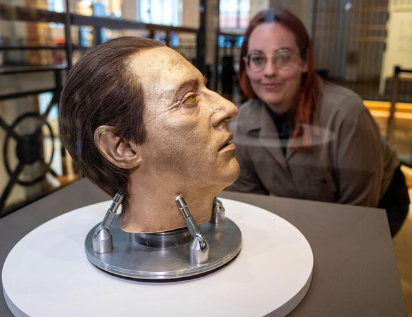
The exhibition doesn’t shy away from the more unusual aspects of the Star Trek universe. A striking prop head, representing the prototype android B-4 from the 2002 film Star Trek: Nemesis, will be featured. This android, encountered by Lieutenant Commander Data (played by Brent Spiner), highlights the series’ long-standing exploration of artificial intelligence and consciousness, themes that continue to resonate today.
Beyond the cinematic and television artefacts, the “Star Trek Warp Trail” delves into the prescient nature of the franchise’s technological visions. The exhibition draws compelling parallels between Star Trek’s futuristic concepts and actual innovations. For instance, the early development of mobile phones in the 1970s mirrored the portable communication devices already a staple in the Star Trek universe. The museum points to the striking resemblance between Motorola’s 1996 clamshell flip phone, the StarTAC, and the communication technology depicted in the show, suggesting a clear design influence.
Innovations and Inspirations from the Final Frontier
The ingenuity of Star Trek extends to its depiction of groundbreaking propulsion systems. The costume of Zefram Cochrane, the visionary inventor of the warp drive, played by James Cromwell in the 1996 film Star Trek: First Contact, will be available for viewing. This highlights the series’ enduring fascination with faster-than-light travel, a concept that continues to fuel scientific curiosity and theoretical research.
Furthermore, the exhibition will showcase objects that spark conversations about deep space exploration and energy sources. A photon collector, seen in Star Trek IV: The Voyage Home (1986), and a spore canister from the contemporary series Star Trek: Discovery (2017-2024) will be on display, inviting visitors to ponder the scientific challenges and potential solutions for powering interstellar voyages.
The medical technology of Star Trek, often depicted as remarkably advanced, will also be represented. Equipment such as tricorders, used for scanning patients, and hyposprays, which administer medication without needles, will be showcased, offering a glimpse into the future of healthcare as envisioned by the franchise.
A Bridge to the Stars
The “Star Trek Warp Trail” promises a comprehensive experience, culminating in a dedicated Star Trek zone on the mezzanine level of the museum’s shop. Here, visitors can step into the shoes of a captain, taking the helm in a replica of the command chair from Star Trek: Discovery. For cinephiles, all 13 Star Trek films will be screened on one of Europe’s largest cinema screens, offering an unparalleled opportunity to revisit the entire saga.
The exhibition officially launches on Thursday, coinciding with a special edition of the Science Museum’s popular adults-only “Lates” event.
Dr. Glyn Morgan, Head of Collections and Principal Curator at the Science Museum, expressed his enthusiasm for the programme: “Star Trek has invited audiences to be curious explorers for decades – a mission we know something about at the Science Museum. Star Trek as a cultural phenomenon has played a real role in changing the world of STEM, from inspiring technical innovations to encouraging a generation of modern astronauts. I hope that this Star Trek at 60 programme at the Science Museum inspires visitors to consider what might be possible if you boldly go where no one has gone before.”
The exhibition serves as a powerful reminder of how science fiction can not only entertain but also inspire innovation and encourage future generations to pursue careers in science, technology, engineering, and mathematics. It’s a journey that celebrates the enduring spirit of exploration and the boundless possibilities of the future.