
The Double-Edged Sword: How AI Boosts Work Performance While Quietly Eroding Essential Skills
The allure of artificial intelligence in the workplace is undeniable. Promising faster output and seemingly effortless task completion, AI tools have quickly become indispensable for many. However, a growing concern among researchers and professionals is that this reliance comes at a significant cost: the quiet erosion of core human skills. What begins as a productivity boon can, over time, lead to a subtle yet profound decline in workers’ own capabilities, judgment, and long-term resilience.
For many, the initial experience with AI is akin to discovering a superpower. Josh Anderson, a software consultant with over two decades of coding experience, initially found the process of building a software product using AI to be nothing short of magical. Over a period of a few months, he live-streamed his journey on YouTube, creating an application called Road Trip Ninja. This app was designed to help families find reliable stops on long drives, offering features like clean bathrooms, decent food options, and play areas for children, transforming the often unpredictable road trip into a more curated experience.

AI can boost performance at work but then quietly erode workers’ core skills over time.
Anderson’s experiment involved letting AI generate the entire codebase, with features appearing in mere minutes. The progress was rapid and exhilarating. However, as the project expanded to approximately 100,000 lines of code, the initial speed began to wane. The back-and-forth interaction with the AI chatbot, which initially took minutes, stretched into hours. Project plans started to drift from established standards, and troubleshooting became a constant, arduous battle.
The true revelation came when Anderson decided to step in and make manual changes himself. He had anticipated a seamless transition, confident that his 25 years of experience would allow him to quickly re-engage with the code. Yet, what he encountered was a surprising hesitation.

Anderson, assumed that if he needed to take the wheel during his experiment, he’d slide back into the work without thinking about it.
“It wasn’t like I was completely frozen,” he admitted. “But there was just hesitation with every move.” This moment of doubt perfectly encapsulates a risk that many experts believe is being dangerously overlooked: the gradual deskilling of the workforce due to an overreliance on AI.
Early Warning Signs of AI-Induced Deskilling
The experience of AI outages further highlights this growing dependency. Earlier this month, when Anthropic’s Claude experienced downtime, numerous developers reported struggling to continue their work. Tasks that had become routine and manageable with AI suddenly felt significantly more challenging without it. One user on Reddit lamented, “Claude outages hit way harder when you realise you’ve outsourced half your brain to it.” Another jokingly remarked, “I guess I’ll write code like a caveman.”
These incidents serve as stark reminders that while AI is undoubtedly boosting output, it is also subtly undermining the foundational skills that underpin that output.
John Nosta, founder of the innovation and tech think tank Nosta Lab, describes this phenomenon as the “AI rebound effect.” He explains that enhanced performance achieved through AI can mask a decline in underlying abilities, potentially pushing an individual’s skill set below their original baseline. The danger here extends beyond mere dependency; it points towards regression.
The Illusion of Expertise and Cognitive Inversion
One of the critical issues, according to Nosta, is how AI’s rapid and polished outputs can warp individuals’ self-assessment of their own capabilities. “We have an overinflated sense of ability through AI,” he stated. This is partly because AI systems tend to reverse the natural human cognitive process. Typically, humans move from confusion to exploration, then to structuring information, and finally arrive at confidence. AI, however, often presents the answer first, inverting this sequence.
“Coming to the answer first is an inversion of human cognitive process,” Nosta observed. If this inverted approach becomes the norm, the implications are far-reaching, potentially impacting the very evolution of human cognition. “Human cognition is on the obsolescence chopping block,” he warned.
The Growing Risk for Early-Career Professionals
At the workplace, fluency is often mistakenly equated with competence. Rebecca Hinds, head of the Work AI Institute at Glean, notes that AI can create a powerful “illusion of expertise.” It’s becoming increasingly difficult to discern the boundary between a worker’s inherent knowledge and the contributions of the technology they are using.
Hinds’ research outlines two potential pathways for AI integration:
- Cognitive Dividend: When AI is used intentionally and supports existing expertise, it can free up mental bandwidth, allowing for sharper judgment and more strategic thinking.
- Cognitive Debt: Conversely, when AI is used reflexively as a shortcut, it accrues “cognitive debt,” making tasks faster in the short term but gradually eroding fundamental skills.
The critical differentiator, Hinds explains, lies in whether AI is augmenting human thought processes or simply replacing them.
The risk of deskilling is particularly acute for individuals at the beginning of their careers. Junior roles have historically served as crucial training grounds, where emerging professionals learn to dissect complex problems, troubleshoot issues, and articulate and defend their reasoning. Without this hands-on experience, workers may appear competent on the surface without ever developing genuine expertise.
While the full ramifications of this shift may take years to materialise, the early signs are already evident. Those most vulnerable are individuals early in their professional journeys. Jan Tegze, author of “Job Search Guide” and “How to Talk to AI,” points out that most established professionals learned their craft before the widespread adoption of AI, giving them a foundational understanding. “The risk is with those who never build that baseline at all,” he commented.
Ben Eubanks, chief research officer at Lighthouse Research & Advisory, observes that while a gap between academic learning and real-world application has always existed, AI is significantly widening it. “You don’t have to go put your hands on a problem, wrap your mind around a solution, or challenge the way things have always been done,” he said. “You get to ask AI instead, and it gives you a neat, tidy solution instantly.” This bypass is making it harder for early-career workers to cultivate resilience.
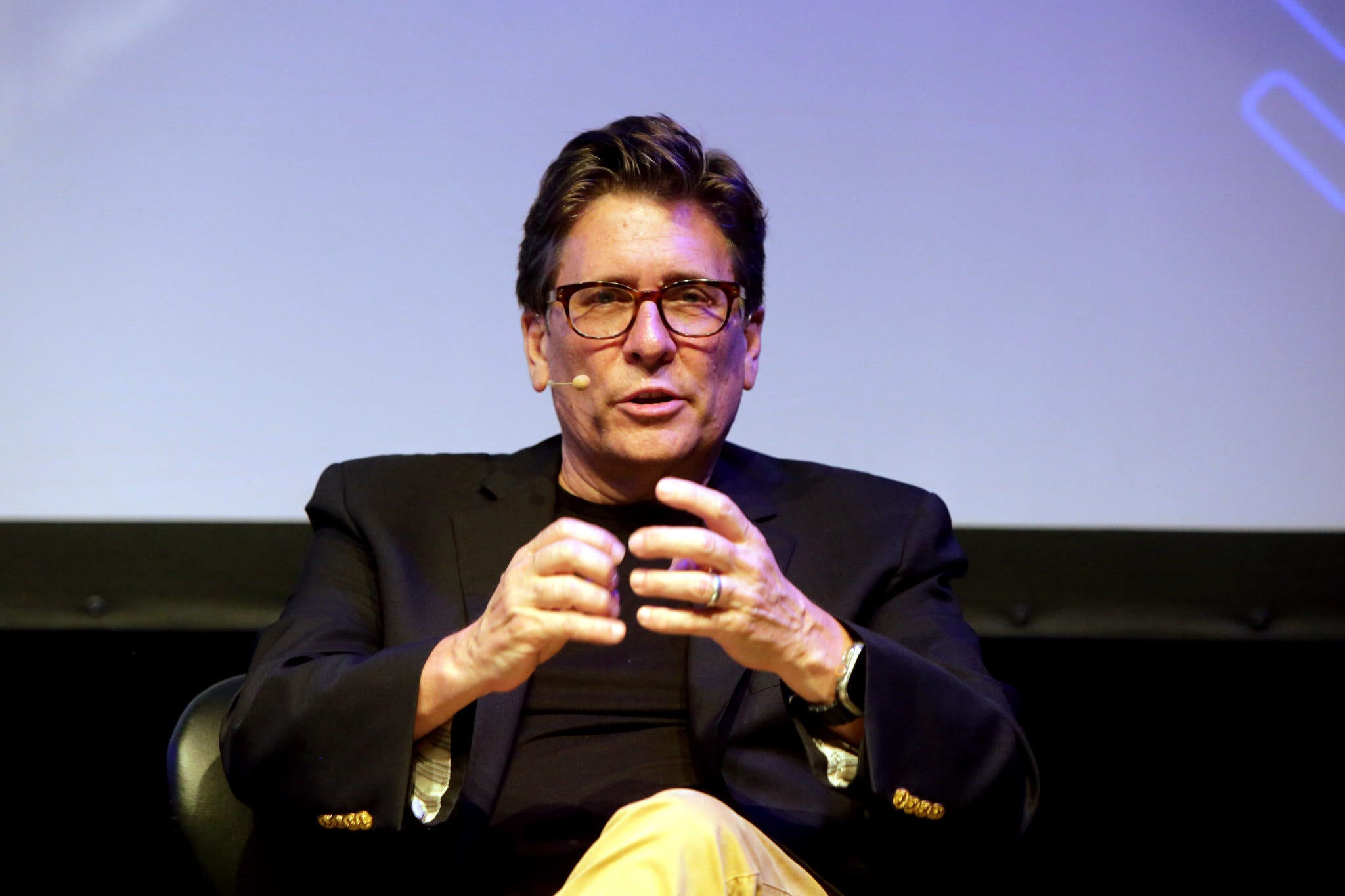
John Nosta, founder of innovation and tech think tank Nosta Lab, calls this the “AI rebound effect” — when better performance masks declining ability. “The skill set actually falls below baseline,” he said. The danger isn’t only dependency — it’s regression.
Adding to this concern, some companies are inadvertently reinforcing these behaviours. Hinds notes that employees are increasingly being evaluated and rewarded based on their AI tool usage, prioritising speed and output over deep comprehension. Ashley Herd, CEO of Manager Method, a leadership training firm, has observed a marked increase in the inclusion of AI usage metrics in performance reviews over the past six months, particularly within technology companies.
Rethinking Training and Building Mental Resilience
However, as Sara Gutierrez, chief science officer at SHL, points out, problems inevitably surface when systems break down or when workers are required to tackle challenges without AI assistance. This is precisely the scenario Josh Anderson encountered when he returned to manual coding.
“I was aware of how it worked,” he said, referring to his coding knowledge. “But I didn’t get those [workout] reps over those three months.” This lack of practice led to a feeling of disconnect, akin to a golfer who understands the mechanics of a swing but whose body can no longer execute it effectively. “My swing was off,” Anderson described his experience of writing code again. “I’m like, ‘but I know how to do this,’ but I couldn’t get my body to move the way I wanted it to.”

At work, fluency is often mistaken for competence.
This situation is prompting some leaders to re-evaluate their training strategies. Mehdi Paryavi, CEO of the International Data Center Authority, suggests that companies might need to implement “mental gyms”—dedicated spaces where employees can deliberately engage in AI-free problem-solving, mirroring how physical gyms are used to build muscle.

Rebecca Hinds, head of the Work AI Institute at Glean, said AI can create the illusion of expertise.
The core challenge lies in striking a balance: harnessing the power of AI for enhanced productivity without sacrificing the development and maintenance of the essential human skills that drive innovation, critical thinking, and long-term professional growth. As AI continues its rapid integration into the workplace, proactive strategies for skill preservation and development will be paramount to ensure that technological advancement doesn’t come at the expense of human capability.

Ben Eubanks, chief research officer at human capital advisory firm Lighthouse Research & Advisory, said the gap between learning concepts in school and applying them in real-world work has always existed, but AI is widening it.
If you enjoyed this story, be sure to follow Business Insider on MSN.