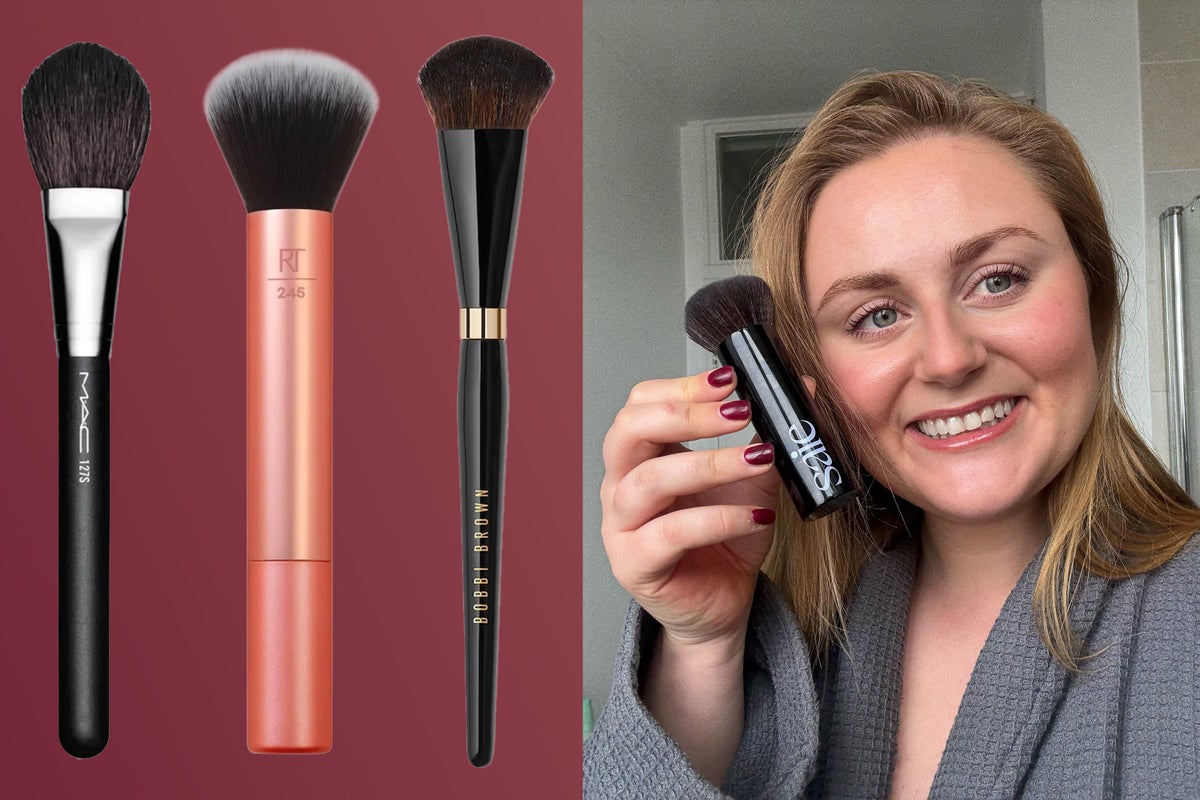
The Importance of the Right Foundation Brush
At the heart of any flawless make-up look is a good foundation, but in order to create a seamless base, your application tools are just as important as the formulas you’re using. So a top-notch foundation brush is key.
According to make-up artist Tori Arthur: “If the skin looks right, the whole make-up looks elevated.” She adds: “Foundation brushes let you build coverage where you actually need it, keeping the layers thin and making sure the make-up lasts properly – especially for long days like weddings.”
The challenge these days is choosing between your paddle (flat) brushes, kabukis and stippling tools. And that’s before you’ve even considered bristle type, density and which formulas the different shapes actually work best with.
Thankfully, with Arthur’s expertise as my guiding light, I set about testing a broad selection of foundation brushes from brands both premium and budget, to suit every skin concern and product preference. Scroll on to peruse my findings and top picks.
Best Foundation Brushes for 2026
Best Overall – Saie the Big Brush
Rating: 5/5
Bristle Type: Synthetic polyester bristles
Shape: Round and domed
Foundation Suitability: Cream and liquid
Why We Love It
– Streak-free finish
– Great for lightweight coverage
– Luxe weighted handle
Take Note
– Develops product build up quickly
Saie’s make-up brushes have gone viral over the past few years, with users on TikTok dubbing them the “best base brushes”. Having used the brand’s double brush (£28, Cultbeauty.co.uk) as a bronzer applicator for several months now, I second that claim.
After getting my hands on the big brush, I set about applying my Charlotte Tilbury beautiful skin foundation (£39, Cultbeauty.co.uk), working the product into the brush on the back of my hand before swiping it onto my skin. Amazingly, the foundation went on streak free on the first brush stroke and it was easier than ever to achieve a lightweight, seamless coverage. Admittedly, the beautiful skin foundation is user friendly to begin with, but I’ve never managed such a quick blend after several years of using it.
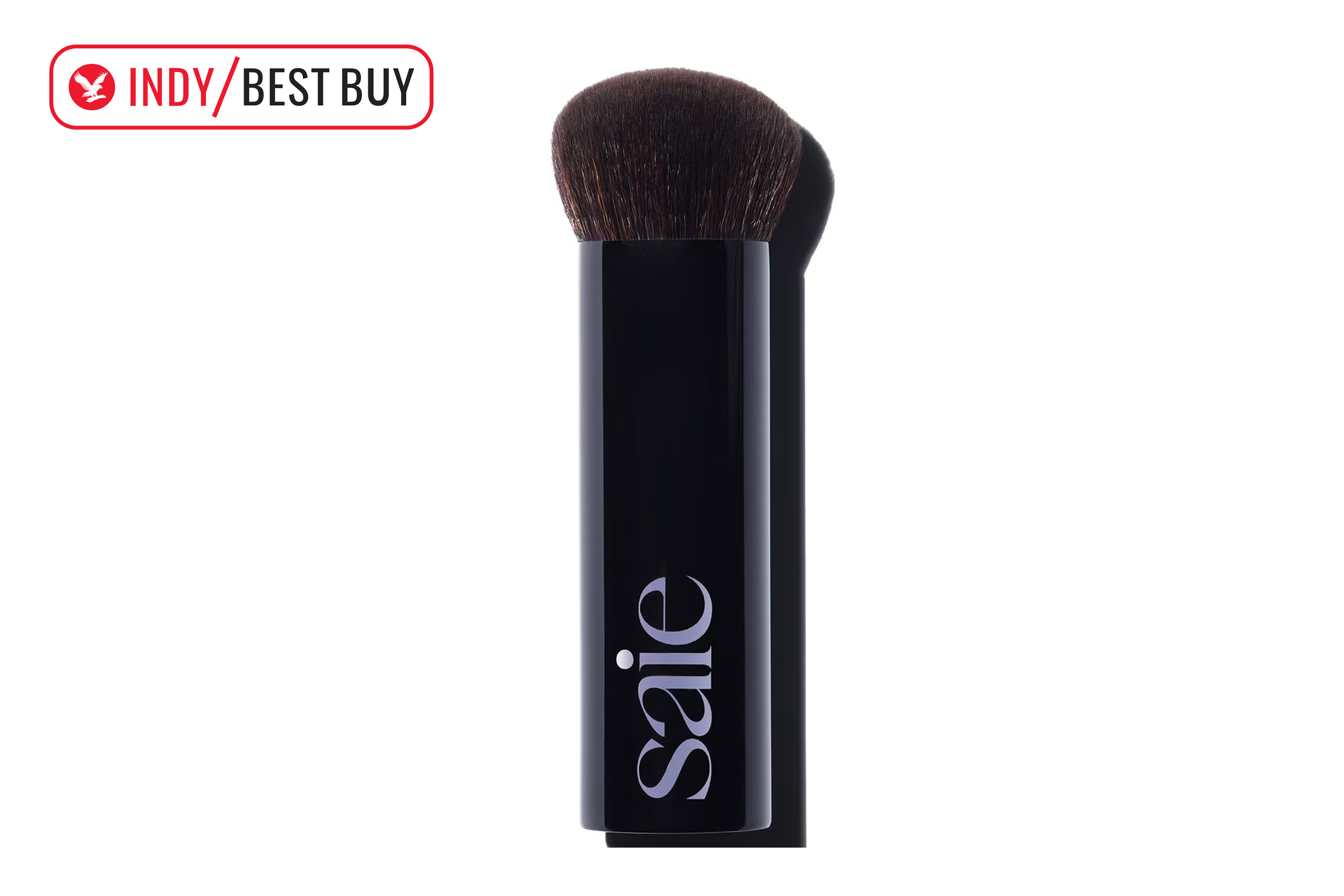
The brush feels silky soft on the skin and, owing to its large circumference (as its name suggests), each swipe covered a greater surface area than my usual arsenal of brushes. It’s an undeniably attractive tool and has earned an immediate place in my make-up bag.
Buy Now: £26, Cultbeauty.co.uk
Best Budget Buy – Elf Buffing Foundation Brush
Rating: 4.5/5
Bristle Type: Synthetic cruelty-free and vegan bristles
Shape: Domed, pointed oval
Foundation Suitability: Powder, cream and liquid
Why We Love It
– Affordable
– Soft and gentle on skin
– Creates a smooth, seamless finish
Take Note
– Black design shows foundation masks easily
– Fluffy bristle take in quite a lot of your foundation
Elf is often lauded as one of the best affordable make-up brands and, with a high-quality wooden handle and soft dual-tone bristles, its £8 foundation buffing brush is great value for money.
Using the brush to warm up my foundation on the back of my hand, I swiped the product onto my moisturised and primed skin, using circular motions to smooth it out. I was able to do this quickly and easily, despite the fact that I’d used too much moisturiser previously. Normally, this would make it harder to buff away streaks, but the Elf brush made quick work of my Charlotte Tilbury foundation, blurring redness and discolouration in just a few minutes.
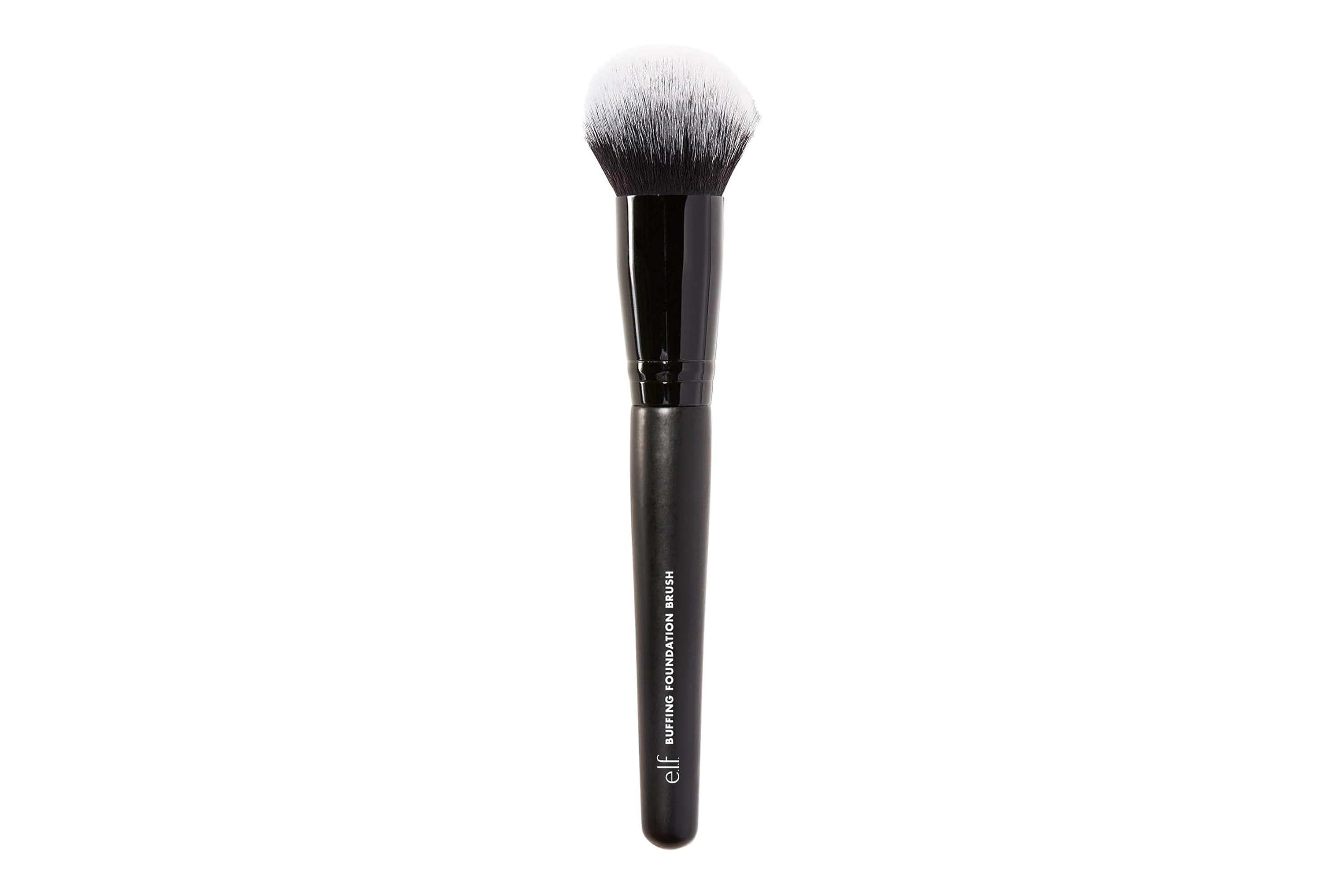
As much as the black design is sleek, it’s the worst colour for showing make-up covered fingerprints. Also, given the density and number of bristles, I found I needed more foundation than usual because the brush had soaked some of it up. Nonetheless, it performed as well as brushes considerably more expensive.
Buy Now: £8, Amazon.co.uk
Best for Dry Skin – Real Techniques Everything Brush
Rating: 4/5
Bristle Type: Synthetic hand-cut bristles
Shape: Domed, circular
Foundation Suitability: Liquid, cream and powder
Why We Love It
– Light, fluffy bristles spread foundation in a thin, non-cakey layer
– Covers a large surface area in one sweep
– Less densely-packed brush hairs make it more gentle to glide across sensitive or dry skin
– Affordable
Take Note
– Not a miracle worker, it can’t negate a dry or patchy formula
– Sheer number of bristles speed up how quickly the foundation dries down
For just £10, the everything brush performs well above its price point, which comes as little surprise from Real Techniques – one of the most dependable names for affordable tools. I also like that it sits within a wider brush wardrobe, though this one is something of a multitasker in its own right.
Alongside foundation, it was equally useful for diffusing cream bronzer and worked brilliantly to smooth pigments out without leaving stark lines. Its broad, fluffy design also covers a large area quickly, though that same speed means some formulas dried down faster than I might have liked.
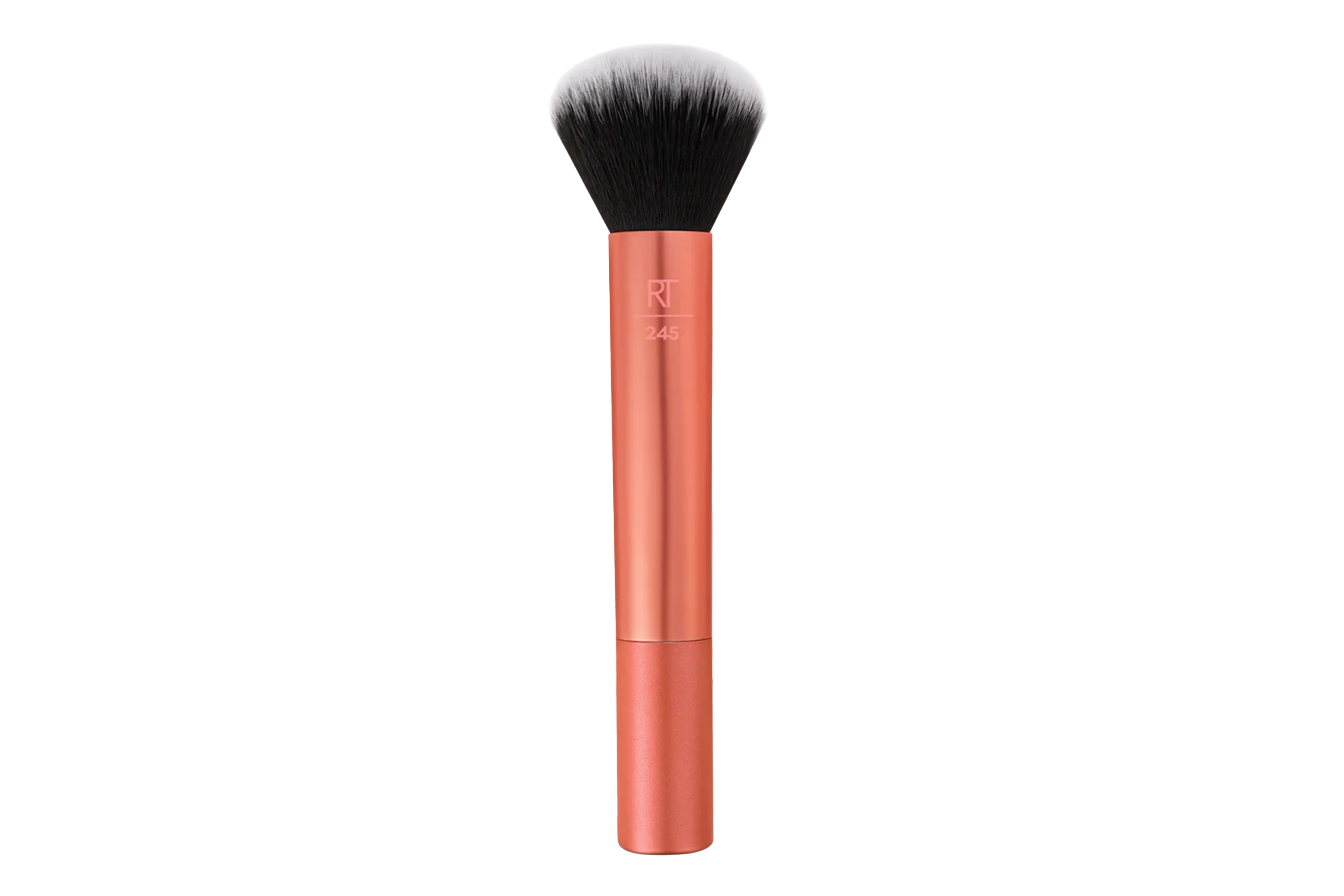
Along the same vein, it can’t completely rescue a base that’s already sitting patchily. My Giorgio Armani luminous silk foundation, for example, doesn’t always cooperate with SPF, and the everything brush couldn’t fully disguise the mottled texture that combination created.
What I kept coming back to, though, is how it feels on the skin. The fluffy, loosely packed bristles make it especially good for dry or sensitive complexions, gliding rather than dragging like denser stippling brushes can. On flaky patches (something I suffer around my nose during winter), it feels soft and almost massaging, helping to spread foundation into a thin, even layer rather than catching on texture and making it look worse.
Buy Now: £10, Boots.com
How I Tested Foundation Brushes
Over the course of several months, I used the following foundation brushes (plus further tools that didn’t make the cut) to blend everything from skin tints and serum foundations to full-coverage liquids, sticks and powders.
I assessed how quickly each tool blended the formulas, whether it left streaks, how it handled dry patches, pores and texture, and how much foundation it absorbed into its own bristles in the process.
Of course, this is just a snapshot of my testing process, so I’ve laid out my full criteria and scoring breakdown in more detail further down this article.
What Is the Best Foundation Brush?
If you want the best all-rounder, Saie’s ‘the big brush’ is hard to fault. It delivered the most consistently streak-free finish in testing, blended lightweight and medium-coverage formulas with ease, and its broad, silky-soft bristles made quick work of larger areas of the face.
For something more budget-friendly, the Elf buffing foundation brush punches far above its £8 price tag, while Real Techniques’ everything brush is the one I’d recommend for dry or sensitive skin thanks to its flexible, well-spaced bristles.
Ultimately, the right pick comes down to your preferred formula and finish, but Saie’s balance of speed, softness and seamless coverage makes it the clear winner.
A few brushes also narrowly missed out. The NYX pro multi purpose buffing brush, for example, quickly became weighed down with product, making it tricky to achieve a smooth, streak-free finish. Similarly, I’d hoped Beauty Pie’s seamless foundation buffing brush would rival Hourglass’s premium offering for less, but once its bristles loaded with foundation, they stiffened and dragged across the skin uncomfortably. It’s worth noting that a handful of other brushes became slightly bogged down with foundation and still made the cut – but these two struggled more noticeably than most.
How I Tested Foundation Brushes
Because the right foundation brush depends as much on your skin type and preferred finish as it does the actual foundation you’re using, I assessed each tool for multiple characteristics, including:
- Blendability: I considered how easily each brush buffed, stippled or swept foundation into the skin without streaking, patchiness or obvious brush lines.
- Finish: I assessed whether the result looked skin-like, seamless and even, paying close attention to cakiness, pore emphasis and how the brush handled texture.
- Formula Compatibility: I tested the brushes with a range of products, including skin tints, liquids, stick foundations, cream bronzers and powders where suitable.
- Comfort: I weighed up how the bristles felt across my own dry patches, active blemishes, irritation and some more sensitive areas around my nose and under eyes.
- Product Absorption: I paid close attention to how much foundation the bristles soaked up, especially with denser brush heads.
- Ease of Cleaning: I recorded how quickly product build-up occurred and whether the brush’s performance changed when the bristles became clogged, if at all.
- Value for Money: I weighed performance against price, aesthetics, versatility and whether the brush compared to more expensive tools (or in the case of some standout budget brushes, vice versa).
What Type of Make-Up Brush Is Best for Foundation?
“If you want more coverage, go for a dense brush with shorter, tightly packed hairs. This helps you layer the product and really work it into the skin,” reveals Arthur. She continues, “For lighter products like skin tints or tinted moisturiser, you should use something a bit less dense so it doesn’t apply too heavily.” Lastly, she finishes, “Stick foundations need a dense buffing brush, otherwise they’ll just sit on top of the skin.”
Is a Flat or Domed Foundation Brush Better?
For Arthur, these type of brushes have different purposes, with neither one nor the other performing ‘better’, so to speak. “A flat brush is good for getting product onto the skin quickly and building coverage,” she explains, “I still use one sometimes, but it can leave lines if you don’t blend it out properly.” Meanwhile, she elaborates, “A domed, dense brush is what you should use to buff everything in and get rid of any streaks.”
Can Any Brush Be a Foundation Brush?
“Technically yes,” answers Arthur, “but using the right tools makes the whole process quicker and the finish more polished.”
Breaking this down, she tells me, “If the brush is too soft or not dense enough, you’ll struggle to get an even finish and it’ll take longer to blend.”
Using stipple brushes as an example, she describes, “These are better for very light layers, like moisturiser or a skin tint.” Ergo, every brush has a formula it’s best suited for.
What Is the Best Way to Apply Liquid Foundation on Mature Skin?
“Work in small sections and keep the layers light,” instructs Arthur, “Don’t apply foundation straight onto the face, put it on the back of your hand first, work it into the brush, then apply.”
“This,” she outlines, “helps control how much you’re using so it doesn’t sit in fine lines – small buffing motions always work best.”
How Do I Avoid Looking Cakey with Foundation?
“Make sure your skincare has actually absorbed before you start, give it a few minutes,” begins Arthur. Next, she advises you “Build your foundation in thin layers rather than putting too much on at once. Use a buffing motion and take your time with it.”
To finish, she suggests “a light setting spray to melt everything together so it looks like skin.”
Why You Can Trust IndyBest Reviews
As a senior shopping writer for IndyBest, Lucy Smith has compiled a number of features regarding complexion products, from the best concealers to the best bronzers. When it comes to make-up tools, she also spent months testing the best make-up brush sets – so she already had an idea of the foundation brush frontrunners – and, with respect to foundations, her new guide to the best foundations is currently in the works (watch this space). In the meantime, she’s reviewed the Charlotte Tilbury airbrush flawless foundation, the Giorgio Armani luminous silk foundation and more. As such, she’s well versed in how seamless and smooth a good face base can appear with the right formulas and tools. Not to mention she personally wears foundation several times a week, with a brush being her application tool of choice.