
A Rare Case of Worms Emerging from a Woman’s Nose
A 58-year-old sheep farmer from Greece experienced a shocking medical situation when she began sneezing out worms after suffering from sinus symptoms. The woman, whose identity remains undisclosed, visited her doctor several weeks after noticing worsening pain around her sinuses and jaw. One week after the pain started, she also developed severe coughing fits.
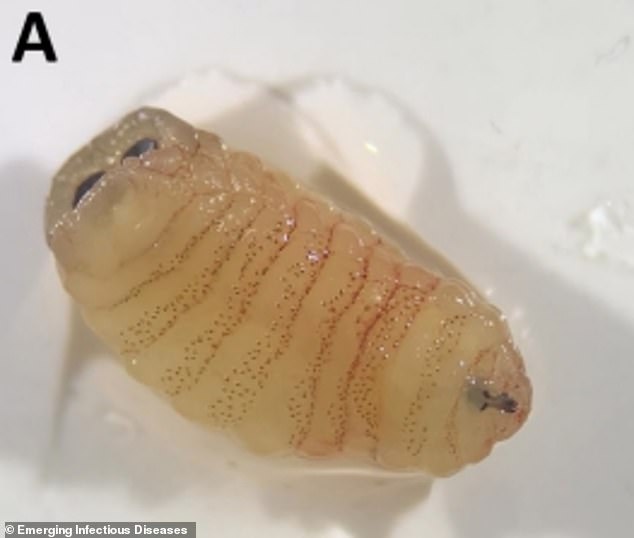
For about a month, the woman had no other symptoms until one day she sneezed and “worms” came out of her nose, prompting her to seek immediate medical attention. An otolaryngologist, a specialist in ear, nose, and throat conditions, discovered and surgically removed ten larvae—immature worms—and one pupa, which is a later stage before a larva becomes an insect, from her sinuses.
The largest larva measured about two centimeters (0.8 inches) long, roughly the size of a peanut. Tests confirmed that the worms were Oestrus ovis, also known as the sheep bot fly. These flies are typically found living in the nasal passages of sheep in warm, temperate regions such as the Mediterranean, Middle East, and Australia. Although less common in the United States, sightings have been recorded in states like California, Hawaii, and Texas.
The woman reported that a week before her symptoms began, she had noticed flies swarming around her face while working in a field with grazing sheep.

Doctors treating the woman noted that she had a severely deviated septum, a condition where the thin wall between the nostrils is off-center, making one nasal passage smaller than the other. This could have provided the flies with an unobstructed path through her sinuses, allowing them to go unnoticed.
In their report published in the CDC’s Emerging Infectious Diseases journal, the woman’s physicians speculated that her deviated septum might have contributed to the infestation. They also mentioned that if the larvae had remained undetected, they likely would not have developed into pupae or adult flies. Instead, they would have liquefied or calcified, increasing the risk of bacterial infection.
The doctors explained that the sinuses are not humid enough for flies to become pupae and that the natural bacteria present in the sinuses create a hostile environment for the worms. However, one of the eggs in the woman’s sinuses did progress to the pupa stage. The team suggested this could be an early sign of evolutionary adaptation, enabling O. ovis parasites to complete their life cycle in humans.
They emphasized that additional cases and data are needed to fully understand this phenomenon. However, they urged clinicians to be aware of the potential for human bot fly infections in endemic areas. Oestrus ovis flies are prevalent in Greece, particularly in regions with high sheep and goat populations. They have also been detected in U.S. areas where sheep are raised, including Catalina Island, a small island off the coast of southern California, as well as the San Joaquin Valley and Los Angeles.
Wyoming and Montana have also detected O. ovis in bighorn sheep, and sporadic cases have been reported in Hawaii and Texas. While U.S. health agencies do not formally track human cases, they are considered rare and mainly involve the flies laying eggs on the surface of the eyes.
People who are not regularly exposed to sheep or other livestock are not thought to be at risk.