A Growing Divide in Access to Robotic Surgery
Robotic-assisted surgery is increasingly becoming a vital part of modern healthcare, offering significant benefits such as faster recovery times, fewer complications, and shorter hospital stays. However, the availability of this advanced technology across the NHS remains highly inconsistent, with patients facing a postcode lottery when it comes to accessing these procedures.
A recent study by the Royal College of Surgeons highlights the stark disparities in the adoption of robotic surgery throughout England. While 28 robotic systems are currently in use within NHS trusts in London, only six are available across the South West region. This uneven distribution raises concerns about equitable access to innovative medical treatments.
The lack of a standardized funding model for robotic surgical equipment exacerbates the issue. Health bosses are left to make local decisions on how to acquire the necessary technology, which can cost between £500,000 and £1.5 million. Some NHS trusts have turned to capital funding, while others have opted for leasing arrangements or even sought charitable donations from local communities.
Despite the government’s emphasis on robotics as one of five key priorities in its 10-Year Health Plan for England, the implementation of this vision has been slow. The plan envisions robots playing a crucial role in delivering care with unprecedented precision. In 2023/24, medics performed 70,000 robot-assisted procedures in the NHS in England, with projections indicating that this number could rise to half a million over the next decade.
Health officials predict that by 2035, nine out of ten keyhole surgeries will be delivered with robot assistance, up from just one in five at present. This shift underscores the growing importance of robotic surgery in the future of healthcare.
Health Secretary Wes Streeting, who underwent robot-assisted surgery for kidney cancer, has expressed confidence in the transformative potential of these technologies for the NHS. However, the latest analysis from the Royal College of Surgeons reveals a significant gap between national ambitions and the reality on the ground.
The report warns that the lack of coordinated national planning has led to decisions about robotic surgery being made locally rather than as part of a unified NHS strategy. This fragmented approach hinders the efficient deployment of robotic systems and limits patient access.
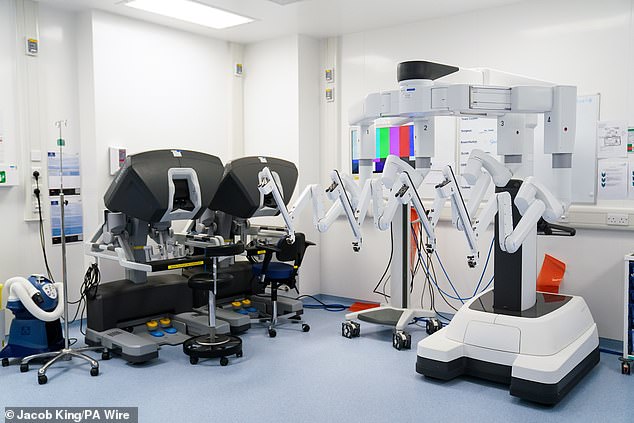
Robotic surgery offers enhanced precision, with machines capable of performing movements more delicate than the human hand. Experts highlight that these systems provide greater dexterity and allow for easier manipulation of surgical tools compared to traditional methods. The range of robotic-assisted procedures has expanded significantly in recent years, covering multiple areas of medicine.
Typically, surgeons control precision instruments using a console and a camera. In some orthopaedic procedures, robots are programmed to perform specific parts of the operation.

Last year, the National Institute for Health and Care Excellence (Nice) approved 11 state-of-the-art robots for use on the NHS. In certain cases, robotic surgery has been shown to reduce hospital stays by half. These findings, the first publicly available national overview of how surgical robots are used across England, will be presented today at the Future of Surgery Festival in Birmingham.
College president Mr Tim Mitchell will address delegates, stating: “Robotic-assisted surgery has the potential to transform care and help reduce NHS waiting lists. However, access remains a postcode lottery.”
He emphasized that it is extraordinary for some NHS hospitals to resort to local fundraising to secure essential funds for robotic systems. The data clearly indicates an urgent need for better oversight of where robots are located and how they are funded to ensure that all patients benefit, regardless of their location.
The College stresses that not every hospital needs its own surgical robot, but all patients should have equal access to hospitals and surgeons that offer robotic surgery. Currently, there is no single, transparent national dataset on robotic surgery provision, making it challenging for NHS England, the Department of Health and Social Care, and Integrated Care Boards to plan services effectively, assess equity of access, and ensure value for money as robotic surgery expands.
The investigation, based on responses to Freedom of Information requests, revealed that the Royal United Hospitals Bath NHS Foundation Trust spent over £2 million in donations on robotic platforms. The College calls on the government to establish a national public directory of surgical robotic systems, implement a clearer and more consistent funding model, including centralized capital funding, and allocate resources for training.
It also urges industry to make the machines more affordable, create flexible financial models to increase trust opportunities for acquiring machines, and provide more support for refurbished models.
A spokesperson for the Department of Health and Social Care stated: “Robotic surgery is making a huge difference in our NHS today, with these cutting-edge machines speeding up treatment, reducing recovery times, and allowing patients to return to normal activities more quickly. As set out in our 10-Year Health Plan, the NHS is committed to the adoption of robotic-assisted surgery for an expanded range of procedures. This is just one of the ways in which we will continue to drive forward the very best standard of care for patients.”