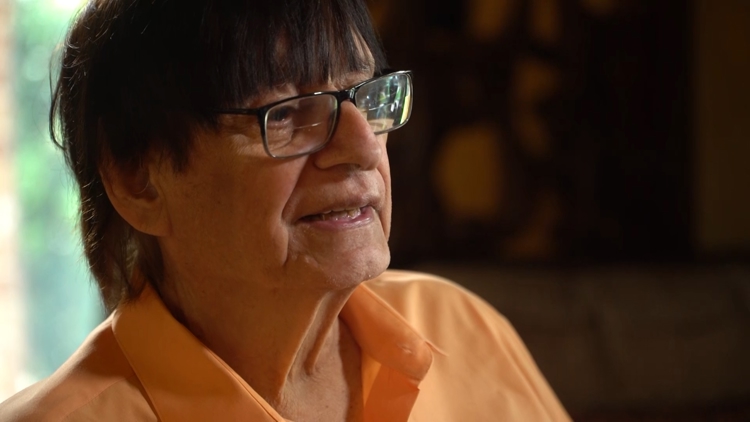
A dedicated mathematics professor at Rice University, Dr. Richard Tapia, has spent his career ensuring that students from underrepresented backgrounds have the opportunity to thrive in science and math. Born to Mexican immigrant parents in Los Angeles, Dr. Tapia’s journey is one of perseverance, passion, and a deep commitment to education. His efforts have not gone unnoticed — recently, Harris County Commissioners honored him by naming the new Sam Houston Tollway Ship Channel Bridge after him.
Dr. Tapia’s contributions to mathematics are well-documented. He earned his Ph.D. in mathematics and has authored over 100 research papers. In 2011, he was awarded the National Medal of Science by President Barack Obama, a recognition of his groundbreaking work and influence in the field. However, for Dr. Tapia, the true measure of success lies not in accolades but in the impact he has had on students.
From an early age, Dr. Tapia developed a love for mathematics. “I guess about when I could read,” he recalls. “Math was always with me.” This passion led him to pursue higher education, where he encountered a stark reality: he was often the only Mexican American student in his math department.
“I said something is wrong!” he remembers. That moment became a turning point in his career. Rather than accept the status quo, he took action. In 2015, Dr. Tapia launched the Tapia Camps at Rice University, a program designed to bring students from underserved communities into the world of STEM.
The camps are more than just academic sessions. They are immersive experiences where students engage in hands-on learning, explore real-world applications of math and science, and develop confidence in their abilities. At the end of each session, participants present what they’ve learned, and prizes are awarded for outstanding performances and engineering challenges.
Dr. Tapia emphasizes that the goal of the camps is not just to teach math but to nurture students’ potential. “I really enjoy them, nurture them, work with them and then get them to go off on their own,” he says.
His approach is both personal and powerful. He believes that math is not just a subject but a way of thinking that can open doors to countless opportunities. “I’m sure I can convince you, if you give me enough time, how beautiful math is,” he says.
For Dr. Tapia, the message he wants every student to take away is simple yet profound. “I show people you can do what I have done. You can do what I have done, and it’s a wonderful world. That’s what I want to show them.”
Through his work, Dr. Tapia continues to inspire the next generation of scientists, mathematicians, and engineers. His legacy is not just in the awards he has received or the bridges named in his honor, but in the lives he has touched and the futures he has helped shape.