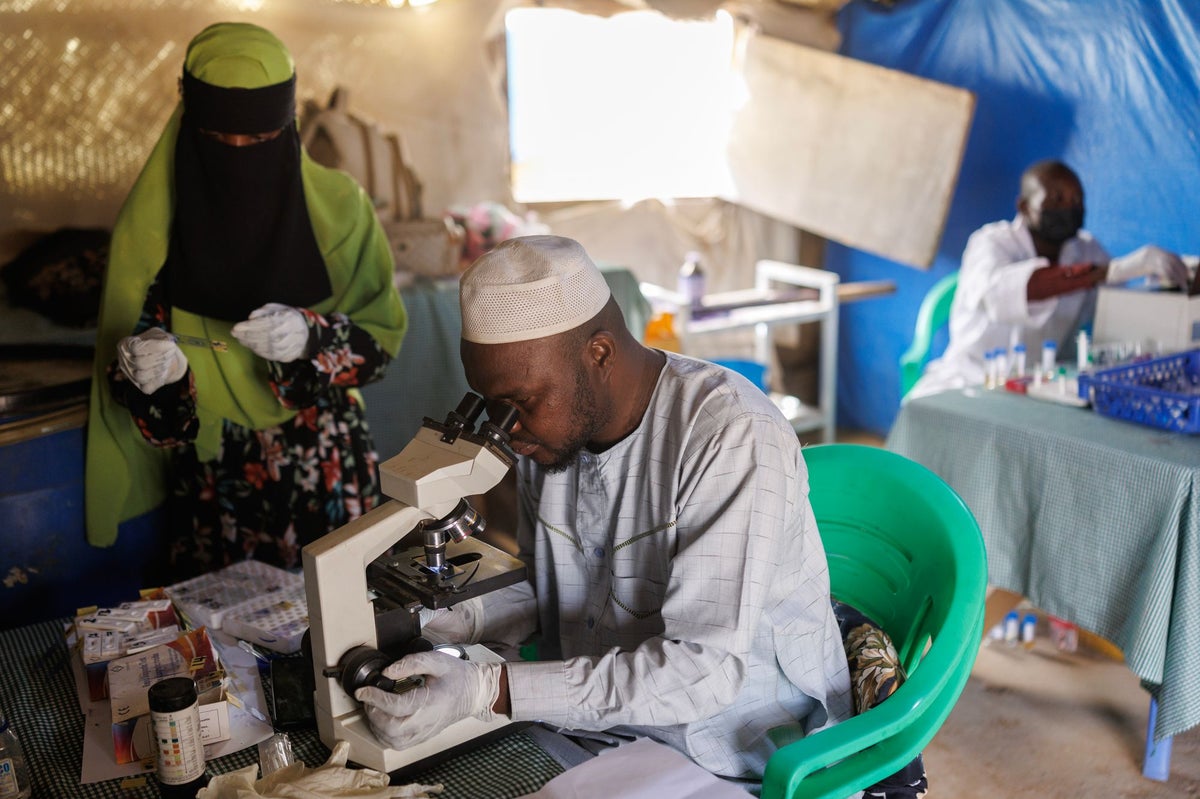
The Fight to End Malaria Faces a Perfect Storm of Challenges
Malaria, a disease that has plagued humanity for centuries, is now facing a series of unprecedented challenges. A combination of financial cuts, evolving resistance, climate change, and global conflicts is creating what many experts are calling a “perfect storm” for malaria control efforts.
One of the primary issues is the reduction in global health budgets, particularly in 2025. This has limited the ability to distribute lifesaving tools such as bed nets, antimalarial drugs, and vaccines to those who need them most. It has also hindered the development of new interventions, which are essential to stay ahead of the ever-adapting malaria parasite and its mosquito vectors.
Mosquitoes and the malaria parasite have shown increasing resistance to traditional interventions, including insecticides and antimalarial medications. This resistance has been a growing concern for years, but it has become more pronounced in recent times. At the same time, climate change is altering the habitats of malaria-transmitting mosquitoes, making it harder to predict and manage outbreaks. Extreme weather events further complicate these efforts by disrupting public health infrastructure and displacing populations.
Conflict and instability in various parts of the world have also had a significant impact on malaria control. War-torn regions often see their healthcare systems collapse, leaving vulnerable populations without access to essential treatments and preventive measures.
These challenges have come at a time when malaria cases have been on the rise. Since the start of the COVID-19 pandemic, there has been a steady increase in malaria cases, reaching an all-time high of 282 million in 2024. The number of people dying from malaria has also increased, with 610,000 deaths reported in 2024—the highest since 2020. Over 95% of these deaths occur in sub-Saharan Africa, and more than 75% involve children under five years old.
Despite these grim statistics, there is still reason for hope. While progress has slowed in recent years, the previous decades saw remarkable achievements in reducing and eliminating malaria. Between 2000 and 2019, annual malaria deaths dropped by over 34%. This success was driven by a robust pipeline of tools, supported by well-funded global health initiatives and partnerships with malaria-endemic countries.
The UK’s Pivotal Role in Fighting Malaria
What may be less known is the significant role the UK has played in the fight against malaria. New research by Impact Global Health in partnership with Malaria No More UK highlights that, as of 2025, UK science institutions were responsible for one in every five malaria tools in the research and development (R&D) pipeline. This places the UK as the third-largest contributor globally to malaria R&D, including vaccines, drugs, and vector control products like bed nets.
The UK’s contributions to malaria vaccines and drugs are particularly noteworthy. The country is involved in nearly a third (31%) of all malaria vaccines in the pipeline—second only to the United States—and nearly a quarter (23.2%) of all malaria drugs. These figures underscore the UK’s strong commitment to malaria research and development.
This leadership is made possible by several factors. First, the UK works closely with scientists in malaria-endemic countries, leveraging the expertise of those on the frontlines. Second, the country’s world-class universities, research institutes, and pharmaceutical and biotech companies provide a dynamic network of innovation and collaboration.
Long-term commitments from successive British governments have helped create a stable environment for malaria research. Scientists are now closer than ever to developing “end game” tools that could not only reduce the spread of malaria but also lead to its complete eradication.
A Crossroads for Global Health
Today, the world stands at a critical juncture. As malaria cases continue to rise and some countries reduce their aid commitments, the need for sustained investment in malaria R&D has never been more urgent. The UK government must ensure that spending on malaria R&D remains within its “global research and technology development” portfolio.
Maintaining this investment would save countless lives, particularly among children in high-risk regions. It would also have positive ripple effects, including boosting international trade and generating economic benefits for the UK. For example, previous research has shown that reducing malaria could add over $80 billion (£66bn) to global trade, including in the UK.
In addition to economic benefits, there are significant health advantages. Research into malaria vaccines has already contributed to the development of other vaccines, such as the shingles vaccine, which is widely used in high-income countries and is projected to prevent nearly 32 million cases globally by 2050.
Continuing to support British scientists and maintaining the UK’s reputation as a leader in malaria science is one of the best ways the government can contribute to global health security and economic stability.
A Call to Action
In the face of the growing threats posed by malaria, the global health community must remain optimistic and committed. With the right investments and partnerships, it is still possible to turn the tide against this deadly disease.
Gareth Jenkins is managing director of Malaria No More UK. This article has been produced as part of The Independent’s Rethinking Global Aid project. Independent readers are independently-minded global citizens. They are not defined by traditional demographics or profiles, but by their attitudes. In today’s increasingly fragmented world, communities value real facts and frank opinions delivered first-hand from a non-biased news brand that they can trust. Armed with information and inspiration, Independent readers are empowered and equipped to take a stand for the things they believe in.