Emilio Gay Emerges as a Strong Contender for England’s Opening Batting Role
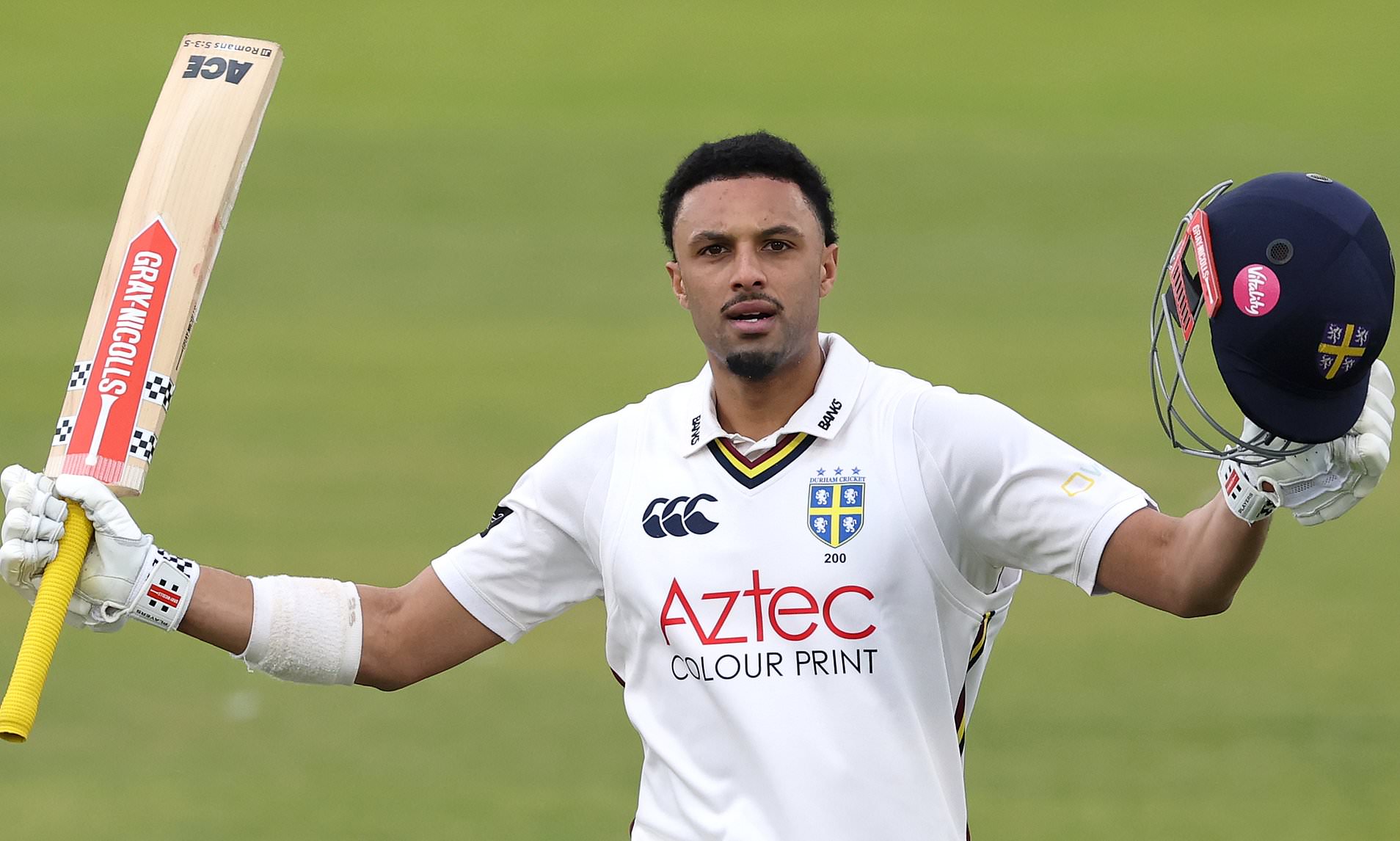
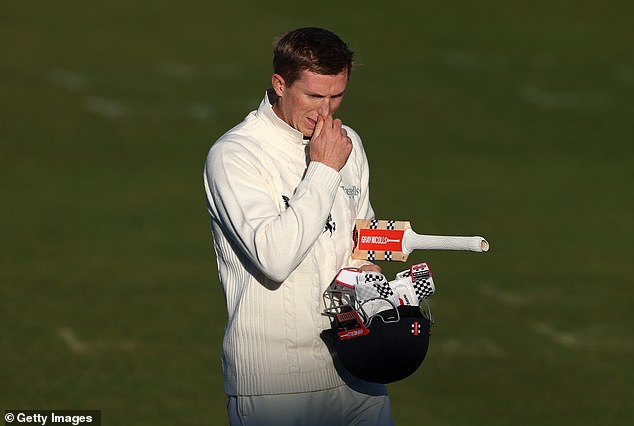
Emilio Gay is making waves in the race to become England’s new opening batsman, with the usual favorites struggling to make an impact in the County Championship. Gay has joined ex-Test players Haseeb Hameed and Dom Sibley in scoring a century during a round of bat-dominated fixtures that concluded on Monday, outshining his teammate Ben McKinney in the process.
Although currently behind fellow left-hander McKinney and Asa Tribe, who plays for Glamorgan, in the pecking order to replace Zak Crawley at the top of the order for England’s Test series against New Zealand in June, Gay has been making a strong case for selection. The 26-year-old, who currently plays international cricket for Italy through his maternal grandfather, once again let his bat do the talking with an unbeaten 159, his second three-figure score in three Division Two matches this summer. This performance helped his team defeat leaders Lancashire by eight wickets at Chester-le-Street.
On the same day, it was revealed that England’s selection process has incorporated a recommendation from the post-Ashes review, introducing a new layer of scrutiny from four leading county coaches. Gay’s season tally now stands at 344 runs at a Bazballian strike rate of 74. While McKinney has a double hundred to his name, he averages only 62.4, and Tribe managed to push his mark above 40 for 2026 with 67 unbeaten second-innings runs off a tired Leicestershire attack on a favorable surface.
Crawley started the 2026 campaign under intense pressure after managing just five centuries and averaging 31 in 64 Tests at the top of England’s order. His performance has been underwhelming so far, with only 118 runs in six innings for Kent.
Hameed, the Nottinghamshire captain, scored 115 off 245 balls after Warwickshire enforced the follow-on at Trent Bridge, while Sibley ground out 101 off 283 in another stalemate between Surrey and Essex at the Kia Oval.
Despite pledging to give more weight to county returns when selecting squads, these performances do not align with the style England remains committed to, making them unlikely candidates for inclusion alongside Ben Duckett, whose scores of 62 and 93 against Warwickshire ended a run of 12 first-class innings without a half-century spanning back to last August.
While all four top-flight fixtures ended in draws, Gloucestershire followed the positive results of Worcestershire and Durham in Division Two by defeating Derbyshire by 10 wickets at Derby.
The New Insight Group and Their Role
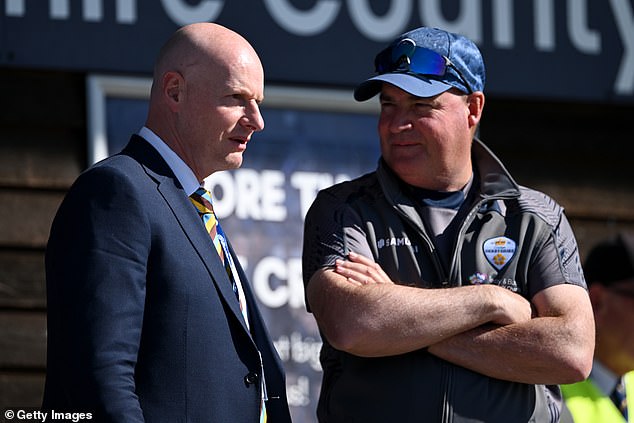
The introduction of a new four-man ‘insight group’ appointed to provide feedback on the best performers in county cricket is a significant development. The group includes Derbyshire’s Mickey Arthur, Anthony McGrath of Yorkshire, Richard Dawson, who helped Glamorgan win promotion last year, and Worcestershire’s Alan Richardson. They will meet with ECB men’s director Rob Key and England’s other leading coaching personnel four times a year to provide insights from the domestic game.
Their role is to assess how those already on the radar of the ECB’s scouting network are performing, effectively stress-testing the talent identification process with independent evaluation across the English season. This move comes after the winter review into England’s failings in the Ashes highlighted a disconnect between the county game and squad selection.
Addressing Selection Concerns
England coach Brendon McCullum has been criticized for not engaging with county cricket, with Sussex’s Paul Farbrace noting that McCullum makes no contact with people and doesn’t want to talk about county cricket. McCullum is expected to arrive in England later next month and rarely watches the County Championship, fueling concerns that the selection process has become closed.
The new insight group is designed to provide analysis on opposition players rather than their own, offering an inside track on how players perform, not just their statistics. Key is expected to attend all quarterly meet-ups with Luke Wright’s yet-to-be-named successor as national selector, along with performance director Ed Barney, head of player ID David Court, and fast bowling lead coach Troy Cooley.
The first meeting is set to take place ahead of the first Test against New Zealand on June 4. This initiative aims to give greater weight to county form when selecting international players and directly addresses the need for England to re-engage with the wider cricket community.
Technological Advancements in Player Selection
In addition to the insight group, the ECB has invested heavily in AI tools to aid the selection process. A £500,000-a-year technology captures each ball of domestic footage using video cameras pinned to umpires. This data was initially thought to help identify the characteristics needed for a winning touring team in Australian conditions.
However, the number-crunching lacked emotional intelligence, prompting a shift towards involving four highly-respected figures in the game. This approach will help in assessing factors like a player’s adaptability and reaction to external pressures such as fatigue.
The insight group also aims to improve relations between the England team and the pyramid from which they select players. Key has chosen four legates—two from Division One and two from Division Two—with firsthand experience of the bridge from first-class cricket to the international stage.
Arthur, one of the members, is arguably the most experienced active coach in the sport, having coached four Test nations. Dawson has a working knowledge of the pathway system, while McGrath and Richardson have worked on tours in recent years.