For most of his 20s, Elliot Connors did not think a lot about his hair. He was losing some of it, maybe — but so what? This was what happened to men. He was funny and sharp; he had a girlfriend.
He began to worry only after he and some friends started a group chat last summer. In it, they talked about their classes and sports and joked about their love lives, and the thread frequently digressed into a series of semi-serious conversations about hair loss: whether their hairlines were staying the same or, God forbid, receding; which products to apply, which medications to take; how much they did or didn’t care.
Several of Connors’ friends were taking a drug called finasteride, which is remarkably effective: research shows that it significantly slows hair loss in most men for at least 10 years (with many men reporting effectiveness well beyond that); studies have found that it stimulates at least some renewed hair growth in a majority of men.
Connors’ friends kept close track of their progress from week to week. Dermatologists commonly recognise seven stages of hair loss, which were refined and popularised in the 1970s by O’Tar Norwood, a dermatologist and pioneer of hair-transplant surgery. Many of Connors’ friends, young men in their 20s, were a Norwood 2 or even a Norwood 3, displaying the beginnings of a creeping V on both sides of the forehead. (When you reach a Norwood 6, you may be “cooked”, in the online discourse of hair loss: too far gone for help.)
Before too long, Connors began inspecting his hands after washing his hair. Was more of it falling out than usual? He examined old photos of himself and compared them with his reflection in the mirror, looking for signs of change. He grew increasingly observant of other men’s hair: He noticed whose hairline was receding, and who was so young that he took his lush mane for granted, blissfully ignorant of the hair loss that was most likely in his future. He started to think he had no choice if he wanted to keep up: he’d better start taking finasteride.
He had read that finasteride could cause worrisome side effects – low libido, for example, or depression – and he would come to feel conflicted about the popularity of the drug. “We could all just not be on any of this stuff, and then our relative appearances would be the same,” he said. “But now we all have to be on it just to keep up with everyone else who’s on it. It’s like a nuclear arms race.”
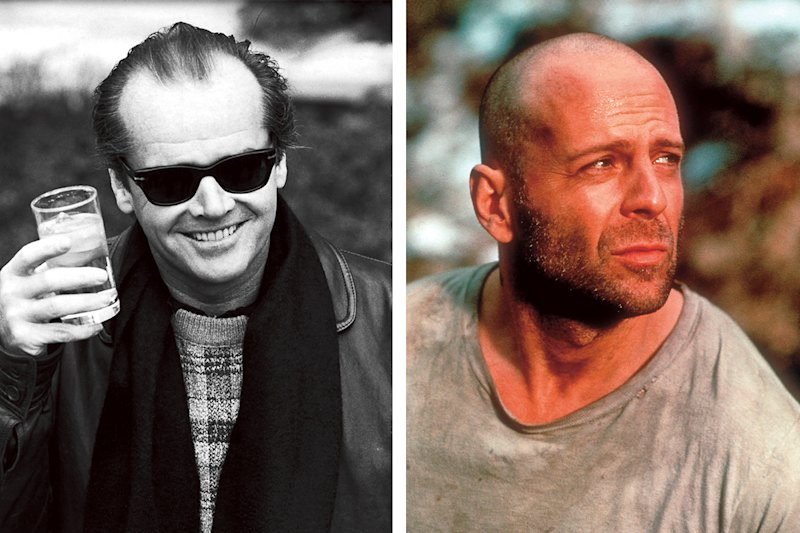
Losing your hair, for men, was once largely inevitable and nearly universal. “People used to say, ‘Losing your hair is just part of life – accept it,’ ” said Marc Avram, a dermatologist in New York who specialises in treating hair loss. In earlier eras, Hollywood’s leading men – Paul Newman, Jack Nicholson, Bruce Willis – played romantic leads long after their hairlines started to recede. Fathers and uncles counselled the young men in their lives to come to terms with the changes as part of the journey into adulthood. “There was literally no other option,” Avram said, “other than plugs.”
Today that’s no longer true. Celebrities and others who can afford it shell out up to $US20,000 (about $28,000) to get hair transplants, which have become harder to detect and ever more precise. Surgeons can now extract individual healthy follicles from abundant areas of their patients’ heads and implant them, one by one, into the scalps’ hair deserts.
This more expensive, newer approach promises a more natural hairline, although those who know what to look for can still tell when someone has had the procedure. “If an actor has a full head of hair sticking straight up from his forehead and he’s over 30, he’s probably had one,” said Leah Ansell, a dermatologist in New York, who says she likes to point them out to her husband during awards shows. “They’ve all had one. All of them.”
Men with more modest means can find packages that fly them to Turkey and deliver the same procedure for around $4200 – or they can start with the cheapest option of all, which is going on finasteride. Feeding that anxiety is a mass-marketing campaign teaching men the same brutal self-scrutiny that women have long been trained to perform. A typical male in his 20s or 30s is likely to receive a flood of ads and shout-outs on Instagram, TikTok, YouTube and the livestreaming platform Twitch for hair-growth products that appeal to men their age: not just the usual tablets but chewable pills and sleek black bottles of “Mane Spray”.

Young American men have also been encouraged to care deeply about their appearance by their country’s own commander-in-chief, whose highest praise for various appointees includes comments about their good looks. He’s “central casting”, President Donald Trump said of his new pick for the chair of the US Federal Reserve, Kevin Warsh: a man in his 50s, it must be noted, who has a full head of hair. (Pete Hegseth, the secretary of defence, is more like a Norwood 2.) Trump seems to have a particular obsession with hair, talking at one campaign rally about all the best products he douses his head with in the shower, and famously asking a young woman at another event to come up and inspect his hair to verify that it was all his own (and not, as one radio personality was suggesting, a toupée).
Young men who have come of age in the time of the manosphere are prime audiences for endless reels from influencers – some of them exceptionally buff, some of them funny, some of them with millions of followers – who are trying various treatments in the hope of regaining a full head of hair. The hair-loss influencer (it’s a category unto itself) Zeph Sanders has more than 1 million TikTok followers tracking his “hair journey”. Typical content: “POV: You spent the last year falling in love with yourself,” reads the text introducing a quick montage of all the steps he has taken over the past 12 months to improve his hair (starting with a hair transplant).
The ubiquity of this kind of content makes losing one’s hair no longer seem inevitable; going bald can now feel like a choice – a conscious decision.
‘There’s no new epidemic of hair loss, but there is an epidemic of men freaking out about it.’
Dermatologist Leah Ansell
Frequently the advertising and those influencers are conveying the message to young men that they should start taking finasteride young – in their early 20s – so that they don’t lose their hair in the first place. Andrew Dudum, a co-founder of Hims & Hers, one of the main telehealth companies selling hair-loss medication, said in a 2017 interview that its goal was to market those treatments to a younger audience, adding that while he was in college, he and his friends could have benefited from products that protected their hairlines. The approach fits into the broader “prejuvenation” trend, in which young men and women are using lasers, fillers and products like Botox to fend off signs of ageing before they start, rather than doing damage control when degradation is already well underway.
Ansell said she has had parents come in asking about finasteride for their teenage sons, looking to make sure they get “all the best they can have in order to succeed in life”. Young men are also coming in on their own for help keeping their hair. “More of them are really anxious about it,” Ansell said. “There’s no new epidemic of hair loss, but there is an epidemic of men freaking out about it.”