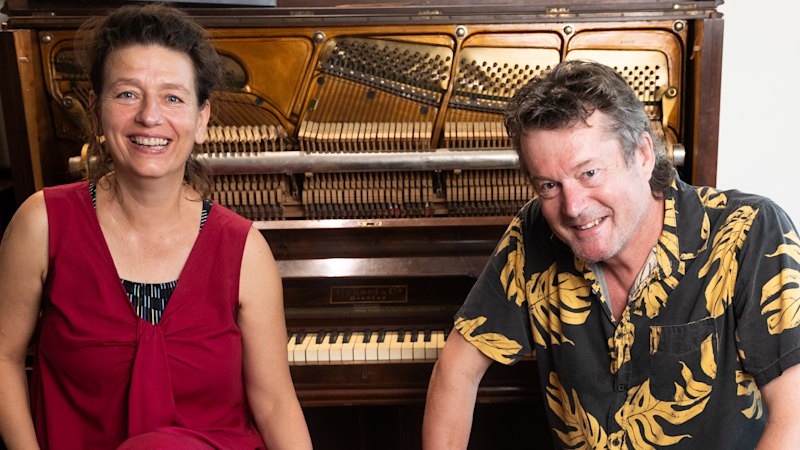
After four decades of tuning an estimated 18,000 pianos, Martin Tucker is confident that his job will always provide him with a stable income. Australians have a deep love for playing pianos, as demonstrated by the popular ABC series The Piano, and acoustic (non-electric) pianos are known to go out of tune over time.
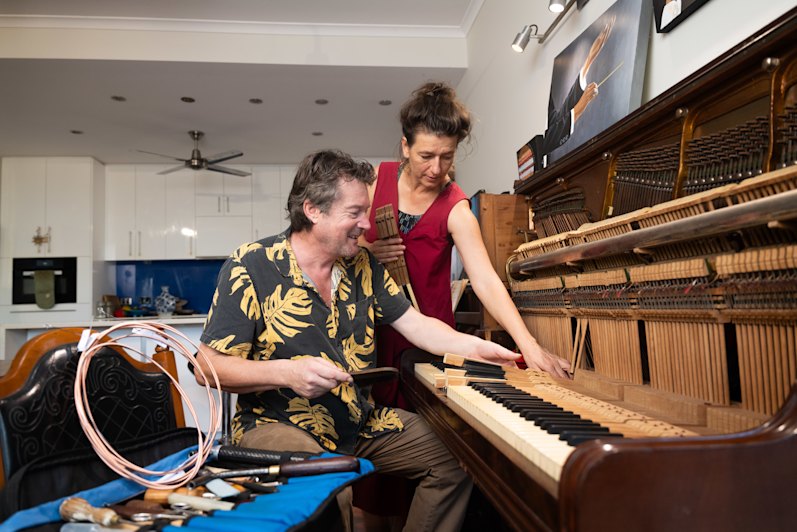
“I haven’t got anything in the diary for the month of June, but I know that by June there’ll be pianos that need tuning,” said Tucker, a lively and talkative Tasmanian who features in the new documentary The Piano Tuner. “I’ve been through the recession of 2009 or whatever, it was bulletproof. We went through COVID. Everyone stayed at home and wanted to play the piano. They weren’t spending their money on bigger things like bathroom renovations or new cars, but they could afford $200 or $300 to get the piano tuned.”
Tucker’s work is the focus of Natalia Laska’s The Piano Tuner, which will have its world premiere at the Sydney Film Festival in June. Festival director Nashen Moodley announced the program for the 73rd festival at the State Library of NSW on Tuesday night. The festival opens on June 6 with Silenced, a documentary by Selina Miles about Australian human rights lawyer Jennifer Robinson’s efforts to combat the weaponisation of defamation laws in the post-#MeToo era. Among those interviewed are Amber Heard and Brittany Higgins.
The centrepiece of the festival is a $60,000 competition for “audacious, cutting-edge and courageous” cinema. This includes films by a former winner from Iran’s Asghar Farhadi, with the drama Parallel Tales, and an Australian debut feature director, Adrian Chiarella, with the horror film Leviticus. Other entries include works by highly respected international directors such as Paweł Pawlikowski (the Thomas Mann biopic Fatherland), Romania’s Cristian Mungiu (Fjord), Austria’s Marie Kreutzer (Gentle Monster), American Olivia Wilde (The Invite), Russian Andrey Zvyagintsev (Minotaur), and Japan’s Hirokazu Kore-eda (Sheep In The Box).
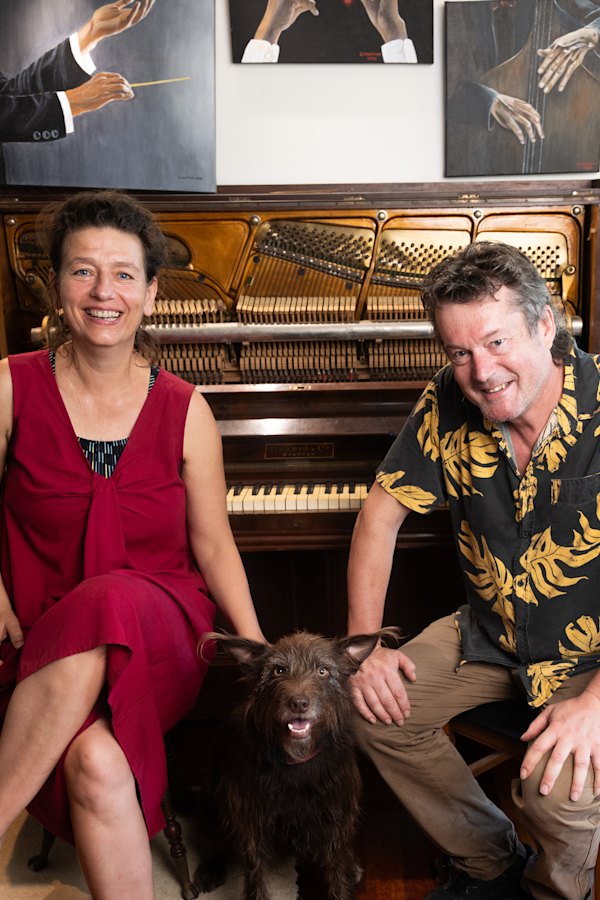
To create The Piano Tuner, which screens in the $20,000 Australian documentary competition, Laska spent eight years filming Tucker, her partner, at work. “I’m from Poland, so piano music is part of my heritage in relation to Frederic Chopin,” she said, “but I was just there to listen. [Tucker] was my first encounter with a living piano tuner and he’s a natural-born performer – a chatterbox – and he’s funny.”
The documentary follows Tucker, 61, as he travels around Tasmania and later the Northern Territory, moving to warmer climates annually. He is welcomed into homes and concert halls, sharing practical advice such as “the way to stop the mice getting in is to keep playing it every day.”
Tucker began taking piano lessons as a child and performed in a Hobart eisteddfod. He started tinkering with a difficult-to-fix Wurlitzer 200 electric piano in his late teens while playing in bands. “I used to take the front off this thing and fiddle around with it,” he said. “I’d get the part and fix it. Then it was a matter of ‘oh, I can pull the front off the real piano that I had to learn on.’ I didn’t do any tuning, but seeing all those wooden parts and seeing how they work, it just got me into it.”
Tucker isn’t sure how many piano tuners or pianos exist across the country. “Back in the day, every Australian house had a piano in the same way that today you have to have a laptop or a computer,” he said. “But over the years, there’s less and less.”
Tucker and piano removalist Tony Gamble have established what they call a piano orphanage in Hobart. “When people didn’t want their piano any more and couldn’t sell it, he’d just take it off their hands and put it in his shed,” Tucker said. “When someone wants a piano, I can go, ‘Oh, Tony’s got a nice one in his shed.’ We sift through them. If there are pianos that aren’t any good, I say ‘Tony, you’ve got to send it to the tip’ or we have a quiet little burn.”
While a reliable business, Tucker admitted there was a downside to his profession. “To make a living, you probably need to tune between 400 and 500 pianos a year,” he said. “But for banks, you tell them you’re a piano tuner and they think you’re an elephant trainer. They can’t see the figures they want to see.”