The World Cup’s Costly Dilemma
As the countdown to the World Cup continues, senior figures within FIFA under Gianni Infantino are reportedly feeling a sense of unease. This is not about the tournament itself, but rather the numbers that have been associated with it. Ticket sales have fallen far short of expectations, despite claims of 500 million requests. The reason for this discrepancy is quite clear—many loyal fans are struggling with the financial burden.
Supporters’ groups like the Football Supporters Association (FSA) and executives such as former Liverpool CEO Peter Moore estimate that following a team throughout the tournament could cost between $10,000 and $35,000. Even local supporters, including Donald Trump, find the prices too high, as evidenced by the low sales reported for the USA’s opening game in Los Angeles by The Athletic.
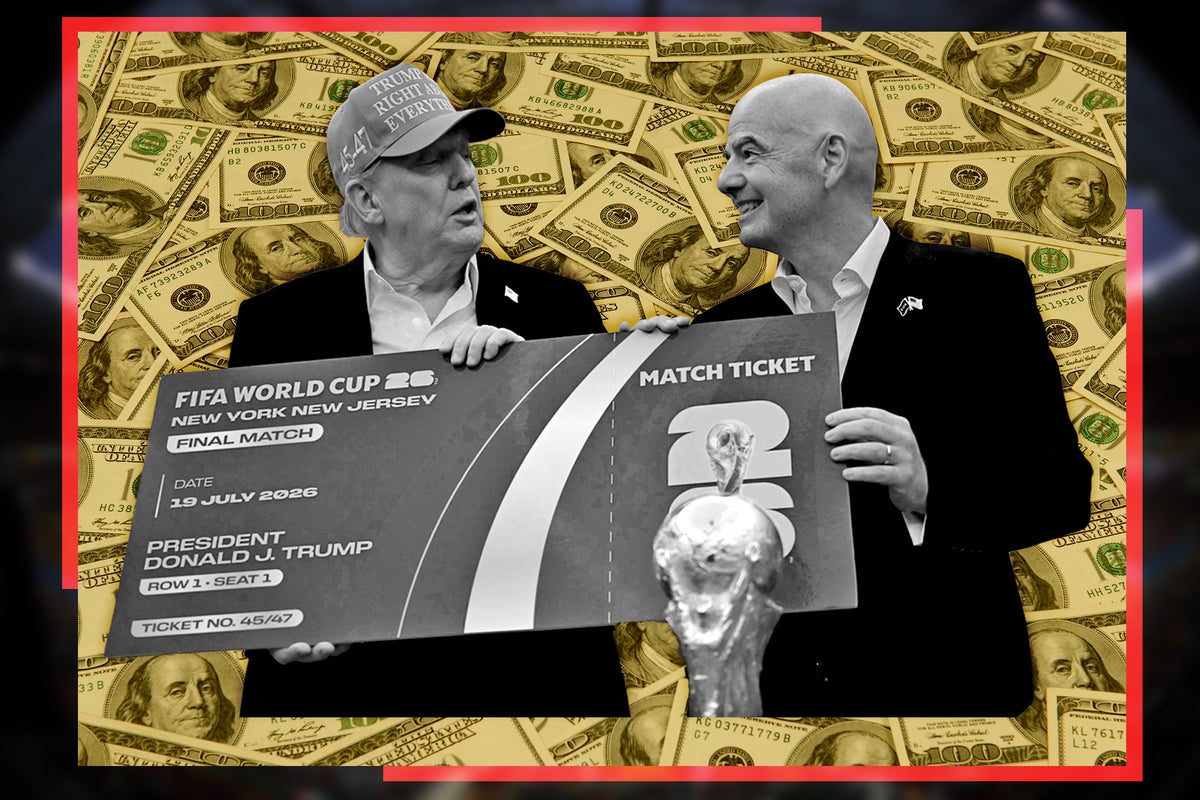
One insider remarked, “FIFA overplayed their hand,” and “got the pricing wrong.” Trump himself admitted he wouldn’t pay such amounts, expressing disappointment if his voters couldn’t attend. This must be particularly embarrassing for Infantino.
The US is often seen as a culture willing to pay high prices for major entertainment events, yet this situation highlights a stark contrast. The philosophical divide between football as a cultural good and its commercialization is evident here. FIFA, which is supposed to safeguard the game, has leaned heavily towards the latter.
Ticket pricing, with some final tickets on FIFA’s resale site going for over $1 million, exacerbates the issue. The high costs extend beyond just tickets, as even qualified teams are concerned about potential losses due to expenses. FIFA may not have anticipated this, yet they have proceeded with these pricing models regardless.
A Shift in Approach
This approach marks a significant departure from previous tournaments, with jaw-dropping numbers that raise eyebrows. For the eventual finalists, most fans will pay a minimum of £5,200 for tickets alone. The initial controversy around these figures may lead to absurd situations where family members sit beside each other but pay thousands more due to one being fortunate enough to qualify for the limited number of $60 Category 4 tickets.
“Where will the final seated categories be?” asks Thomas Concannon of the FSA, amid criticism of how some ticket positions have changed. Football Supporters Europe quip that it’s “dynamic categorisation.”
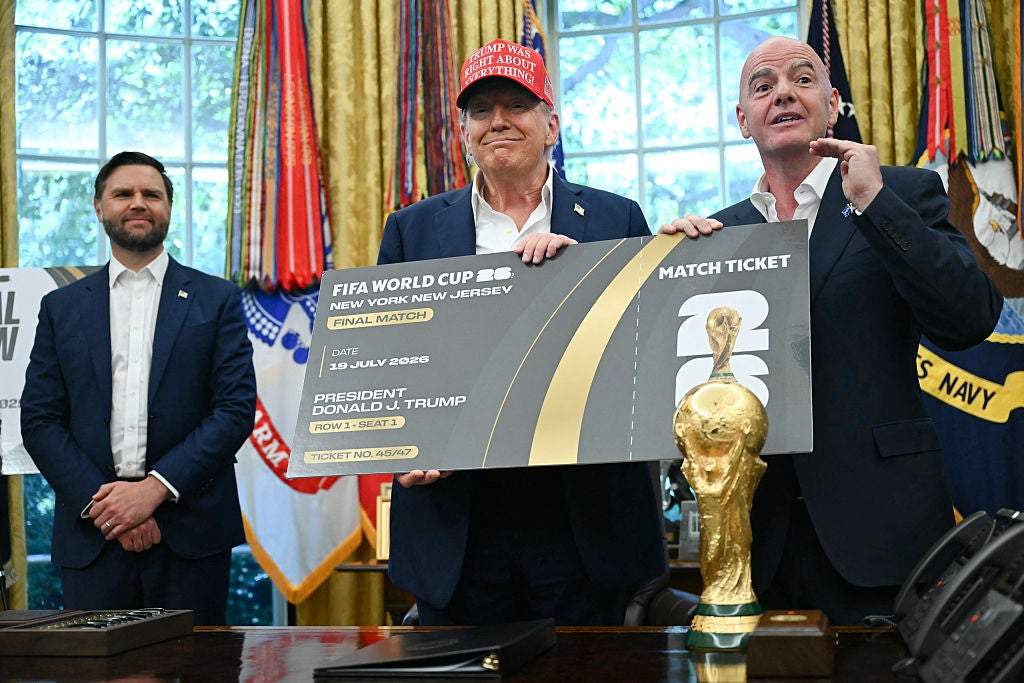
Some cheaper tickets for England-Croatia have still appeared on FIFA’s official resale site for $2,300. The issue of the “secondary market” and how “touting” is legal in the US has created unique challenges for this World Cup. However, some responses remain baffling.
In addition to cashing in on potential mark-ups, FIFA takes a 15 per cent “resale facilitation fee” and another 15 per cent from the seller. The governing body’s persistent line is that all revenue is redistributed around the game, primarily through the FIFA Forward programme.
Even if that were true, one source argues, “Let’s see some transparency” and show where the money actually goes. FIFA, with reserves of over $2.5 billion, was going to make huge money anyway. Tickets were calculated at less than 50 per cent of total revenue, which was estimated to be a record $11 billion—$4 billion more than Qatar—from the original prices promised in the bid book back in 2018.
“You could easily chop $5 billion off and everyone, including FIFA, benefits,” says Moore, now the founding owner of the US club Santa Barbara Sky in California.
A New Era of Commercialization
FIFA’s redistribution model has also served as a long-criticised vote-returning mechanism. Infantino spreads the money around, and grateful associations elect him back in. More money was the core part of his manifesto back in 2016. The last few weeks have already brought calls for the president’s re-election from Conmebol and CAF, despite questions over term limits.
A similar lack of transparency surrounds how ticket pricing was decided upon. Some of the most senior FIFA figures have no clue. They maintain they were simply presented with plans from the president’s office, which is how every major decision now works.
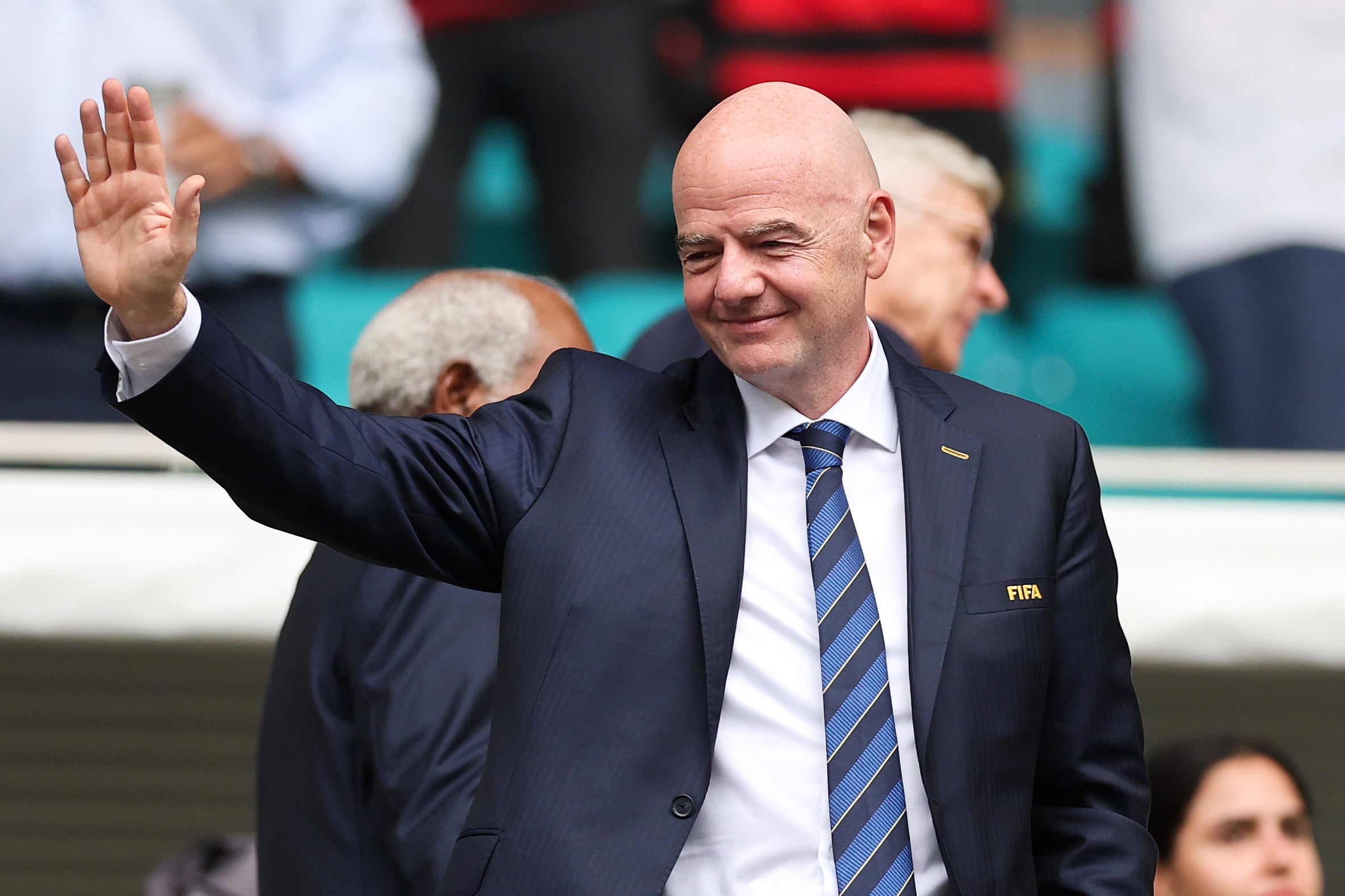
Sources with knowledge of the dynamics around Infantino say he is primarily surrounded by US-based advisers working “to fully optimise revenue using all tools available.” There appears to be minimal interrogation of the actual merit of this.
That alone marks another significant departure for FIFA, especially from the last World Cup in the US. Before 1994, tournament architect Alan Rothenberg had multiple ideas about tickets, which he details in The Big Bounce.
Rothenberg wanted “a really high-priced ticket” due to the associated prestige, as well as having every seat at the final priced at $1,000. In some echoes to now, too, he argued that “the street value would be at least that” so touts shouldn’t get the benefit. “FIFA said no.” Why? “Overly concerned about average fans’ reaction.”
The difference to now is galling. And this was Joao Havelange’s FIFA, notorious for creating a model of governance corruption that the modern FIFA now crow as having left behind.
“The simple question,” Moore ponders, “is who this World Cup is supposed to be for.” “These are once-in-lifetime chances for fans,” Concannon adds. FIFA barely appear to have even acknowledged that, other than to consider what price can be put on it.
A Cultural Divide
The US’s “secondary market” might still have put an even greater price on it, of course, but it’s like FIFA didn’t even want to consider obvious workarounds. They could have apportioned more to qualified associations to distribute according to loyalty schemes, in the way fan culture generally works.
Rather than appreciating a ticket as something with that cultural value, though, FIFA has instead repositioned them as an appreciable asset.
“It’s like marking up tickets for big concerts to sell,” Moore says. “But that’s not soccer.”
One justification has been that the dynamic pricing model used for some categories will allow supporters cheap tickets closer to the game, but that doesn’t help a fan who decided not to travel from Bogota or Berlin.
A further curiosity has been the contribution of another strand of “fanatic”. Any report on prices is met with bullish defences of “the market” on social media, with even USA 94’s Alexi Lalas contributing.
Academics put this down to how hardwired a capitalist/consumerist ideology is—what Michael Sandel describes as the “marketisation” and “skyboxification” of everything in American life.
“Even professional sport in America first developed as an entertainment business product,” explains Sean Hamil, an academic on sports governance at Birkbeck.
Jan Zglinski of the London School of Economics adds how “sport is primarily there to generate money.”
“In Europe, sport is thought of as a public good, intended to foster social cohesion.”
In other words, the European model of sport as recognised in EU law.
FIFA essentially grew out of this thinking, which makes this shift all the more questionable.
For all Infantino’s talk of having to adapt to US culture, FIFA didn’t do that for any recent World Cup. Sources say that Qatar, despite all other justified criticisms, actually resisted FIFA’s attempts to apply similar pricing in 2022.
They obviously didn’t do it for South Africa, or else more locals might have been able to actually attend.
But it is also a matter of law.
FIFA is legally registered as a not-for-profit charity in Switzerland.
“None of its statutes say to maximise profit for the benefit of shareholders,” Hamil says. “They’re to promote football. The main problem is that it is not behaving like a not-for-profit.”
It has also fed into a host of other problems for supporters.
The ticket prices are all the more egregious because of FIFA’s apparent lack of concern about how costly a US World Cup is. Even service charges are frequently mandatory at 30 per cent, and that is one of the minor expenses. Hotels have, of course, been hiked up, although that amid the irony that the huge overall cost has dampened demand, so prices have already dropped by 18 per cent. How couldn’t they when just getting there is worse, especially with the refusal to properly cluster games?
England, as one example, have their group games as far apart as Dallas and Boston. Many internal flights are almost as expensive as transatlantic journeys. And for one of the rare journeys where a train is possible, like New York-Philadelphia day trips, the cost is over $300.
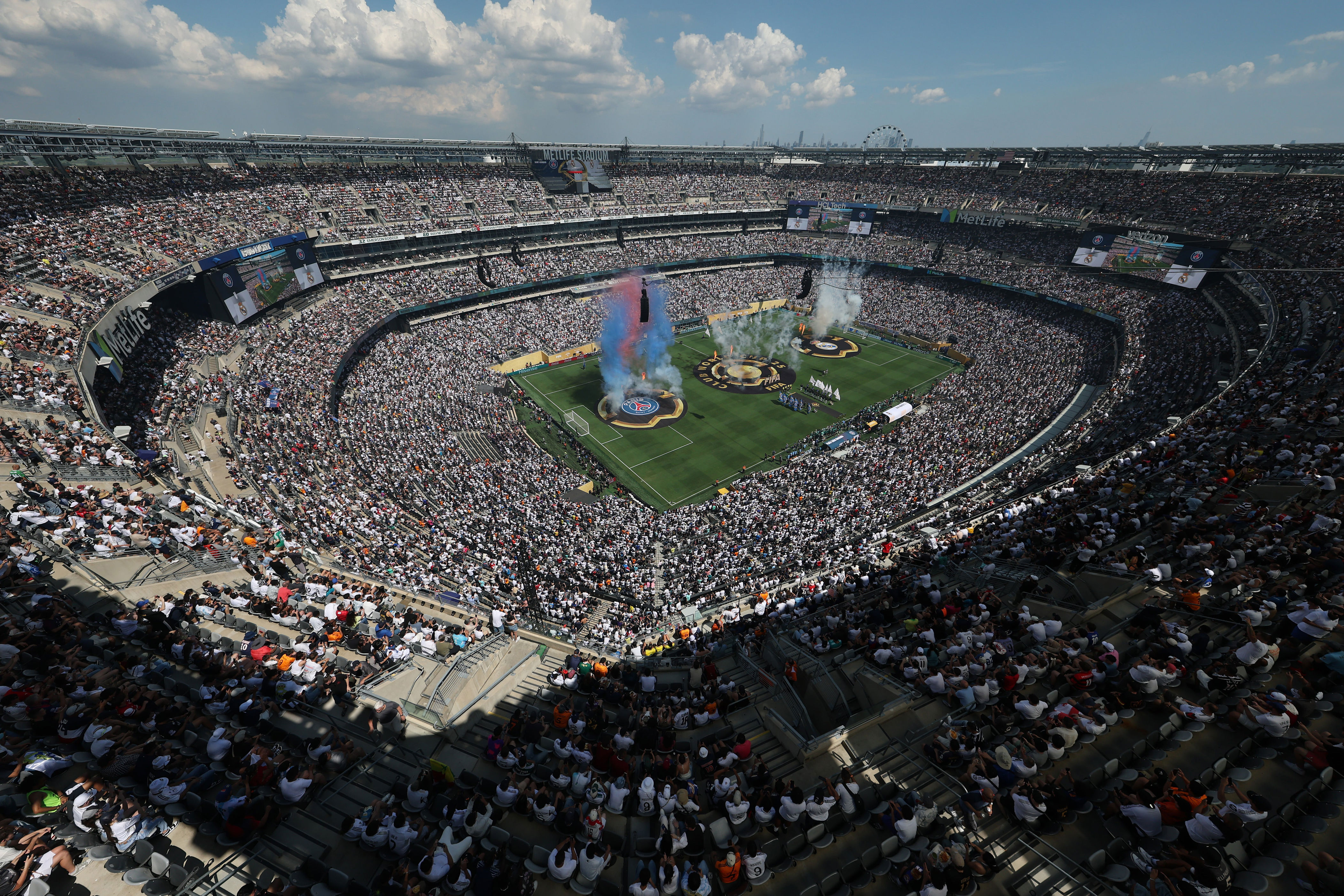
There’s then the headline issue of local transport. Getting to Foxboro’s Gillette Stadium from Boston will cost $80 on a train, or $95 on a bus, with a round-trip ticket from New York Pennsylvania Station to Metlife up from $13 to $105 – and the latter only after sponsorship money brought the price back down from $150.
It was the latter mark-up that Fifa’s chief operating officer for this World Cup, Heimo Schirgi, said would “have a chilling effect.”
That must be one of the most brazen comments in sports administration. You only have to look at any revenue stream FIFA has control over, for one.
More pertinently, such prices are a direct consequence of an astonishing deal they have struck with the host cities.
FIFA takes almost all the revenue, right up to the parking money. The cities, meanwhile, pick up almost all of the costs, from security to additional infrastructure. This is the price for the privilege of hosting: a collective hole of at least $250m.
The Independent has been told FIFA did realise that US cities didn’t have access to the same funds as previous hosts, but didn’t actually adapt. They instead devised the sop of the “city supporter programme” – individual city sponsorship deals.
A problem, as reported by The Independent, is that none of those deals could cut across FIFA’s own partnerships. Huge cities were consequently left looking to local businesses.
FIFA’s other line is that the World Cup will bring tourism, but most of their decisions have put people off. Involved sources say all current indications are that travel from abroad is going to be “weak”.
The train hike-ups, meanwhile, are described by insiders as “100 per cent a consequence of this deal”.
FIFA have responded stridently to any suggestion they should pick up the cost, saying they are “not aware of any other major event previously held at NYNJ Stadium… where organisers were required to pay for fan transportation”.
But tournaments have routinely ensured ticket holders do not have to pay, mostly through deals with governments – including for FIFA’s own 2006 World Cup in Germany.
The agreements for this World Cup were changed so a previous requirement for free transport instead read “at cost”. The fans now pay a greater cost.
Despite that, FIFA have shown no inclination to follow what UEFA did at Euro 2024 in Germany, and part-subsidise travel.
Veteran officials feel this also stems from another first for a World Cup. FIFA did away with Local Organising Committees to take complete control.
“Nobody is there to tell them the local nuances,” one source says.
Much has similarly been made of how US Soccer have been excluded, given they would have offered views more attuned to long-term legacy.
As it is, FIFA are dropping in, occupying every space right up to the car parks and pushing everything out along with the prices, to then make off with the revenue.
While FIFA have evidently changed, so has Infantino. Old UEFA colleagues say he used to be “classic European model of sport guy”.
The Independent has written extensively about how the very position of FIFA president changes its incumbents, but Infantino’s own interpretation has taken that further. His will for FIFA to be the game’s major player, rather than a regulator, has transformed outlooks.
It’s why his Club World Cup might be hugely influential. Since 2018, and initial negotiations to expand the competition with Softbank, Infantino has been in regular dialogue with the billionaire ownership class that runs clubs.
They have a lot of their own ideas about ticket prices – and many actively want to “skybox” football.
This is who Infantino is listening to. It makes his own words at the recent FIFA Congress all the more conspicuous, as he enthused about how the US’s commercialisation of sport is “reaching different levels”.
“We can go to 500 billion global football GDP, half a trillion.”
Many sources add that the way he has used football to launch himself into a geopolitical class, flying on Qatari private jets, has made him “completely detached”.
Few CEOs of non-profits are on his salary, after all.
As is always the case with such tensions, it may involve the irony of harming the “product”.
Aside from the indications that fewer fans will travel, Concannon points to how the cheapest Category 4 tickets are not pitch-side – another first.
“It means the hardcore fans are up in higher tiers, so you’re not going to have the same spectacle.”
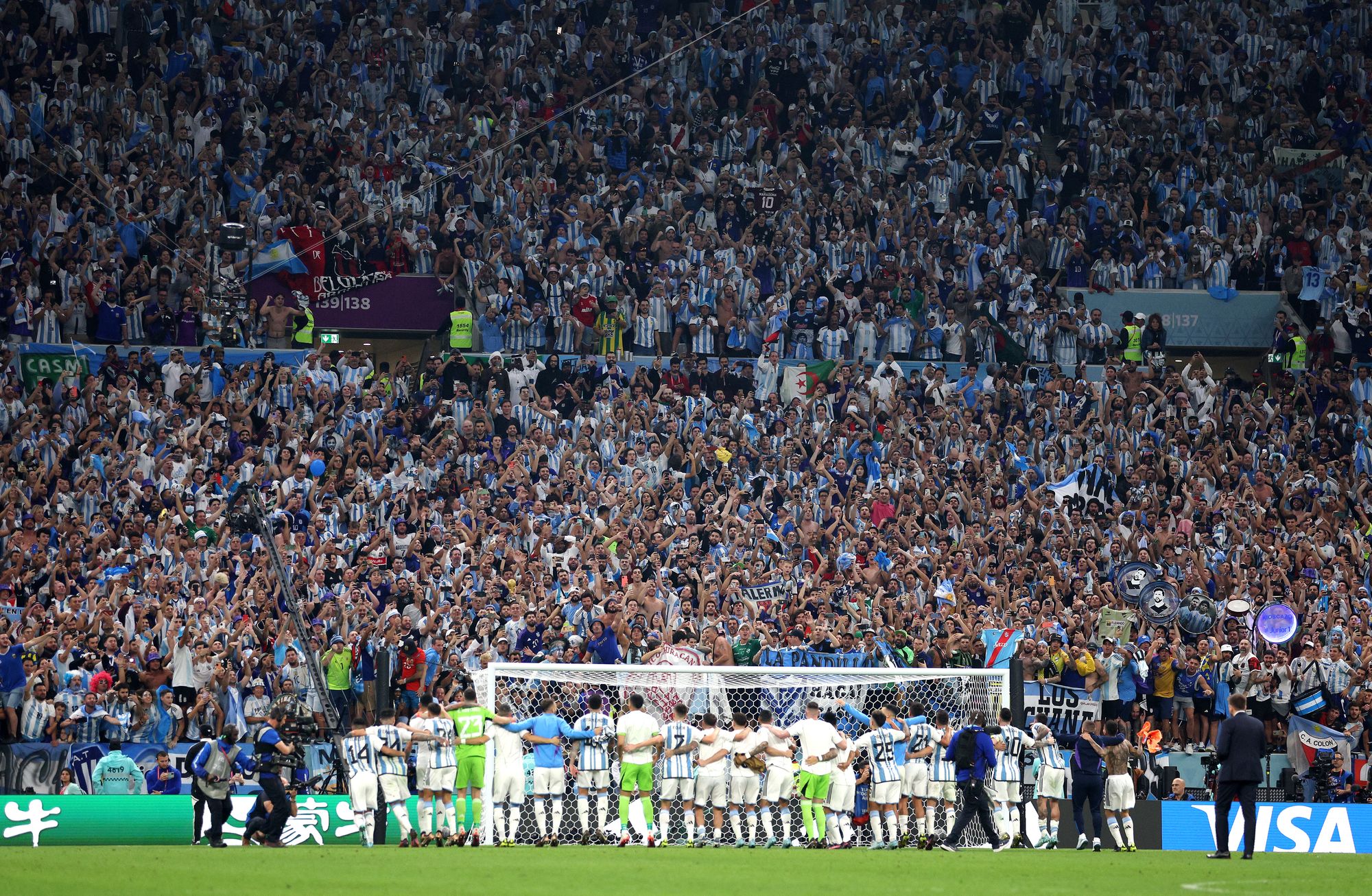
If they go. Argentina have been the great fan story of the last three World Cups, and there are already multiple stories of how they won’t travel in anything like the same numbers. The stadiums won’t have as many people who deeply care about the teams.
As one executive puts it, “the true World Cup atmosphere will die because people literally cannot afford it”.
Moore laments the likely contrast to the festival of Germany 2006. “It’s a completely different business model and a completely different set of objectives.”
And they may yet have a profound impact on football.
FIFA, notionally the ultimate safeguard, have instead led the way on commercial pursuits that many of the most corrosive influences have been striving to introduce for years. Infantino has opened the door.
Moore describes it as “the early stage of something quite profound”.
“It’s the World Cup shifting from mass-access global football toward a high-value limited-access mega event.”
Sporta’s Andrew Smith, who works on the financialisation of sport, believes FIFA have not properly considered long-term effects.
“We’ve seen this in other sports. If you price out those actually passionate about it, they lose interest in that pinnacle. There’s a fracturing. The people who create the value in the first place are turned off, and the value is gradually lessened.
“The World Cup becomes two-tier. That’s very dangerous for football. It doesn’t have the guardrails for this.”
FIFA, of course, are supposed to be that guardrail.
Instead, everything seems to be going one way.
Insider access, exclusive analysis, and behind-the-scenes gossip – sign up for Miguel Delaney’s Inside Football newsletter now