The Spectacle of the ‘By-the-Wind Sailors’
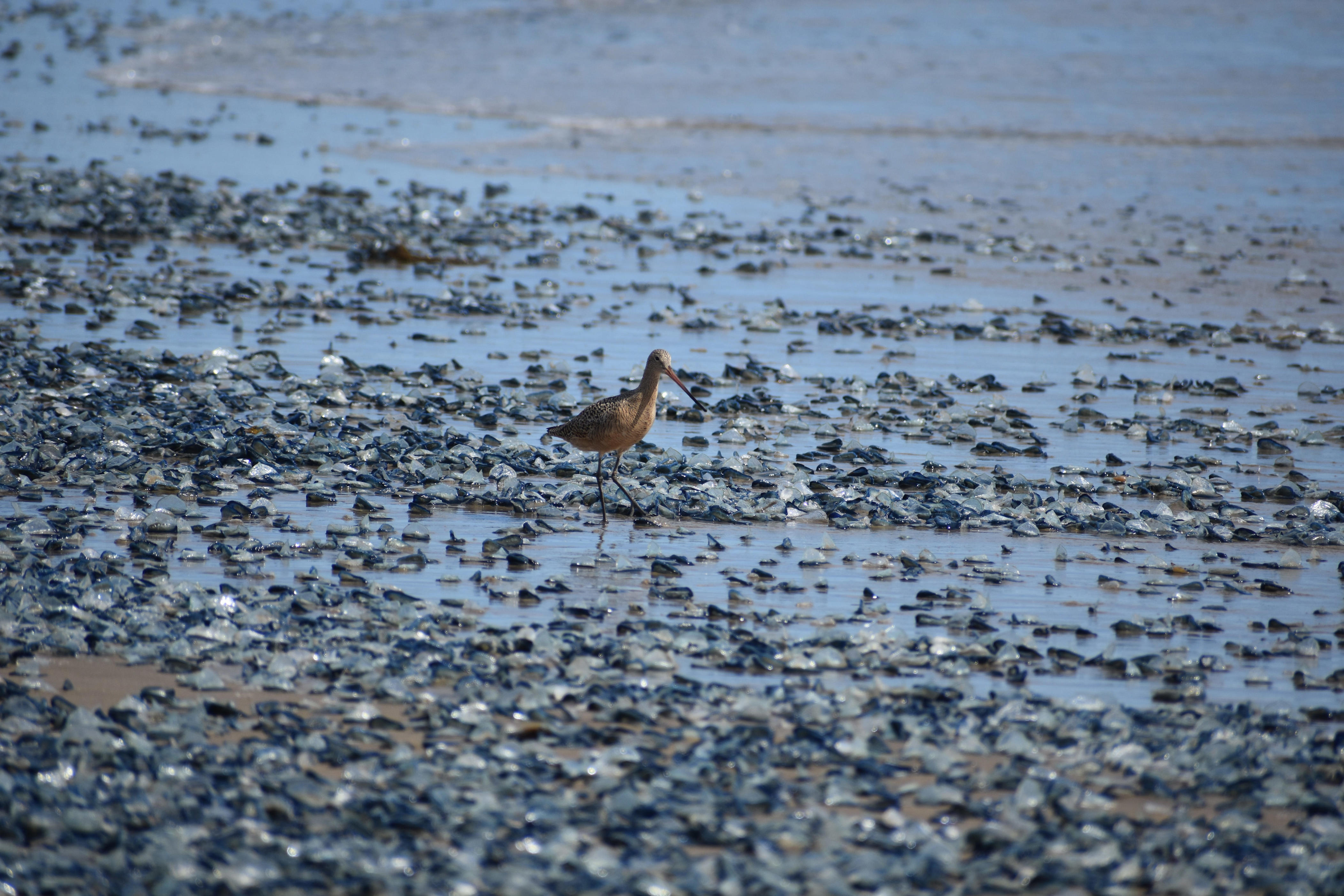
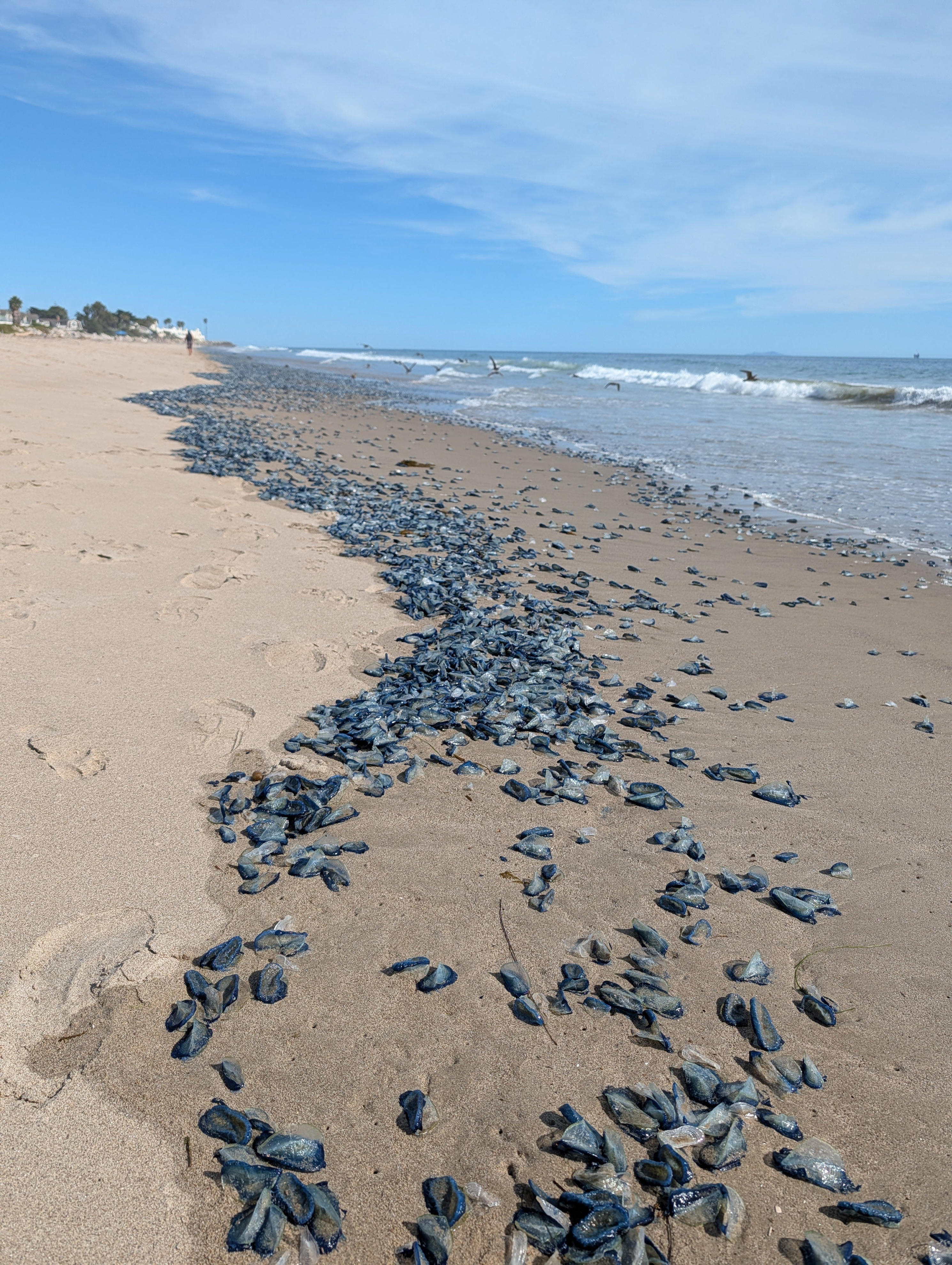
CARPINTERIA, CA – A stunning natural phenomenon is unfolding along the coasts of California, Oregon, and Washington. Hundreds of thousands of shimmering, indigo blue sea creatures are washing up on the shores, captivating both beachgoers and scientists with their beauty and unique biology.
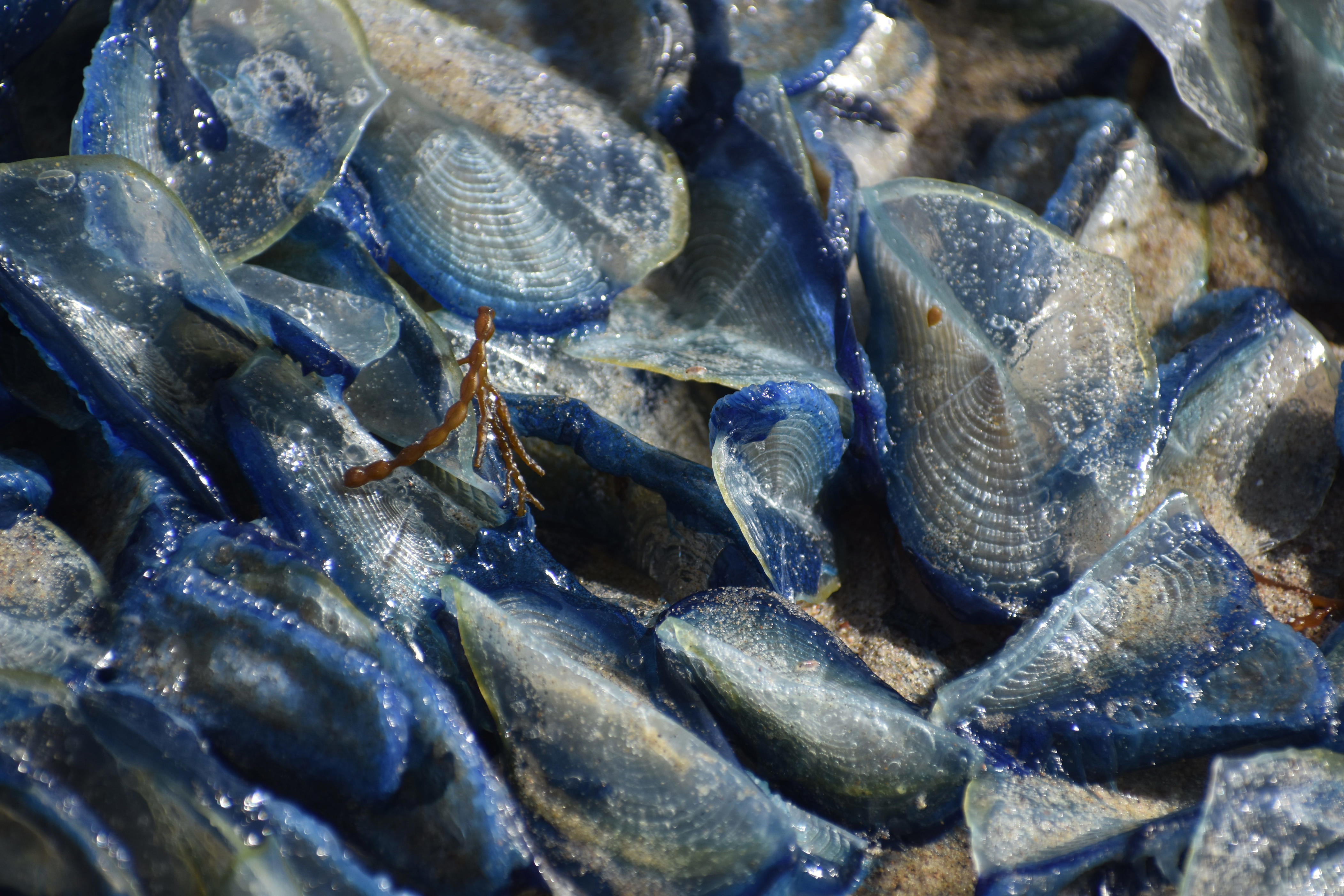
“The ocean is filled with jewels,” but this jellyfish-like creature stands out, said Douglas McCauley, director of the Benioff Ocean Initiative at the University of California, Santa Barbara. These creatures, known as velella velella or “by-the-wind sailors,” are drawing attention not just for their vivid, bluish purple color, but also for their sparkling “sails” that shine like diamonds on the ocean’s surface.
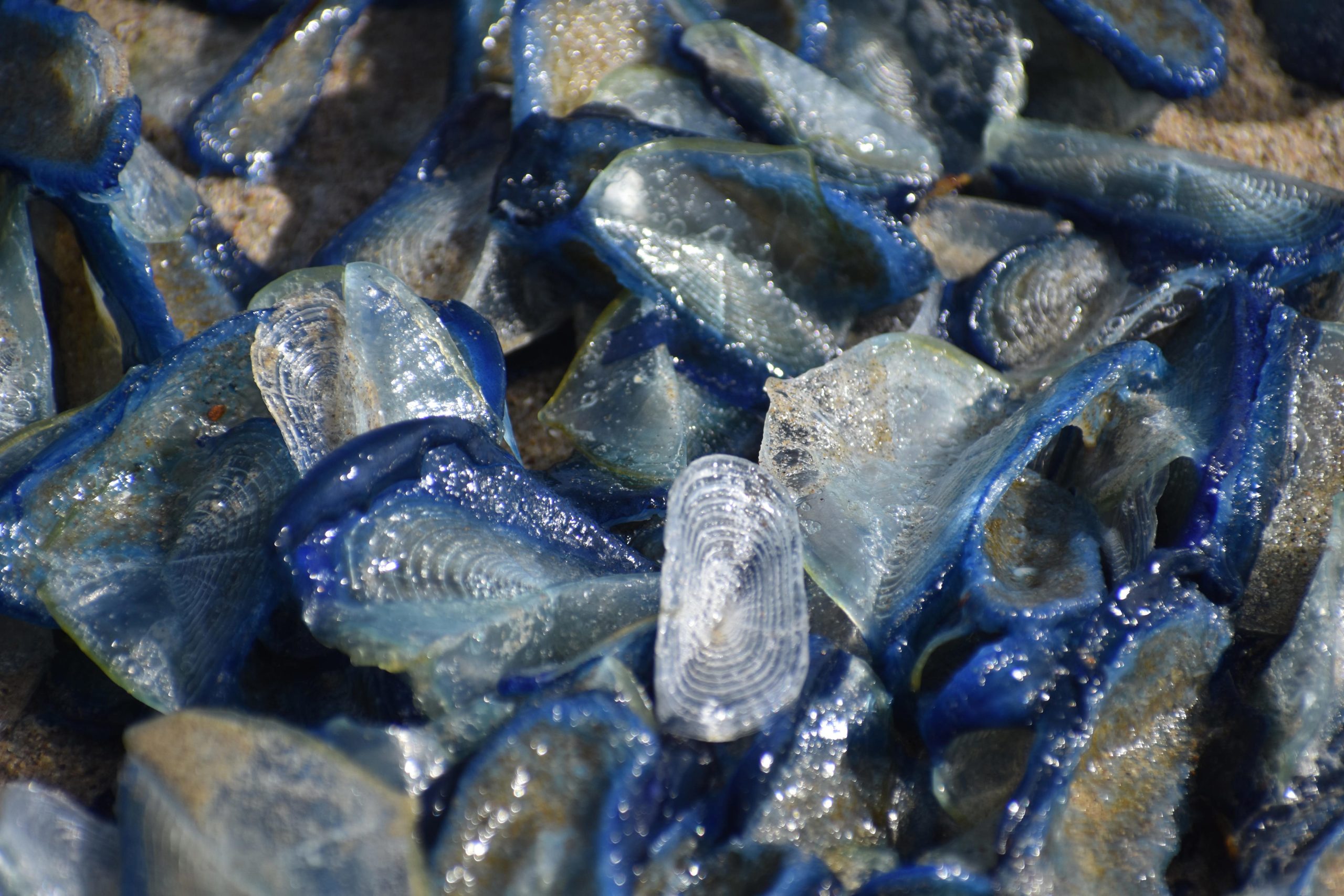
When McCauley walked onto the beach for a great white shark observation project in late April, he was surprised to see the velella stretched along the sand the entire length of the beach. Flotillas of them often come ashore along the Pacific Coast in the spring when offshore winds shift, but recent aggregations along beaches and just offshore have been especially dense along the California coast.
“In a lifetime of living and doing marine science in Southern California I’ve never seen that many pile up on a beach,” McCauley said.
This aggregation offers an exciting opportunity for citizen scientists to help researchers learn more about the creatures, two scientists who study the velella told USA TODAY. They are urging beachgoers and sailors to become part of a growing body of observers reporting exactly when and where they see them.
Understanding the ‘By-the-Wind Sailors’
Although the by-the-wind sailors have been documented for decades, scientists don’t yet fully understand them, said Steven Haddock, a senior scientist at the Monterey Bay Aquarium Research Institute and an adjunct professor at the University of California, Santa Cruz. Part of the fascination is “just kind of the sheer spectacle,” he said. “People go to the beach and they see these huge numbers washed up.”
Scientists would like to add predictability to when the velella armadas appear, he said. One study along the coast of Washington state suggested larger concentrations of velella may be found after particularly warm winters. While the study’s authors and Haddock said more research is needed, the winter of 2025-2026 was a record-breaker in California, and intense marine heat waves were observed over the ocean.
The velella can be found around the globe, but are seen most often in large accumulations off the U.S. Pacific Coast and in the Mediterranean, said Rebecca Helm, assistant professor of environmental science at Georgetown University’s Earth Commons Institute.
Studies have revealed the velella eat zooplankton, fish eggs and krill, while ocean sunfish called mola mola, one of the ocean’s largest bony fish, have been seen feasting on large flotillas of velella at sea.
The Mystery of Survival and Adaptation
Scientists still have much left to learn about the billions of bubble-like shapes, Helm said. They drift and float for thousands of miles on the ocean’s surface, traveling via their triangular-shaped “sail” features that allow ocean winds to push them along, Helm said. “Who else is hanging out with them? Who’s eating them? Where are they eating?”
One mystery is how they “survive in the wind and waves and get turned around and seem to manage to pop up right every time,” she said. “It’s a very unusual adaptation for an ocean animal to harness the wind right?” She’s also looking at the coating that helps repel water and keep the velella upright in the ocean. Try flipping a boat or kayak over and then get it going in the right direction again, she said. “These guys do that no problem. They don’t have paddles, they don’t have hands, they don’t have any agency, and yet they pop up right every time.”
Scientific Exploration and Innovation
Others aspects of the research are more complex. Scientists hope the velella can help oceanographers improve their understanding of spatial scales, from satellite images with the resolution of a football field, to aerial drone photos and microscopic images measured in millimeters, Haddock said. A group of scientists in China have studied mimicking the velella as a prototype for unmanned surface vehicles while a group at Johns Hopkins University have worked with the military on modeling them to create low-cost ocean sensors.
What Are ‘By-the-Wind Sailors’?
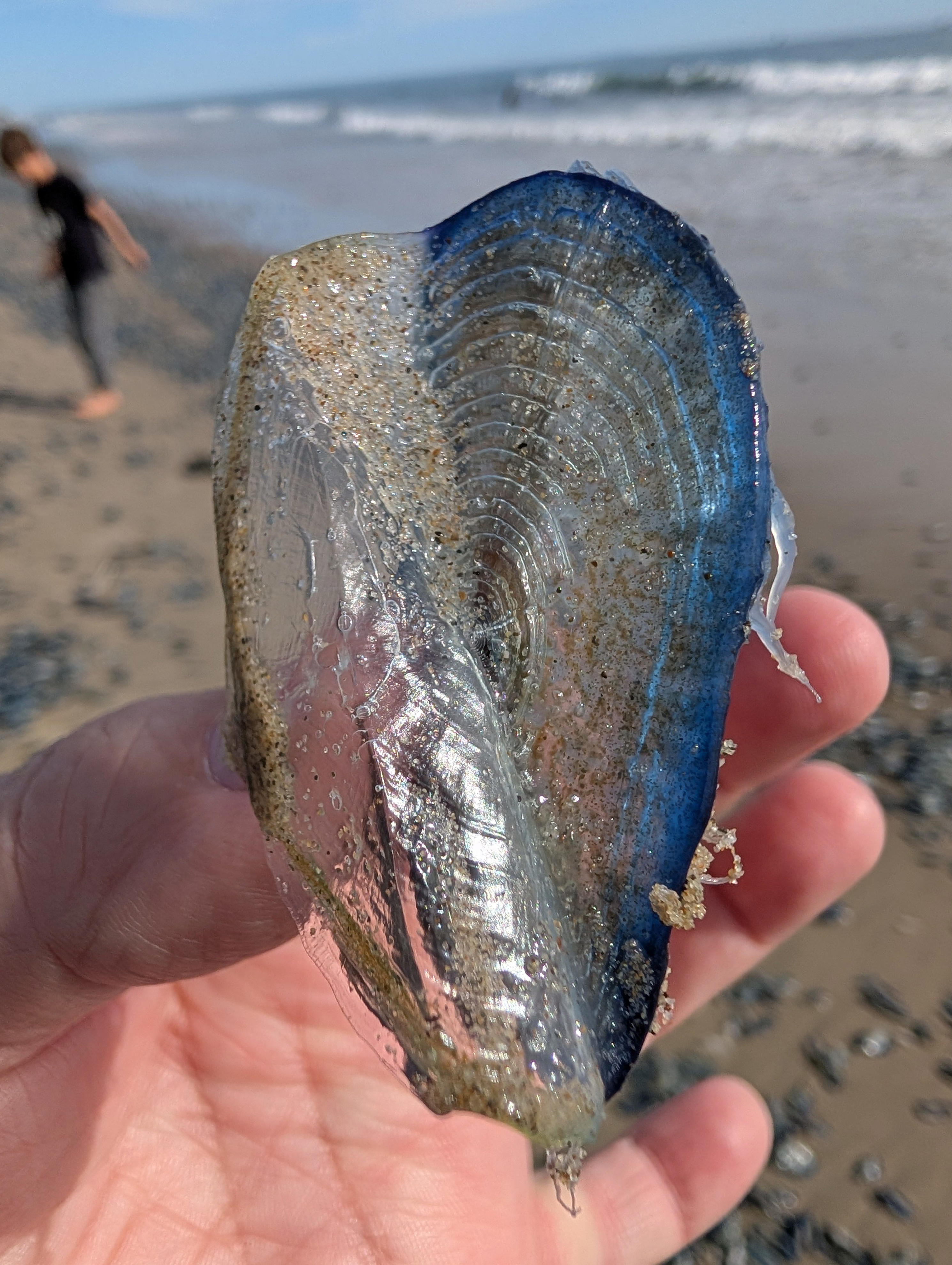
Trying to describe the velella’s biology can be a bit challenging, the researchers said. They are closely related to jellyfish, but aren’t true jellyfish. They are hydrozoans, part of the same phylum as jellyfish – cnidarians.
Some scientists have described them as floating colonies, but Haddock said it’s easier for people to understand each raft – which generally fits within the palm of a human hand – as a single organism. Each is its own individual community, a collection of polyps with tentacles that stay attached and integrated, with the triangular shaped sail-like structures that help them stay afloat.
“If you flip them upside down, they’ve got this central mouth that looks like a volcano, with a field of squirming little noodles around this volcano,” Helm said. “Imagine a volcano pushing up through a forest and trees. But every one of those little noodle trees is a mouth in and of itself. There’s one big unique central mouth, but surrounded by hundreds of other mouths. So it’s just like all eating.”
Life Cycle and Ecological Role
The velella at the surface are part of a complex life cycle, Helm said. Each one can produce thousands of tiny, free-swimming, sesame-seed sized offspring “by growing them off their body like flowers grow on a tree.” When one of the velella is plucked from the beach and dropped into a bucket of sea water, you can see the little tiny, yellow golden dots jetting around, Haddock said. They sink to the seafloor, producing the single cells that keep the population going. Eventually they return to the surface as new floating colonies. The “rings” that can be seen in photos hold bits of air that keep them afloat.
Adding to the complexity, individual species of algae live inside the velella, and get passed along to each of the buds that swim off, Haddock said. “This photosynthetic algae lives inside of its tissues, so they’re kind of like solar panels up at the surface.”
How You Can Help Track the ‘By-the-Wind Sailors’
While miles-long swaths of velella may float in the open ocean, it’s when the winds blow them onto shore that people really notice them, Haddock said. The scientists hope to engage people on vessels at sea to begin reporting velella sightings and taking photos with GPS activated so scientists could track exactly where the photos were taken. Bystanders and sailors who see the velella or other marine life can report them through the “iNaturalist” app.