A Unique Gift for a Centenarian
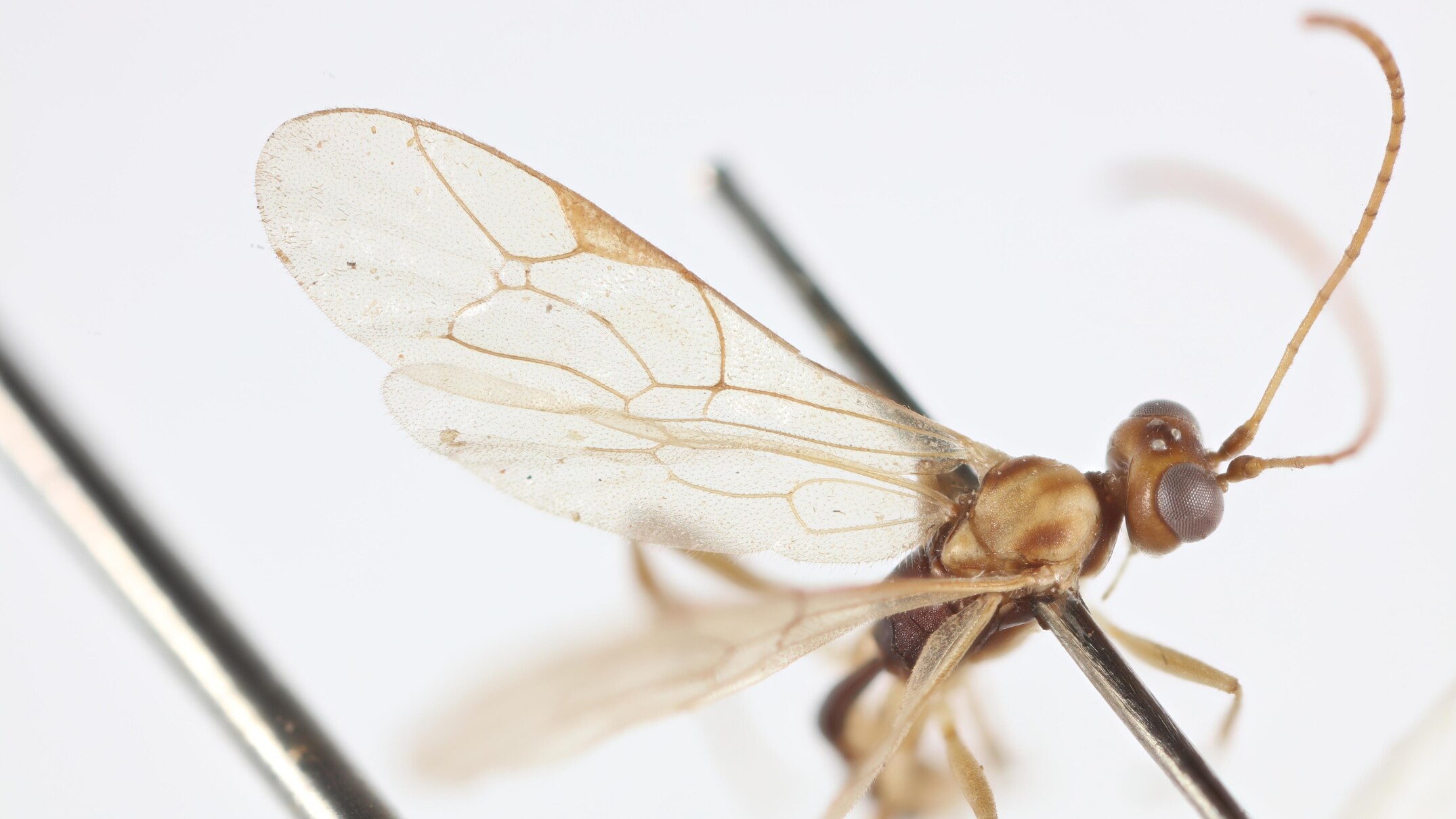
When it comes to celebrating a 100th birthday, the gift is often something special. For Sir David Attenborough, the renowned broadcaster and naturalist, the present was a parasitic wasp from Chile. This unusual gift came in the form of a newly identified species named after him, highlighting the deep connection between his work and the scientific community.
The new species, Attenboroughnculus tau, was discovered by taxonomists at London’s Natural History Museum. The name “tau” refers to the Greek letter t, which represents two t-shaped markings on the wasp’s abdomen. This tiny creature, measuring just 3.5 millimetres in length, was described in a study published in the Journal of Natural History.
Sir David has more than 50 species named in his honor, including five other wasps. His influence extends far beyond the screen, inspiring generations of scientists and nature enthusiasts alike.
The Inspiration Behind the Name
Gavin Broad, the senior study author and principal curator for wasps, bees, and ants at the museum, shared how Sir David’s documentaries shaped his own career. “I got this idea I wanted to be a taxonomist from Attenborough from Life on Earth,” he said. “They’re hugely influential for me, especially when I was really young, living in the city. It was Attenborough who opened my eyes to the bigger world … so it’s his fault I am where I am now.”
Sir David was informed about the naming early on and sent letters of thanks to the study’s authors. Dr. Broad recalled, “It was very touching to receive a note, in handwriting much neater than mine at half his age.”
Understanding Parasitic Wasps
Parasitic wasps, also known as ichneumon or Darwin’s wasps, are a family of insects that typically lay their eggs inside or on a host. These hosts then become a food source for the hatching larvae. This life cycle has been explored in previous documentaries, including Sir David’s Trials of Life series.
Dr. Broad noted that while the exact host of Attenboroughnculus tau remains unknown, some of its relatives are known to lay eggs in spider egg sacks. “It’s possible Attenborough’s wasp is doing the same,” he said. “We’ll need to head to Chile at some point to find out.”
A Rare Discovery
The wasp was collected in 1983 in the Valdivia province of Chile, a region Sir David has visited multiple times for his documentaries. Despite its significance, little is known about this species. Adelaide University entomologist Jess Marsh, who was not involved in the study, highlighted the rarity of such discoveries. “There are only four species described in this group of wasps, but it is very likely there are many, many more that are new to science,” she said.
The species is currently known only from a single specimen held in a museum, emphasizing how much remains undiscovered about invertebrates.
The Challenge of Identifying New Species
Museum collections around the world hold thousands of unidentified specimens. The new species of Attenborough wasp is unique enough to be the only member of its genus, making it a rare find. Its discovery was partly due to the efforts of a volunteer, Augustijn De Ketelaere, who noticed the wasp’s distinct features during a collaborative project with Dr. Broad.
Dr. Broad emphasized the importance of volunteers in addressing these backlogs. “We’ve got somewhere in the region of 27 million insects pinned up mostly on slides,” he said. “For my part of the collection that I look at, about half are unidentified and there are thousands of new species.”
Encouraging New Generations
Despite the challenges, Dr. Broad remains hopeful that a new generation of amateur entomologists can contribute to the field. Dr. Marsh echoed this sentiment, noting the accessibility of invertebrates. “Most invertebrates in Australia are new to science, and you really don’t need to go to far-flung, exotic places to find these new species — your nearest park, backyard, or green space is home to many.”
She added, “As a taxonomist, the first two species of spiders I described were in a tree in my front yard in South Australia. Go out, take photos, upload them to iNaturalist, investigate and enjoy.”
Continuing the Legacy
At the age of 100, Sir David Attenborough continues to inspire. Dr. Marsh shared how his work influenced her career. “David Attenborough was one of the main reasons I wanted to get into wildlife conservation growing up. I credit Life in the Undergrowth for cementing my love of invertebrates — it had a huge influence on my career direction. His films are still just as relevant now.”
To celebrate Sir David Attenborough’s 100th birthday, viewers can watch a selection of thought-provoking and landmark documentaries on ABC iview.