The Controversial Plan to Paint the Eisenhower Executive Office Building
President Donald Trump’s proposal to paint the historic Eisenhower Executive Office Building (EEOB) white has sparked significant debate and is set for a crucial hearing this Thursday before a key federal agency. The plan, which would dramatically alter the 19th-century landmark adjacent to the White House, is part of a broader initiative by the Republican president to enhance Washington’s aesthetic appeal.
Trump has been implementing numerous changes across the White House complex, including the demolition of the East Wing for a 1,000-person ballroom and renovations to Lafayette Park. His desire to paint the EEOB stems from his belief that its current gray granite exterior is a “really bad color,” a sentiment he expressed last year.
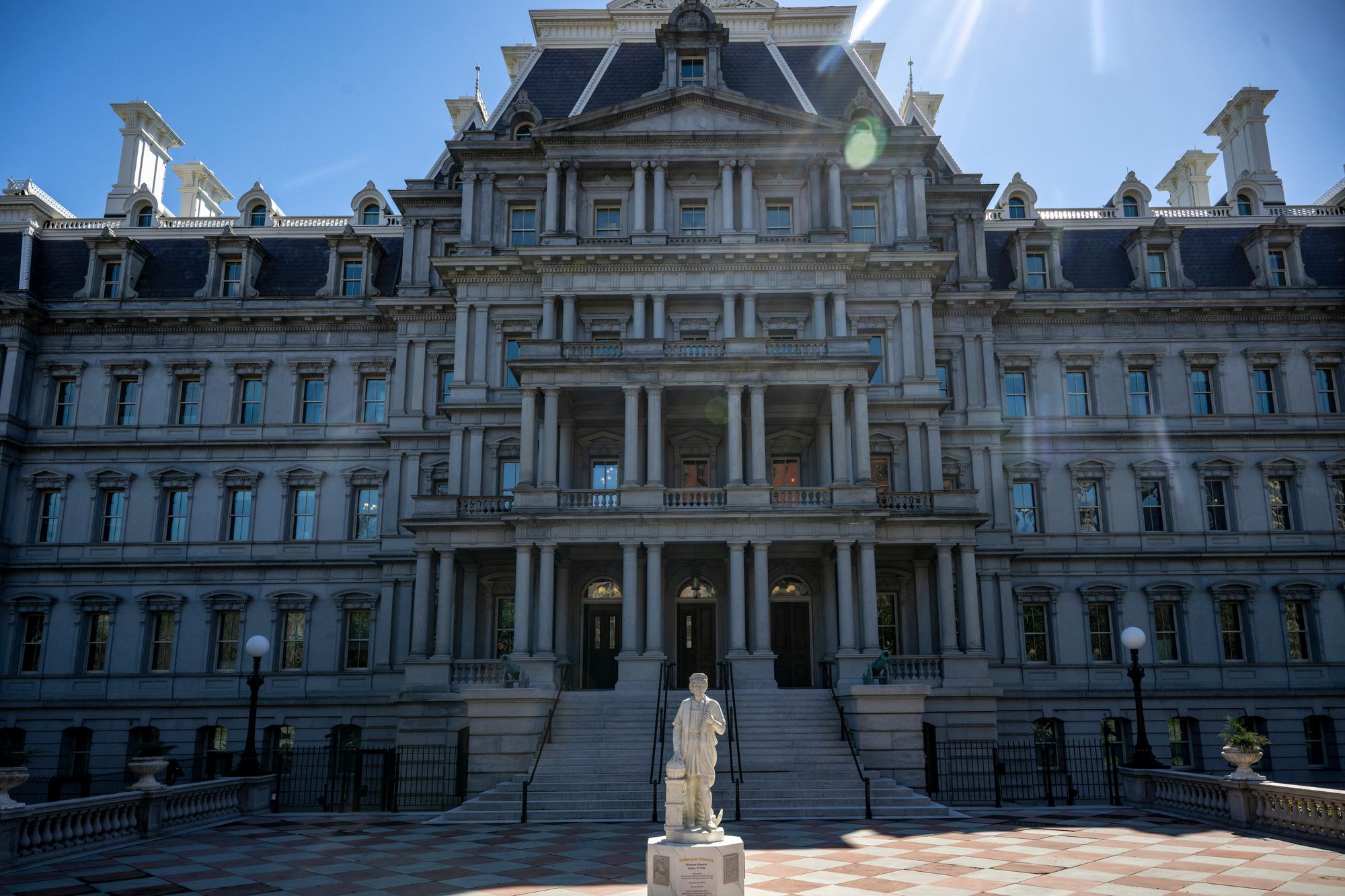
Josh Fisher, a White House official, informed the U.S. Commission of Fine Arts in April that the administration favors painting the entire building due to its stained and “great disrepair” condition. An alternative proposal suggested painting most of the building white while retaining the granite base. Fisher noted that experts could not guarantee an exterior cleaning would sufficiently improve the building’s state.
Preservationists Raise Concerns
However, the proposal has sparked alarm among preservationists, architects, and historians. They argue that granite is not designed to be painted, warning that paint could trap moisture, accelerate stone deterioration, and fail to resolve the underlying issues the administration aims to address.
Public sentiment also appears to be overwhelmingly against the plan. Hundreds of pages of public comments submitted to the National Capital Planning Commission (NCPC) highlight concerns about potential harm to the granite and the significant cost to taxpayers. Many suggested alternative improvements like enhanced landscaping or lighting.
The Society of Architectural Historians sent a letter to Will Scharf, a top White House aide and chair of the planning commission, asserting that the project would “adversely and permanently alter this important part of American heritage and should be rejected.”
Recommendations and Legal Challenges
The NCPC staff report recommends supporting a cleaning of the building but indicates that more information is needed to properly evaluate the painting proposals. Staff also advised requesting details on the specific type of paint to be used, examples of its successful application on granite facades elsewhere, and a summary of other methods to achieve the administration’s goals, such as cleaning or lighting.
The EEOB, a National Historic Landmark listed on the National Register of Historic Places, is a prime example of French Second Empire architecture, featuring granite, slate, and cast iron. It originally housed the State, War, and Navy departments and now contains ceremonial offices for the vice president, offices for the second lady, and the National Security Council.
A lawsuit challenging the proposed paint job is currently proceeding through federal court. The fine arts commission previously directed White House officials to return with further information, including results from paint testing.
The Broader Implications
This controversy highlights the ongoing tension between modernization efforts and the preservation of historical landmarks. While the administration sees the painting as a way to improve the appearance of the EEOB, critics argue that it risks damaging a significant piece of American heritage.
The debate also underscores the importance of community input in decisions that affect public spaces. The overwhelming opposition from the public and experts suggests that any changes to the EEOB must be carefully considered and transparently communicated.
As the hearing approaches, all eyes will be on the federal agency responsible for reviewing the proposal. The outcome could set a precedent for future projects involving historic buildings and their preservation. Whether the EEOB will be painted white or remain in its original form remains to be seen, but the discussion surrounding this issue reflects a deeper conversation about how we value and protect our nation’s history.