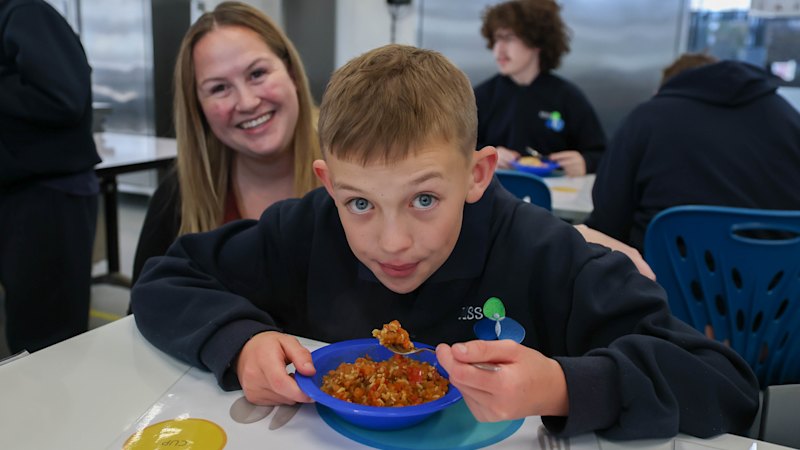
In a small school kitchen in Melbourne’s outer west, the aroma of macaroni and cheese and steaming plates of paella fills the air as hungry students gather. The children laugh and dance, creating a scene that is typical of any canteen lunch line. However, this is Melton Specialist School – one of many across the state catering to students with intellectual disabilities, neurodiversity, and physical disabilities. For these students, a routine healthy lunch is not always guaranteed.
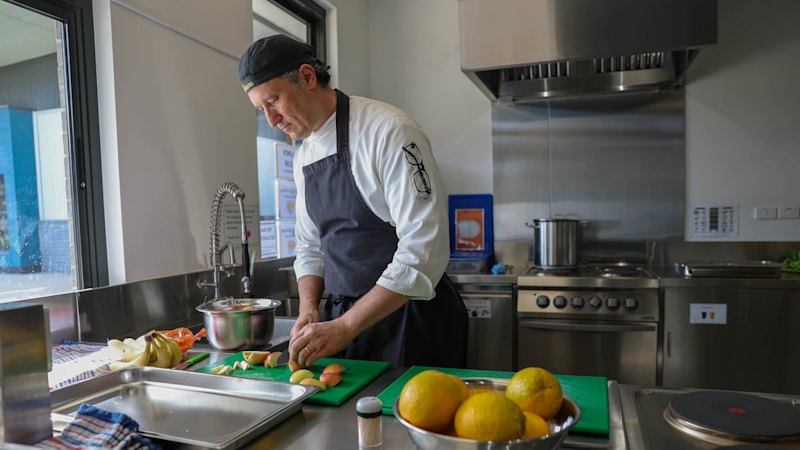
Simone Biancalani, a Tuscan chef who has launched a new lunch club at the school, explains that his mac and cheese, which includes at least five kilograms of cauliflower, is a staple for 100 out of the school’s 400 students. Today’s paella, however, is an unfamiliar dish that many students have never tried before. “When I started, many wouldn’t even go near the food,” Biancalani says. “This job isn’t about ego; it’s about finding the foods the kids enjoy.”
Christian Cooke, a year 6 student with autism, ADHD, Klinefelter syndrome, and mild intellectual disability, is lining up for lunch. Before joining the program, he would only eat noodles and toasties. He often argued with his mother, Rachel, about the canned tuna or sandwiches she sent with him to school. Since eating Biancalani’s lunches, Christian can now list at least eight new meals he enjoys, including jacket potatoes and brownies made from sweet potato and chickpeas.
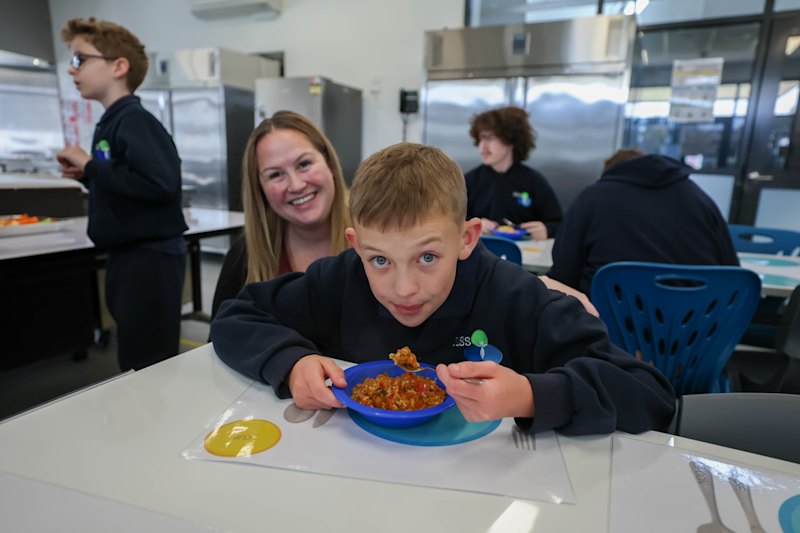
“I wanted to eat it because the food is yummy,” Christian says. The program has also had a positive impact at home. Previously, Christian’s diet was limited to plain dishes like spaghetti cautiously dipped in sauce in a separate bowl. Now, he will eat nearly anything he has tried at school. “It’s because all the kids are eating together. The other kids were eating it, so he wanted to eat it too,” Rachel explains.
Melton Specialist School principal Brooke Briody notes that the school environment reduces the stress around food and mealtime. “At home, there’s time pressure and costs, which can add to the rigidity around their eating,” she says. “At school, they’re going to have fun regardless of whether they try a tiny bit or have a lot.”
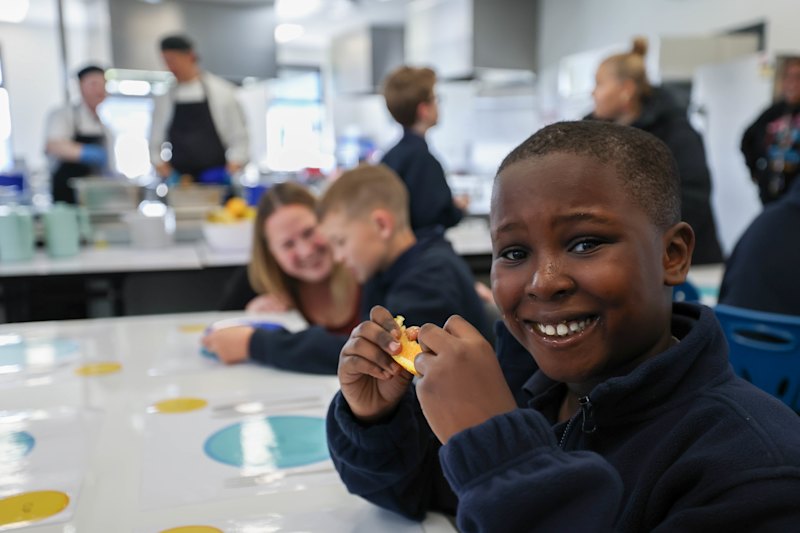
Australia is one of the few high-income countries without a national school meals program, according to an OzHarvest Report released last month. At Melton Specialist School, teachers are finding that food presents a direct opportunity for learning. Since the trial began last year, there has been a 13 per cent increase in students achieving social goals, and a 15 per cent increase in exceeding achievement goals. More than half of the students are attending school more often.
“You can broaden your language just by being around food. And it’s an amazing motivator for some kids,” Briody says.
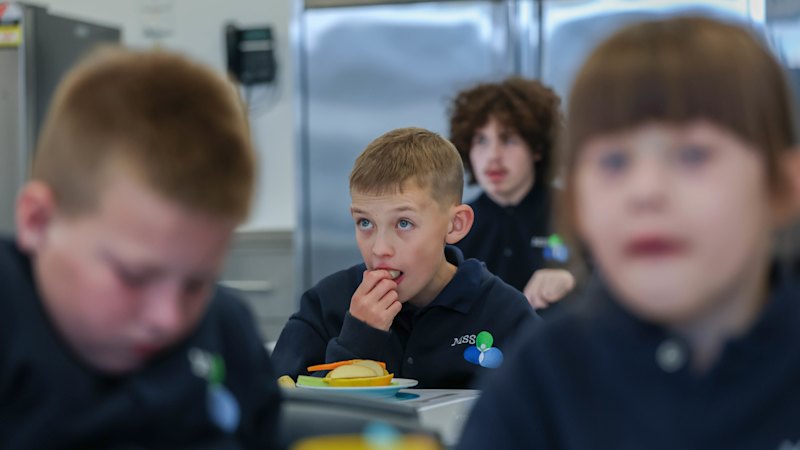
Despite the program’s success, much of the food comes from donations, and Biancalani works in a classroom kitchen designed for students to learn food technology, not to cater for hundreds of people. The school now plans to build a new kitchen and a larger dining room to feed all 400 students daily if it can raise $300,000 for a staged redevelopment of a communal area and unused classroom. “We can only have 10 or 12 kids eating together at one time. The social side of learning is really impacted by the space,” Briody says.
After trying the paella, Christian decides it isn’t for him and politely asks for a bowl of fruit instead. Children learning to reject food and ask for something different is part of the program, says school wellbeing leader Olivia Desormeaux. “When they go on excursions and family gatherings, they can say, ‘no, thank you’,” she says. “The learning here is empowering them.”
By the end of lunch, three-quarters of the students have tried the paella. Whether they loved or loathed it, the meal becomes a talking point for teachers and carers to engage with the students throughout the day. “We aren’t saying we have all the answers, but we’re trying,” Desormeaux says. “And we are seeing a beautiful program get embedded in our school culture. Food is a real connector.”