A Major Step in Protecting the Northern Corroboree Frog
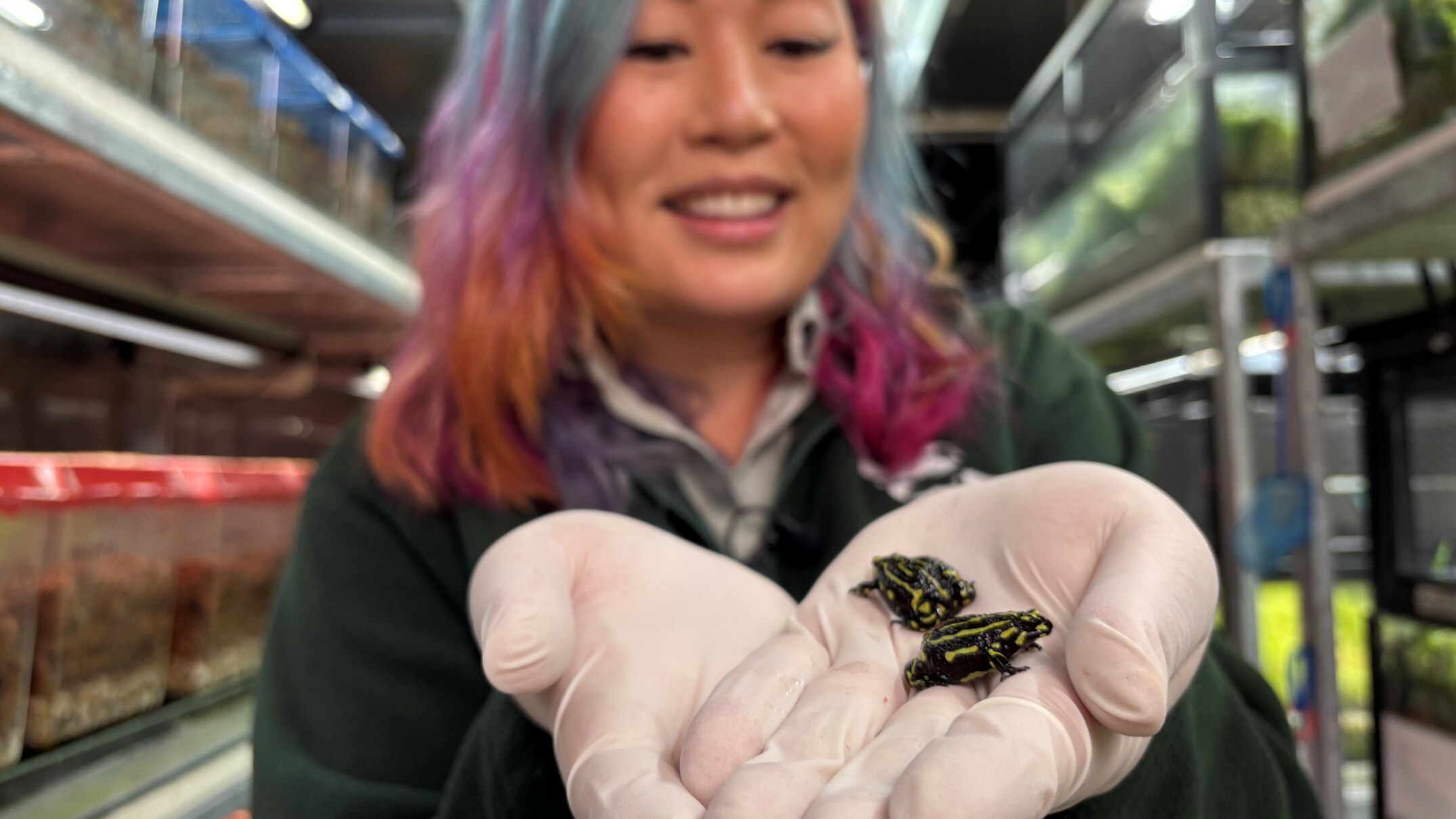
More than 800 tiny, technicoloured northern corroboree frogs have been released into the wild in the Brindabella National Park in southern NSW. This initiative aims to help boost the numbers of one of Australia’s most critically endangered amphibians. These frogs, weighing just 2–3 grams and no bigger than a paper clip, were born and bred at Sydney’s Taronga Zoo in a special quarantine facility designed to keep out a deadly fungus that had driven the species to the brink of extinction.
At the zoo, frogs at every stage of development were stacked in tanks that lined the shelves of the temperature-controlled building. Taronga keeper Del Leong tended to tadpoles and fed crickets to pregnant females. “They are critically endangered — there’s around 1,200 adults left in the wild, so things are looking pretty dire,” she said. “Hopefully, with the release we’ve just done, it will boost up the population and in a few years’ time, when they are sexually mature, they’ll be able to then breed.”
The Threat of a Deadly Pathogen
The northern corroboree frog faces a significant threat from a deadly pathogen known as the chytrid fungus. This fungus has wiped out frogs all over the world, but the northern corroboree frog is one of the species most susceptible to the pathogen. “Like most frogs, northern corroboree frogs breathe through their skin … but unlike a lot of other frog species, they don’t really get out in the sun to bask and shake the chytrid fungus spores off,” Ms Leong explained. “Chytrid fungus thrives in cold wet environments and these guys, being an alpine species, it’s always cold, it’s always wet.”
To track the survival of the released frogs, albums of photographs of the frogs’ backs and bellies have been kept. These photos demonstrate how each frog displays its own unique pattern, and can be cross-checked in years to come to determine whether the frogs have survived their release into the wild. “Just like how we have individual thumbprints or fingerprints, they all have individual markings on their back or on their bellies,” she said. “We have taken photos of each and every single one of the frogs we’ve released, so when we do subsequent surveys and find one, we can take another photo and go back to our database and identify them.”
A Unique Habitat and Conservation Efforts
The northern corroboree frog only lives in the Brindabella and Fiery ranges of NSW and the ACT. In recent years, its habitat has been ravaged by the Black Summer bushfires, and colonies have been decimated by the amphibian chytrid fungus. To combat this, the quarantine facility at Taronga also permanently houses an “insurance population” of 370 adult northern corroboree frogs — a kind of Noah’s Ark to protect against further catastrophic events among their native populations.
This year’s frog release is by far the biggest since the breeding and release program began at Taronga in 2010. The juvenile frogs were carefully packed into aerated plastic containers for the five-and-a-half-hour road trip to the Brindabella National Park, where they were released in secret locations by staff from Taronga, the National Parks and Wildlife Service, and the NSW government’s Save Our Species program.
A Promising Future for the Species
Department of Climate Change, Energy and Water senior threatened species officer David Hunter said he was confident the release would pay dividends in years to come. “It was hugely satisfying,” Dr Hunter said. “We feel confident that we will get good results from this because for nearly 10 years, Taronga has been trialling different life-stage releases — whether they’re releasing eggs, tadpoles, juvenile frogs, adult frogs and also what time of year they’re releasing.”
“They’ve found that if they release one-year-old frogs in autumn, that’s when they get their best return rates in terms of survivorship to sexual maturity.” It will be some years before scientists know how many released frogs have survived to breed. But the technique to find out is a very simple and noisy one. “We’re very lucky in that one of the characteristics of corroboree frogs is that they’ll respond to a loud sound,” Dr Hunter explained. “So we essentially just walk around yelling out, ‘Hey frog!’ and if they’re there they will yell back to us.”
The male frogs are the ones that return the call in mating season, allowing scientists to then count the number of eggs in the male’s nest and calculate an estimate for the female population. “It’s certainly something that really works in our favour in terms of trying to look after this species,” Dr Hunter said.