A New Perspective on Ice Giants
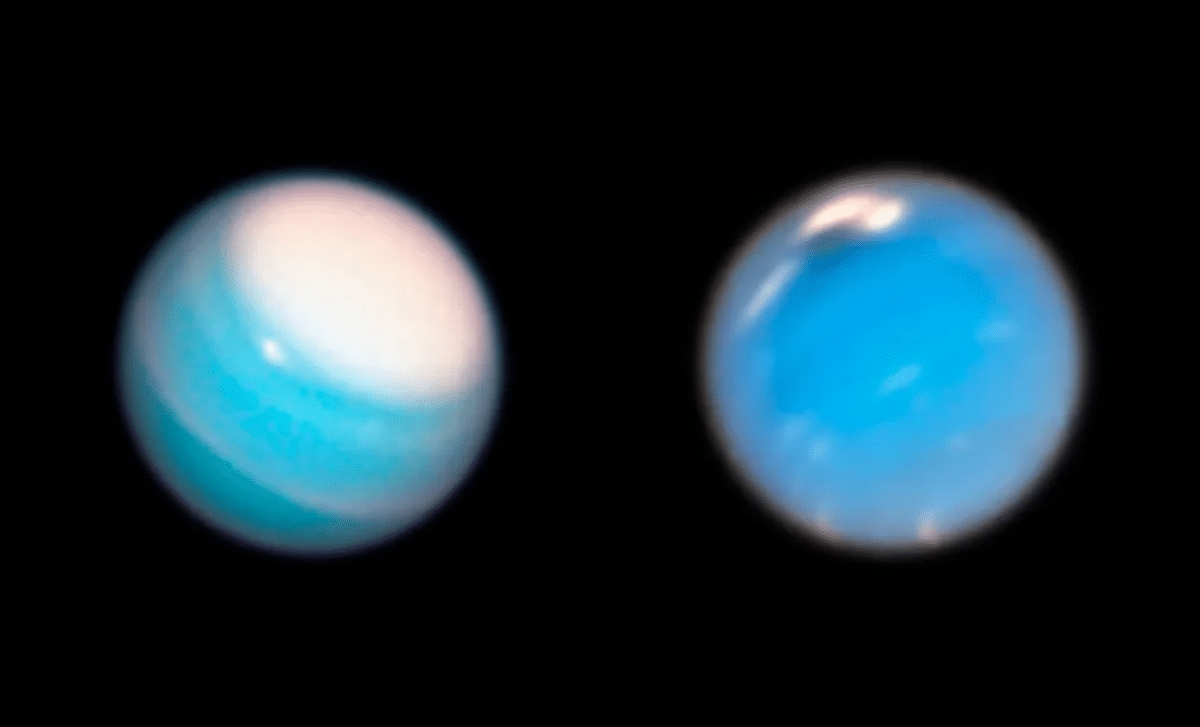
For generations, Uranus and Neptune have been regarded as the solar system’s frozen outliers, distant blue worlds believed to be packed with exotic ices beneath thick, turbulent atmospheres. Their classification as “ice giants” became one of the most accepted ideas in planetary science, shaping how scientists understood the outer reaches of our cosmic neighborhood. Now, that long-standing picture may be starting to crack. A new study suggests these planets could be far rockier than previously imagined, with outer layers potentially dominated by rocky material instead of ice.
A Planetary Classification That May No Longer Fit
For decades, astronomers have grouped Uranus and Neptune into a special category known as ice giants. Unlike Jupiter and Saturn, which are dominated by hydrogen and helium, the two outermost giant planets were believed to contain large amounts of water, ammonia, and methane ice beneath their thick atmospheres. Their blue appearance, driven partly by atmospheric methane, reinforced that image of frozen worlds orbiting at the edge of the solar system.
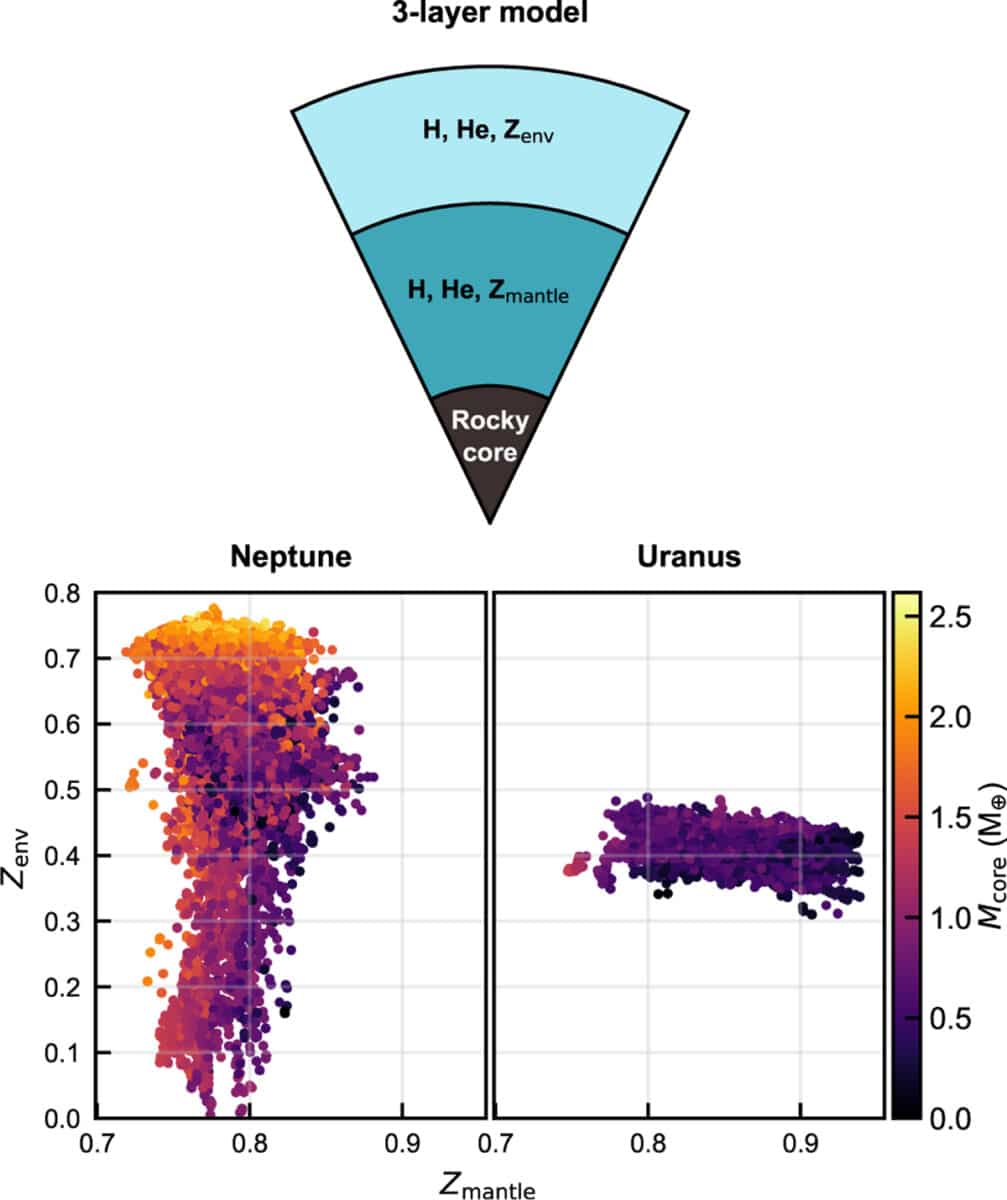
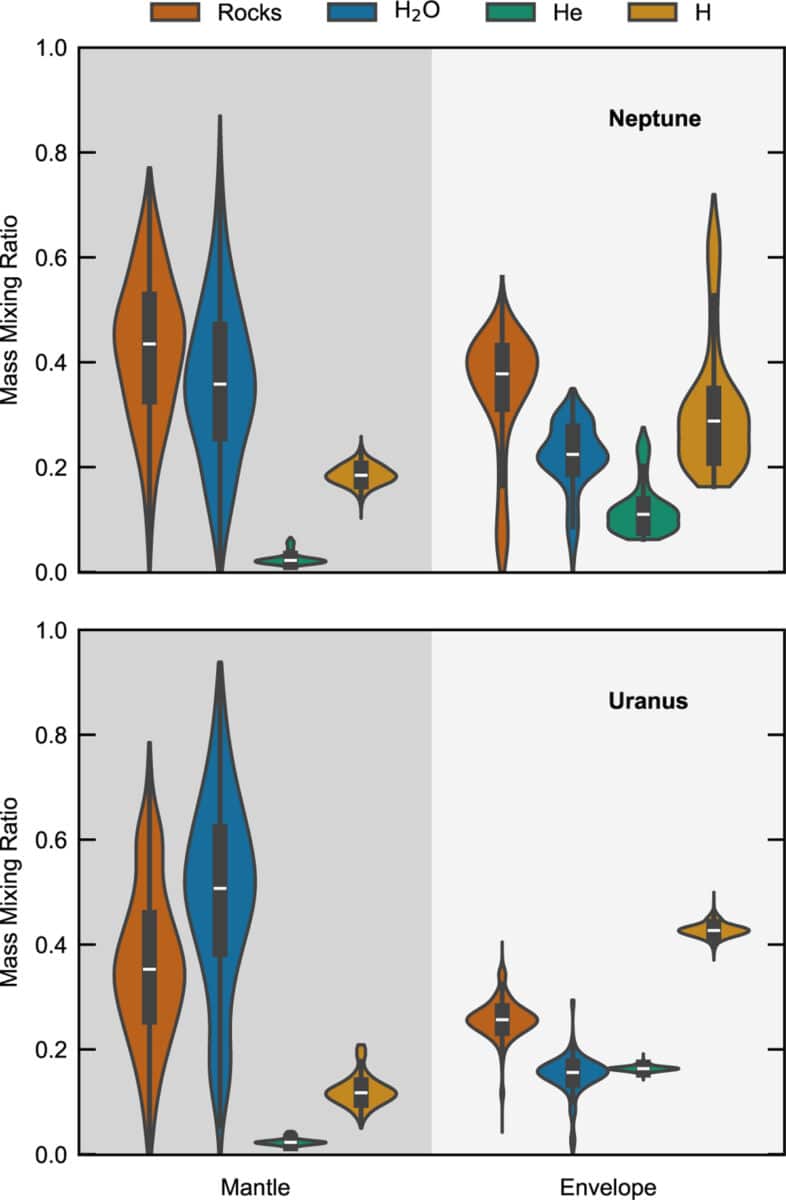
The new research paints a more complicated picture. Scientists modeled the internal structures and atmospheric layers of both planets and found evidence suggesting that rocky material may dominate major portions of their outer shells. According to the researchers, conditions inside the planets could allow silicate material to condense into rocky matter within the atmosphere itself. That possibility dramatically changes the traditional understanding of how these planets are built.
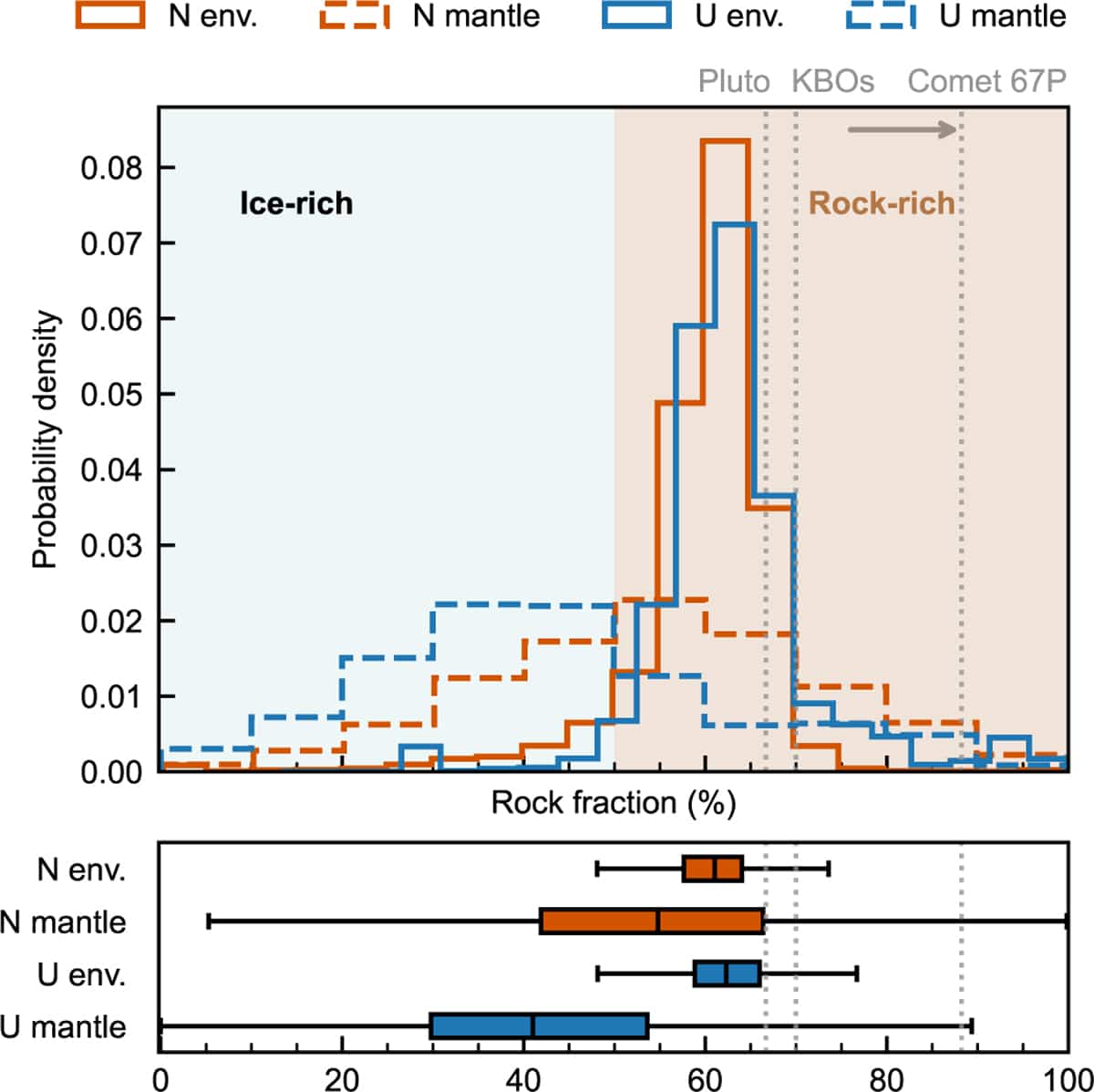
“We found out that both Uranus and Neptune have their outer shells made mostly of rocks (and hydrogen and helium gas),” study author Yamila Miguel of the Netherlands Institute for Space Research told Space.com. This “goes against the common belief that they are ice-giant planets.”
The findings also raise questions about the broader language used in planetary science. If these planets are not dominated by ice as previously thought, the label “ice giant” may no longer accurately describe them. Miguel even suggested that astronomers may eventually need a different classification system altogether.
The Clues Came From Beyond Neptune
The research team’s idea did not emerge in isolation. It was inspired by growing evidence from the trans-Neptunian region, the vast area beyond Neptune populated by icy dwarf planets, comets, and Kuiper Belt objects. Recent observations and models have indicated that many of those distant bodies may actually contain more rock than expected.
Scientists studying objects such as Pluto have increasingly found evidence that these frozen worlds are not composed purely of ice. Many appear to possess dense rocky interiors or significant rocky fractions mixed into their structures. That trend led researchers to reconsider the makeup of the giant planets located closer to the Sun.
The team wondered whether the same pattern might apply on a much larger scale. If smaller objects in the outer solar system are rockier than once believed, perhaps Uranus and Neptune formed from similarly rock-rich material. Using advanced simulations, the researchers recreated the planets’ envelopes, mantles, and cores while examining how temperature and pressure interact deep within their atmospheres.
The models suggested that under extreme planetary conditions, silicate clouds may condense into rocky matter. Rather than existing only as vapor or fluid mixtures, parts of the atmosphere could effectively become loaded with rock-forming material. That concept stands in stark contrast to the traditional image of planets dominated mainly by frozen compounds.
The study was published on May 5 in Astronomy & Astrophysics, adding another layer to an ongoing scientific debate about the true nature of the solar system’s outer worlds.
Why These Findings Could Change Planetary Science
The implications of the study extend far beyond simple terminology. Planetary composition is directly tied to theories about how worlds form around stars. If Uranus and Neptune contain substantially more rocky material than expected, scientists may need to revise models describing the early solar system.
Current theories suggest the planets formed from accumulating icy and gaseous material in the cold outer regions surrounding the young Sun. A rock-rich composition could imply that the building blocks available in those regions were very different from what astronomers assumed for decades. It may also affect theories explaining planetary migration, atmospheric evolution, and magnetic field formation.
The findings could even influence the search for planets beyond the solar system. Thousands of exoplanets discovered around distant stars resemble Neptune-sized worlds. Scientists often classify those planets using assumptions based on our own ice giants. If the baseline understanding of Neptune and Uranus changes, interpretations of many exoplanets may also need revision.
Miguel emphasized that the planets are not entirely devoid of ice. “They might have quite some ice in their interiors,” Miguel said, “they are definitely not completely icy as we used to believe.”
That distinction matters because the study does not completely overturn existing planetary science. Instead, it suggests a more balanced and complex internal structure than earlier models proposed. The giant planets may contain significant ice deep inside while also possessing rocky atmospheric regions and outer shells.
The Outer Solar System Still Holds Major Mysteries
Despite decades of observation, Uranus and Neptune remain among the least explored major planets in the solar system. Only Voyager 2 has visited them directly, flying past Uranus in 1986 and Neptune in 1989. Since then, astronomers have relied heavily on telescopic observations and theoretical models to understand their hidden interiors.
That lack of direct exploration leaves enormous gaps in scientific knowledge. Researchers still do not fully understand why Uranus rotates on its side, how Neptune generates its extreme winds, or what processes shape their unusual magnetic fields. The possibility of rocky atmospheric layers adds another mystery to an already complicated picture.
Future missions could provide much-needed answers. Scientists have repeatedly proposed sending dedicated orbiters or atmospheric probes to the ice giants, viewing them as priority targets for planetary exploration in the coming decades. New measurements of gravity, atmospheric chemistry, and internal structure could confirm whether the rocky-envelope hypothesis is correct.
For now, the study serves as a reminder that even the most familiar planetary categories can change when new evidence emerges. The solar system continues to surprise astronomers, especially in its coldest and most distant regions, where many worlds remain only partially understood.