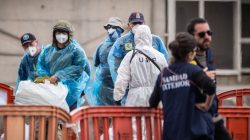
Understanding the Hantavirus Outbreak on the MV Hondius
The Centers for Disease Control and Prevention (CDC) acting director, Jay Bhattacharya, has made a clear statement regarding the hantavirus outbreak on the MV Hondius cruise ship. He emphasized that this situation is not comparable to the COVID-19 pandemic, aiming to prevent unnecessary public panic.
Bhattacharya spoke with CNN’s Jake Tapper, stating, “This is not COVID, Jake, and we don’t want to treat it like COVID.” His main message was that the hantavirus should be addressed using established protocols that have successfully contained previous outbreaks.
The health alert was issued because 17 American passengers are set to return to the United States soon. These individuals will be taken to the National Quarantine Unit in Nebraska for assessment and quarantine. The process of repatriating all 147 passengers is expected to take about a week.

Protocols and Risk Assessment
Bhattacharya explained that the CDC is working with the World Health Organization (WHO) to assess the 17 passengers for risk. He clarified that the risk is not about the likelihood of dying but rather about close contact with someone who is symptomatic. If individuals were not in close contact with a symptomatic person, they would be considered low risk.
Previously, seven Americans returned to the US from the infected ship and were identified across several states. Bhattacharya noted that the protocols followed for these travelers are the same as those used during a 2018 outbreak of the same hantavirus strain.
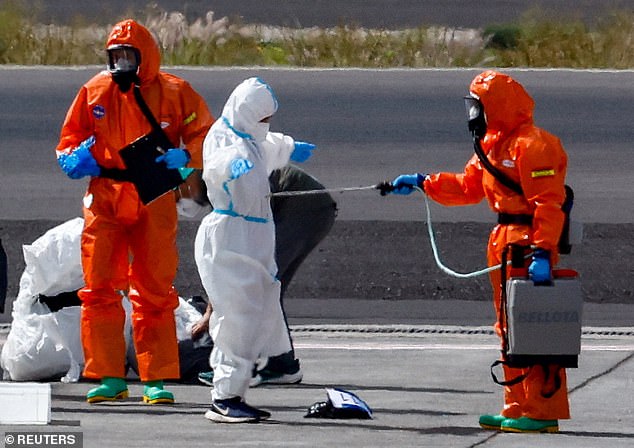
He also emphasized that the seven passengers who returned did not show symptoms and therefore could not spread the disease. “If they don’t have symptoms, they’re not at risk of exposing others,” he said.
Coordinated Efforts and Public Reassurance
The WHO recommended a 42-day quarantine for those onboard the boat, which saw its first confirmed case of the outbreak on May 2. In an update, the WHO confirmed that eight passengers who had left the ship had fallen ill, with six of them confirmed to have contracted the hantavirus. Four remain hospitalized in South Africa, the Netherlands, and Switzerland.
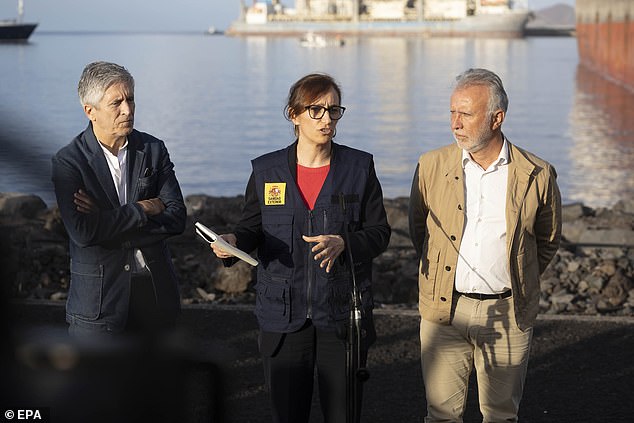
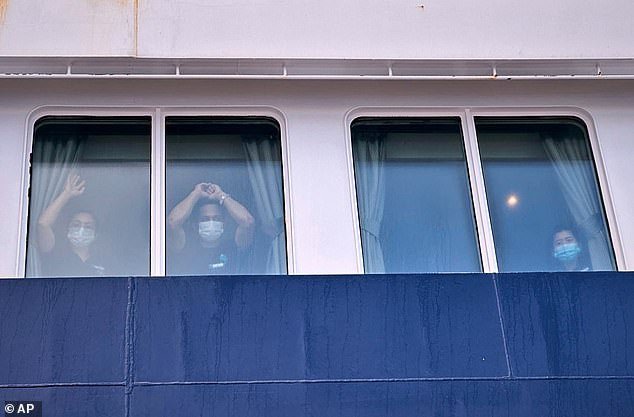

Despite reports that the passengers were not showing symptoms, government officials stressed that there would be no contact with the public. The WHO reassured Tenerife residents that they would not encounter passengers of the hantavirus-hit cruise ship. In a letter addressed to the people of Tenerife, WHO director-general Dr Tedros Adhanom Ghebreyesus stated that the current public health risk remains low.

Operation and Disembarkation Process
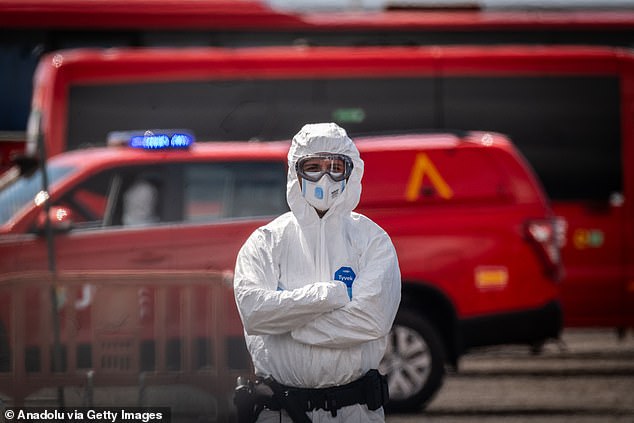
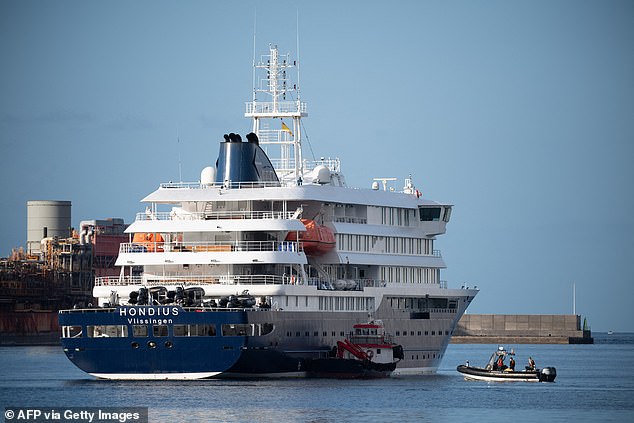
The MV Hondius left Ushuaia, Argentina on April 1 for a cruise across the Atlantic Ocean to Cape Verde. Spain’s health and interior ministers insisted there would be ‘no contact’ with the local population, and that passengers would leave ‘by nationality groups’. All areas the passengers pass through will be sealed off, and a maritime exclusion zone will be in force around the vessel.
Oceanwide Expeditions, the operator of the MV Hondius ship, stated that the disembarkation of all guests and a limited number of crew members is now underway. Upon disembarkation, all individuals will be transferred immediately to waiting aircraft. The sequence of disembarkation is being coordinated with the arrival of repatriation flights.
In a statement to the Daily Mail, the US Department of Health and Human Services said: “The US government is conducting a coordinated, interagency response led by the Department of State. HHS, through ASPR and CDC, is supporting efforts to protect the health and safety of U.S. citizens, including repatriation, medical evaluation, and public health guidance.”
Passengers will be transported to the United States via a Department of State-coordinated airlift with appropriate medical capabilities onboard. It is important to note that transmission of the Andes variant is typically associated with close contact with a symptomatic person and is not commonly linked to people without symptoms. It does not spread easily, and the risk to the public remains extremely low.