If you’re in the market for an eight-seat family SUV, the Hyundai Palisade has probably already crossed your radar. But now there’s a twist. Hyundai has taken this well-established large SUV and given it a hybrid powertrain.
That puts it up against familiar rivals like the Toyota Kluger GXL Hybrid and the Kia Sorento Sport+ Hybrid which are both strong players in the family-friendly space. The version we’re looking at for this review is the mid-spec Elite and we’re family-testing it to see if the new hybrid powertrain makes for a winning combo.
Hyundai launches unexpected new brand as Ioniq spins-off into new division featuring fresh hybrid tech to better rival BYD and Chery
Kia spills on Hyundai’s new HiLux-fighting ute with timing and game-changing powertrains confirmed for future 2026 Toyota HiLux and BYD Shark 6 rival
High fuel price beating new 2026 Hyundai Staria hybrid confirmed for Australia to tackle Kia Carnival and Ford Transit PHEV
Price and features – Does it represent good value for the price? What features does it come with? 8 / 10
The Hyundai Palisade range is fairly straightforward, offered in two trim levels. We’re looking at the recently added mid-spec Elite here, which sticks with an eight-seat layout and is priced from $76,500 before on-road costs. Step up to the flagship Calligraphy and you can choose between seven or eight seats, depending on how often you’re playing chauffeur.
Price-wise, the Palisade Elite hybrid does sit above its perceived rivals. The Toyota Kluger GXL Hybrid starts from $71,930 MSRP, while the smaller Kia Sorento Sport+ Hybrid undercuts it more noticeably again at $67,180 MSRP. So yes, you are paying a premium here, but the Hyundai is quite a bit bigger than those two models.
That said, the features list does a decent job of justifying it. You get leather-appointed upholstery, power-adjustable front seats with heating, a heated steering wheel and power-folding outboard seats in the second row, all things that make day-to-day family life a bit easier.
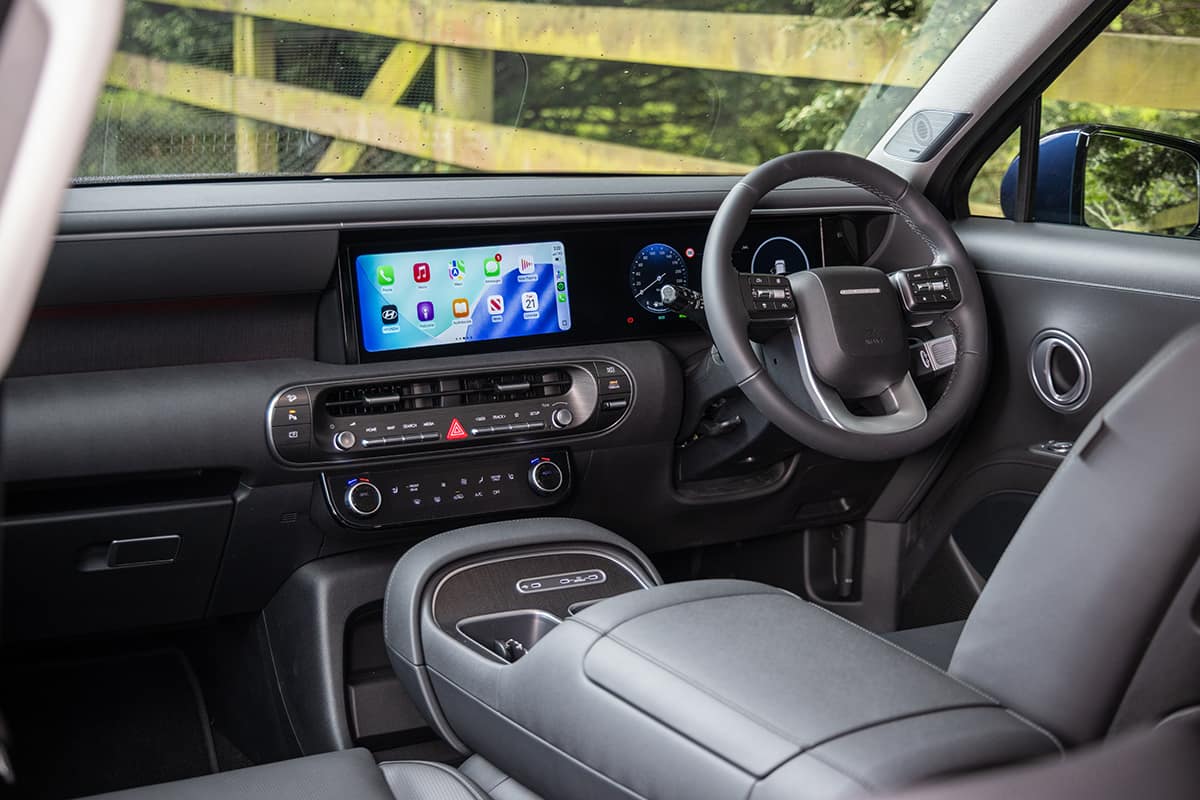
Tech is another strong point. There’s a 14-speaker Bose sound system, dual 12.3-inch displays, built-in navigation, over-the-air updates and three-zone climate control.
Charging is well covered too, with six 100W USB-C ports, an additional data port, two 12-volt sockets and a wireless charging pad.
There are a few newer touches worth mentioning. A fingerprint authenticator can store up to two users, which is handy if the car gets shared, and this generation also introduces two digital keys. You also get access to Hyundai’s Bluelink app, which allows for remote functions like pre-conditioning the cabin, locking or unlocking the car and checking its location.
On the practicality front, there’s a full-size spare alloy wheel, a 360-degree camera system and a powered tailgate. Families will also love the four ISOFIX child seat mounts and five top-tether anchor points.
Design – Is there anything interesting about its design? 9 / 10
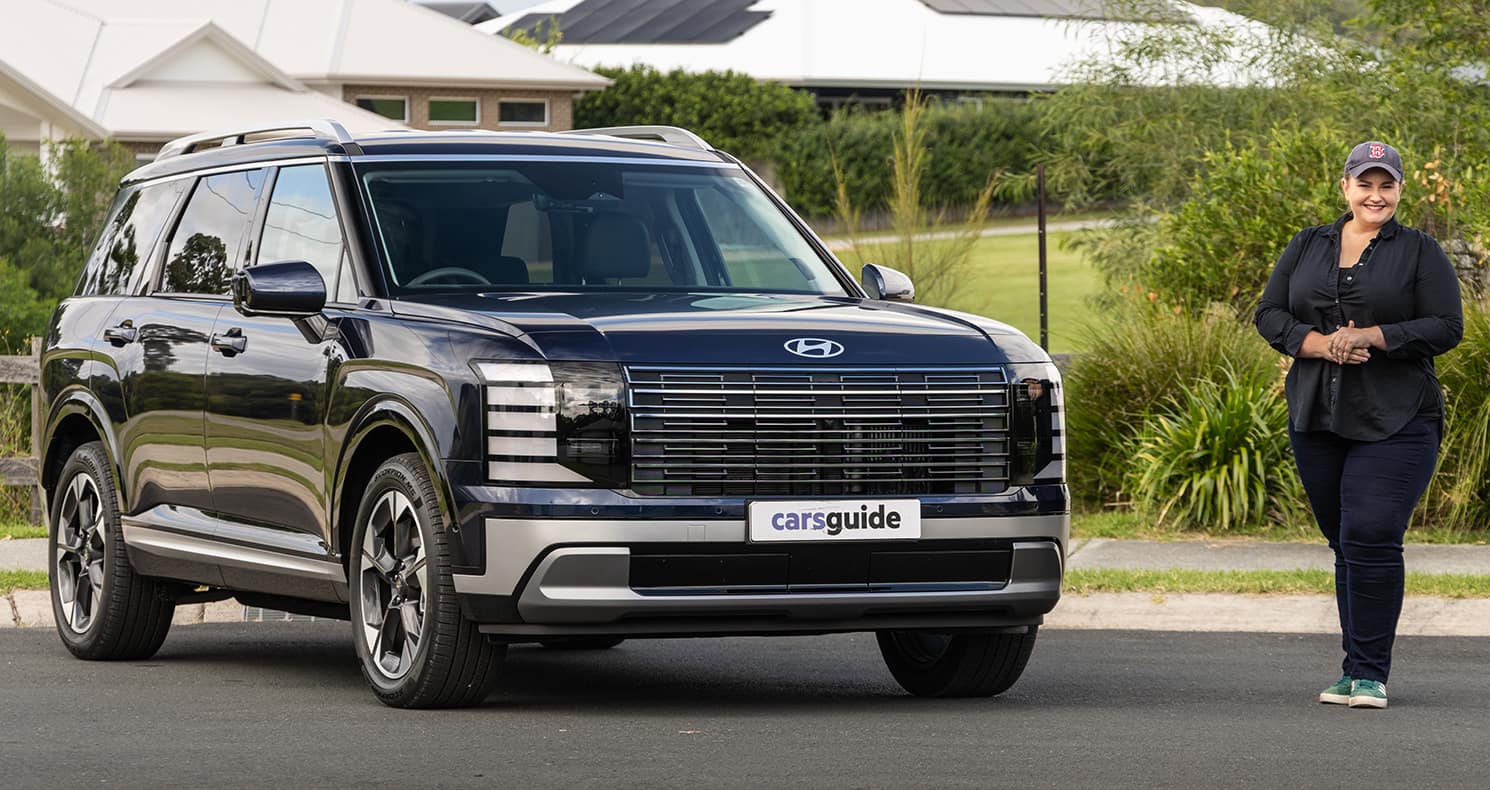
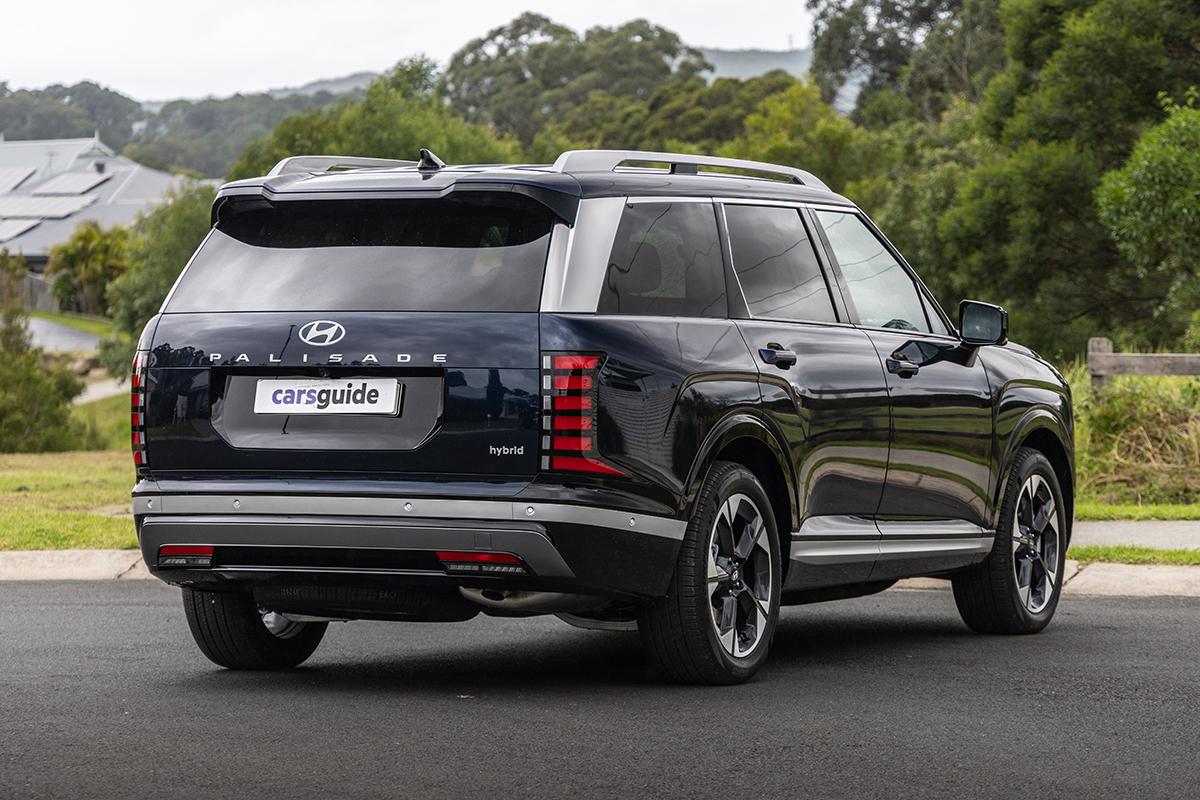
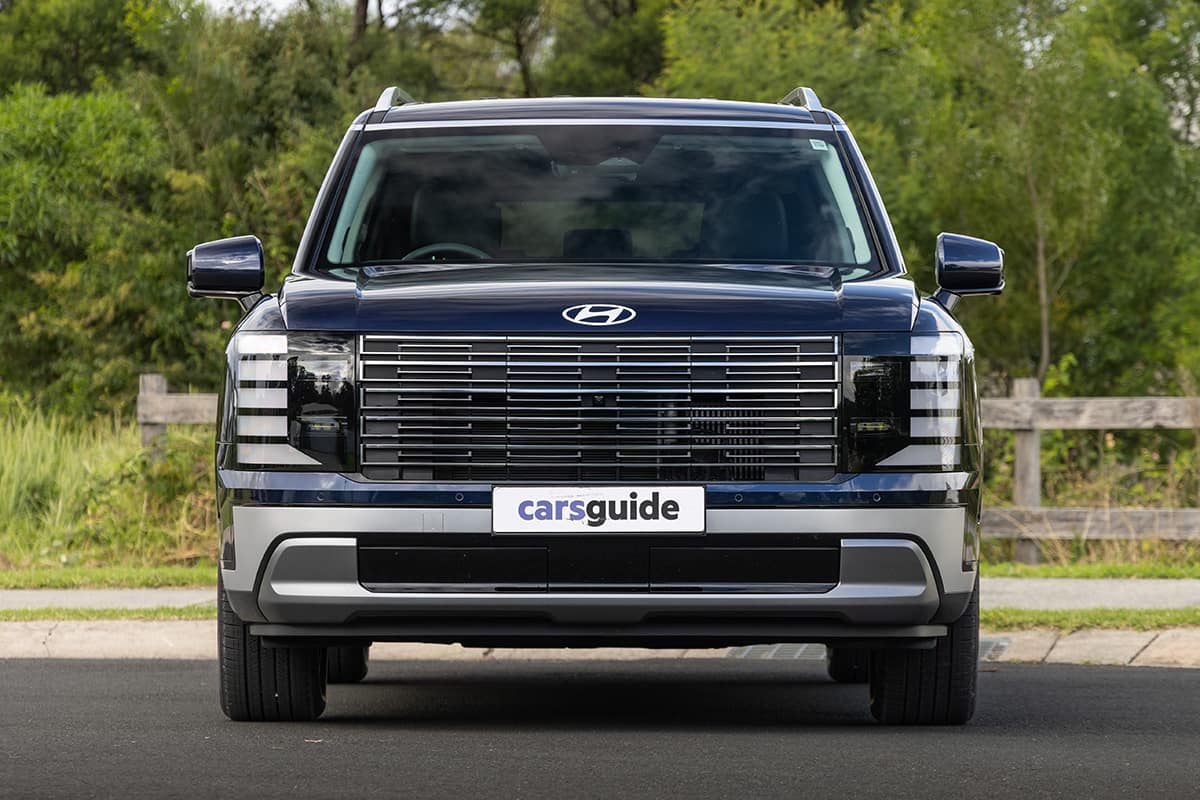
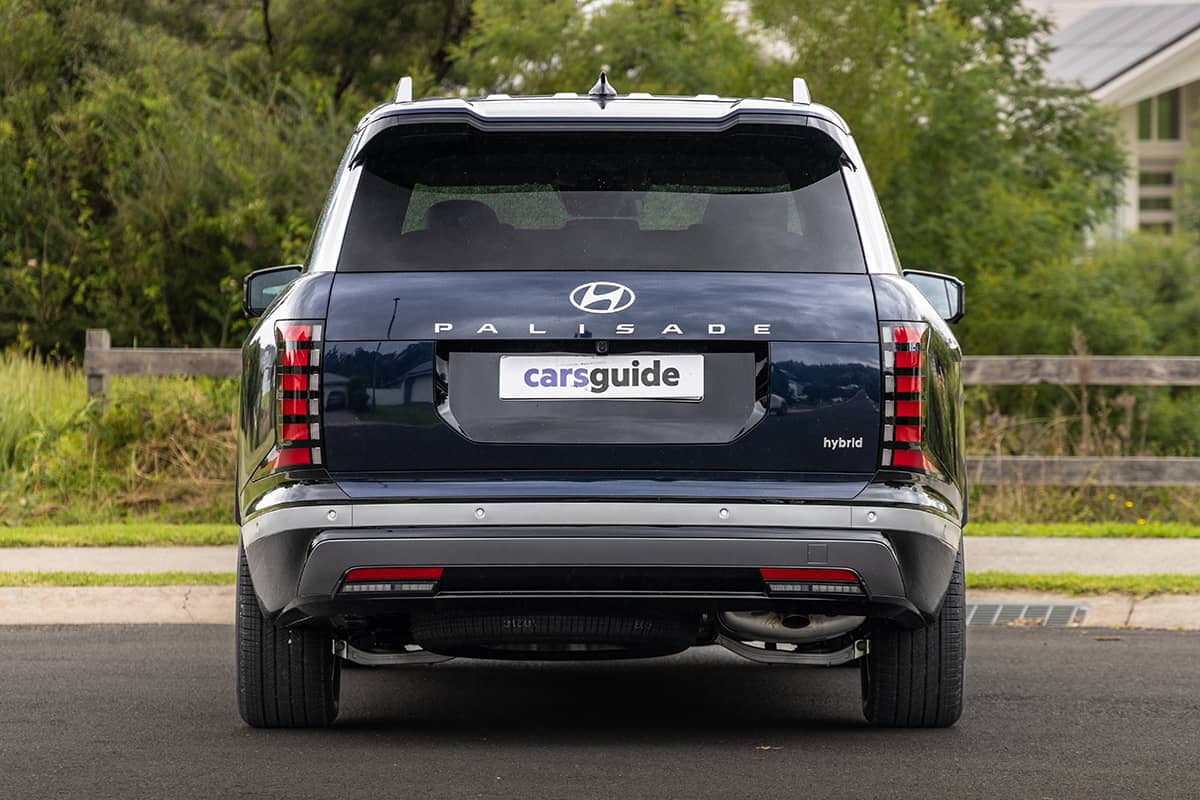
The Hyundai Palisade leans heavily into a more American look. It’s unapologetically big and boxy, with a squared-off silhouette that makes no attempt to hide its size. Up front, there’s a bold grille flanked by oversized vertical LED light signatures, while the rear mirrors that same stacked lighting design. The bonnet is long, the proportions are broad and everything about it is geared towards presence.
The dark-tinted windows, clean body panels and metallic accents gives it a polished edge. It’s the kind of SUV that feels as much at home at a client lunch as it does in the school pick-up line.
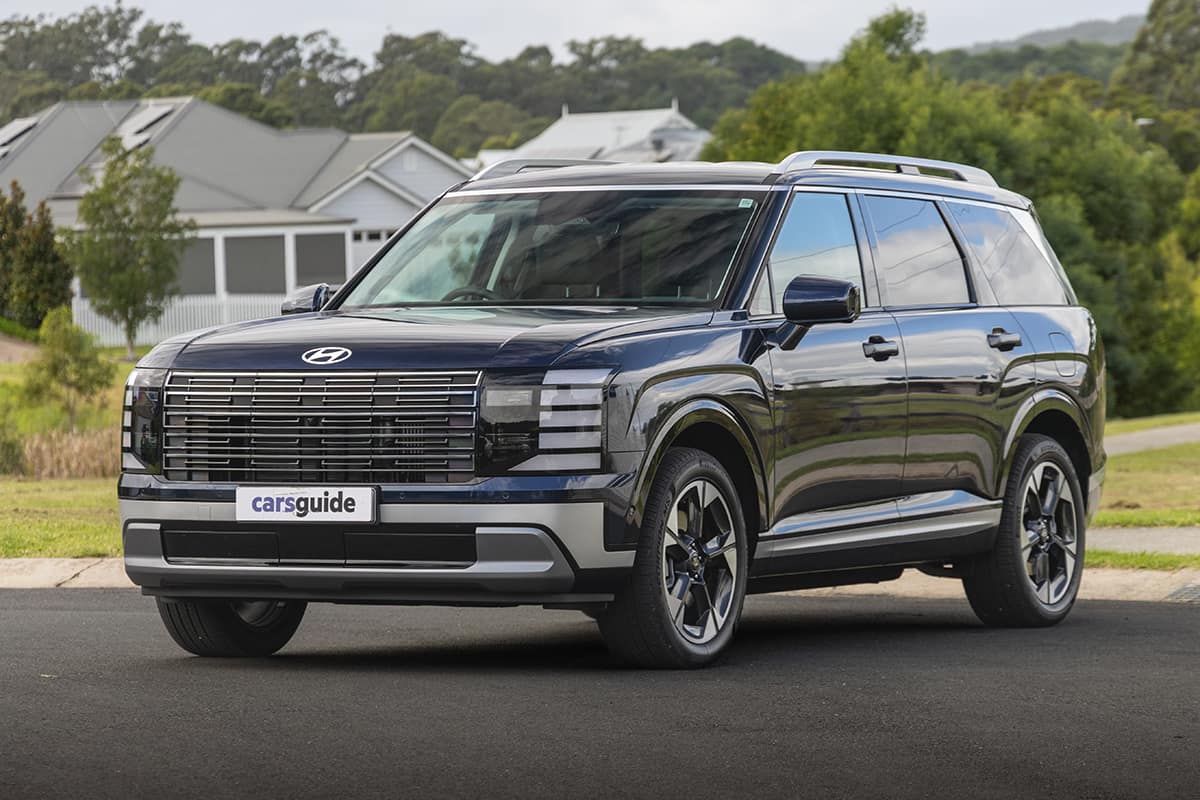
Inside, the cabin is genuinely spacious and even without a sunroof, it doesn’t feel closed in. The dashboard has a softly curved, vertical layout that keeps things feeling open rather than bulky.
Thankfully, Hyundai hasn’t gone all in on touch controls and there are still plenty of physical buttons to fiddle with. You’ve got dual 12.3-inch displays and a 14-speaker Bose sound system doing the heavy-lifting with the ‘visual’ tech side of things.
Thickly padded touchpoints and premium materials round out a cabin that’s simply a pleasant space to spend time in.
Practicality – How practical is its space and tech inside? 8 / 10
Practicality is one of the Hyundai Palisade’s strongest points, and it starts up front. The first row is properly cavernous and, unless you’re the Hulk, you won’t be knocking elbows with your passenger. The seats themselves are wide, deep and well cushioned, making them an easy place to spend a few hours on the road.
The second row continues that theme of space. It’s wide enough to comfortably fit three adults. I tested that with three friends over a weekend trip and no one complained. That said, the bench-style seat does mean less defined support. My nine-year-old pointed out he tends to slide around a bit and that the cushioning is on the firmer side.
Unsurprisingly, the third row is usable but with some compromise. You can fit three small kids or two adults, though legroom is tight unless you slide the second row forward.
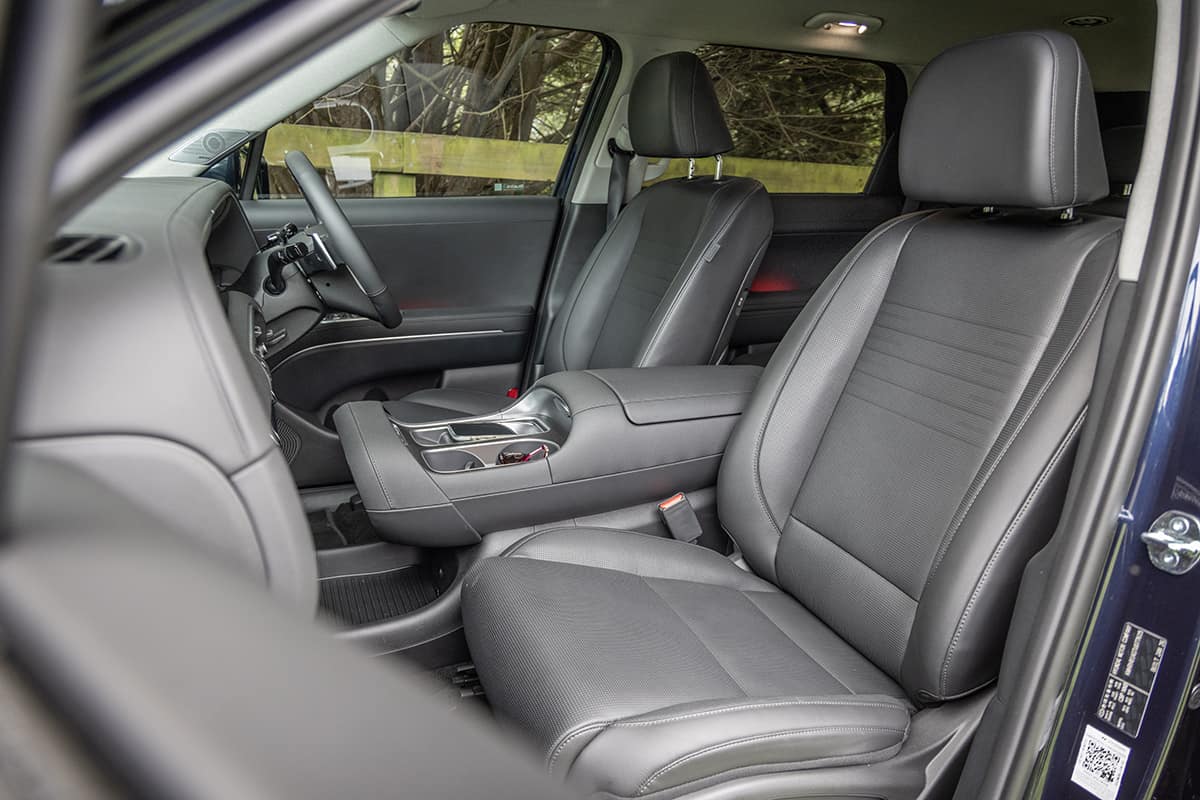
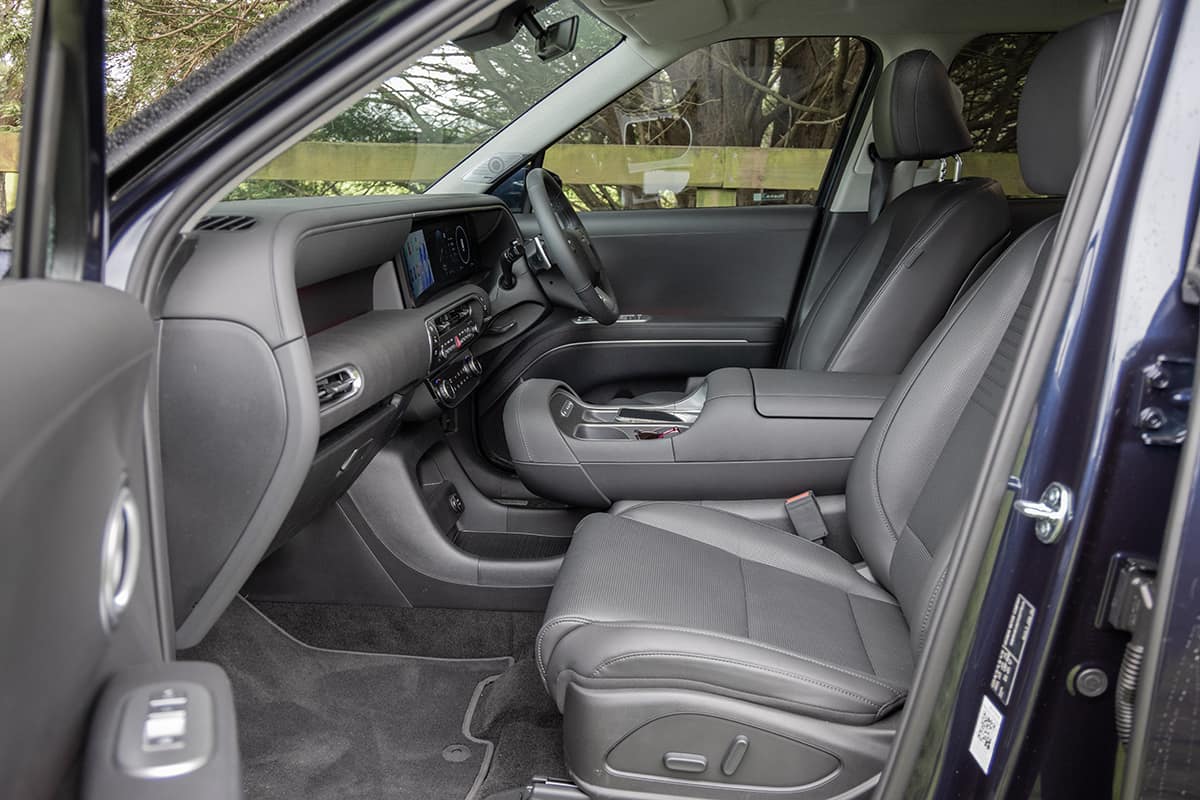
Access to both rear rows is easy thanks to the wide door openings and relatively low step-in height, which makes a difference when you’re loading kids in and out.
Amenities across all three rows are well thought out. Up front, you’ve got a good mix of storage options like a large glovebox and centre console, two cupholders, two drink bottle holders, and a handy open shelf that’s ideal for a handbag or Saturday night’s takeaway. Charging is taken care of by three USB-C ports, a 12-volt socket and a wireless charging pad.
The second row gets four cupholders, a couple of bottle holders and map pockets, as well as a small drawer that’s a good size for snacks or smaller devices. In the second row there’s also climate control, ceiling-mounted air vents and two USB-C ports.
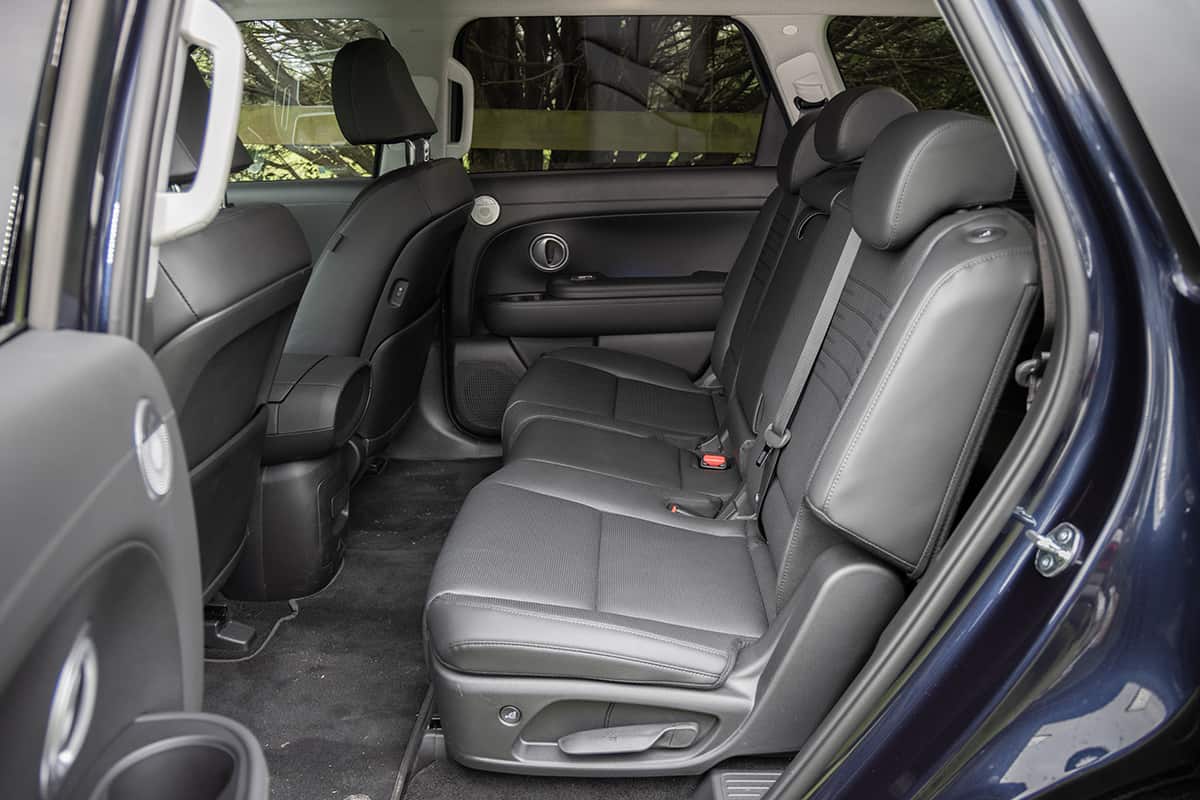
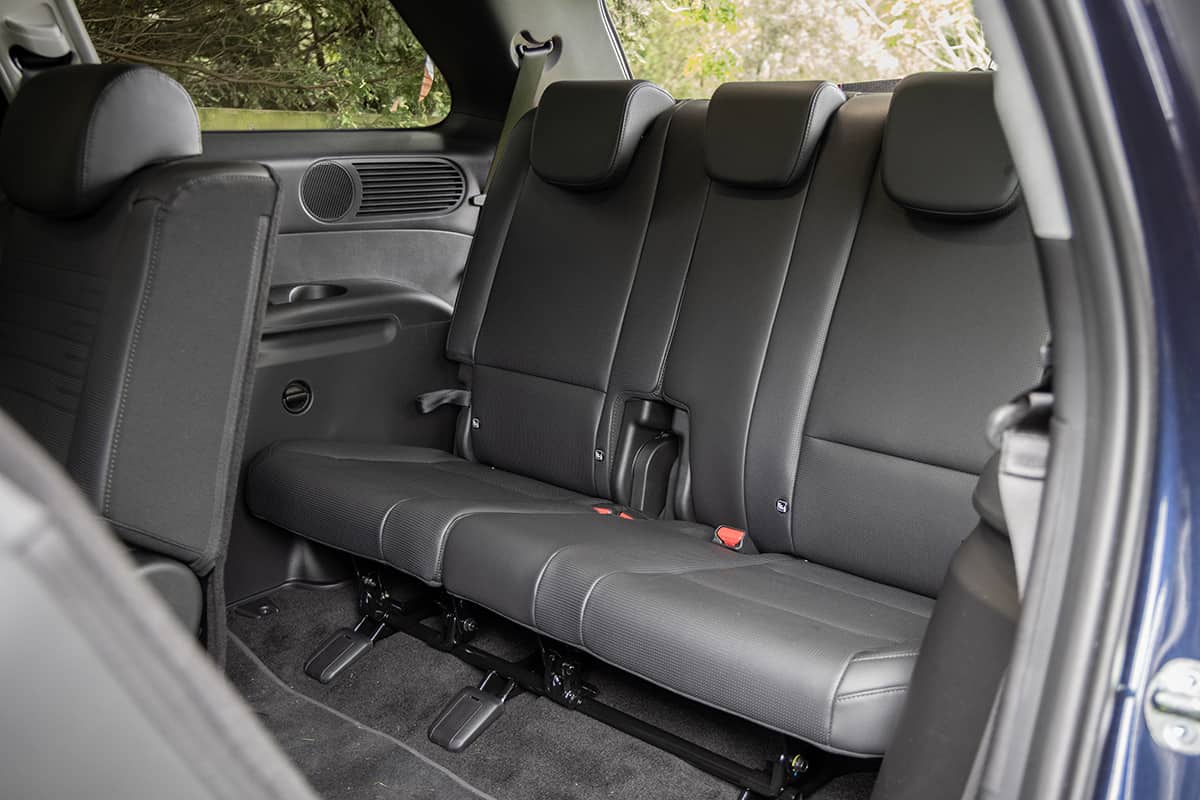
Even the third row doesn’t feel like an afterthought. There are two USB-C ports, four cupholders, directional air vents, plus two ISOFIX points and two top-tether anchors for families juggling car seats.
Tech is easy to live with. The media system is intuitive, the touchscreen is responsive and you get wireless Apple CarPlay and Android Auto alongside built-in navigation. Hyundai’s Bluelink app also allows for remote functions like pre-conditioning the cabin or checking the car’s location, which comes in handy more often than you’d think.
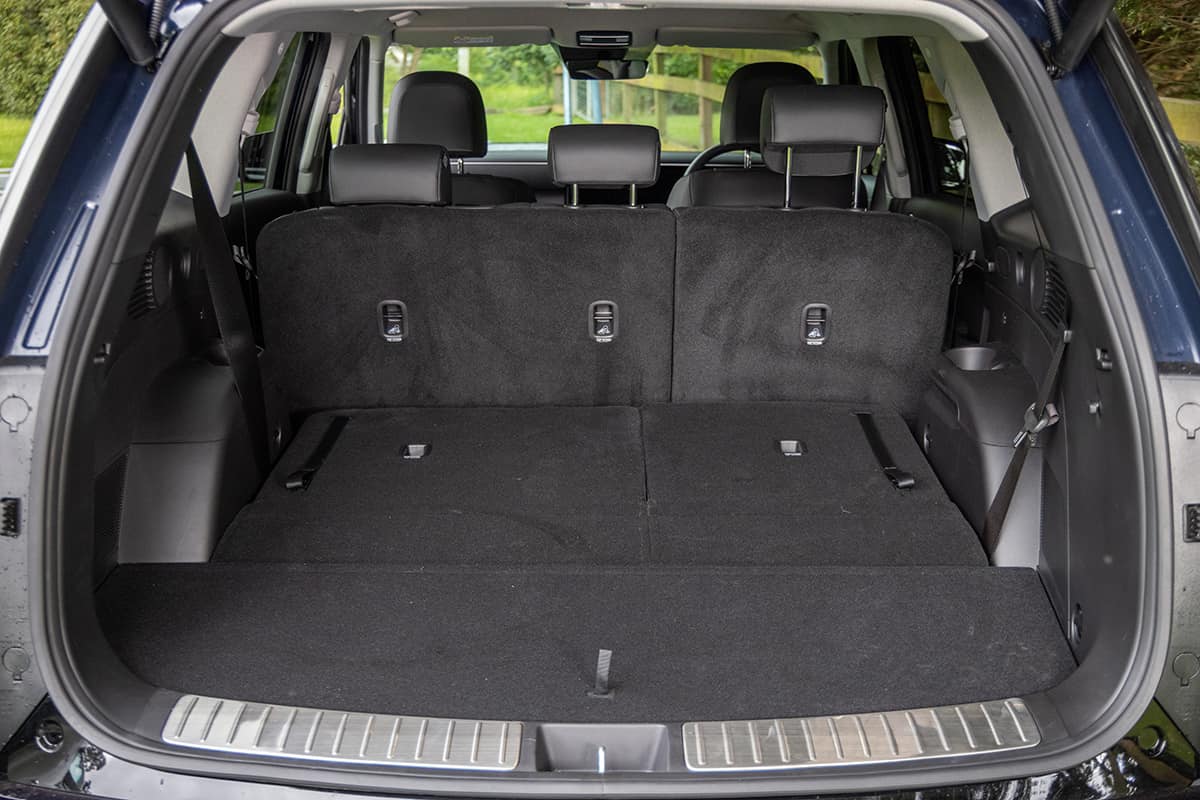
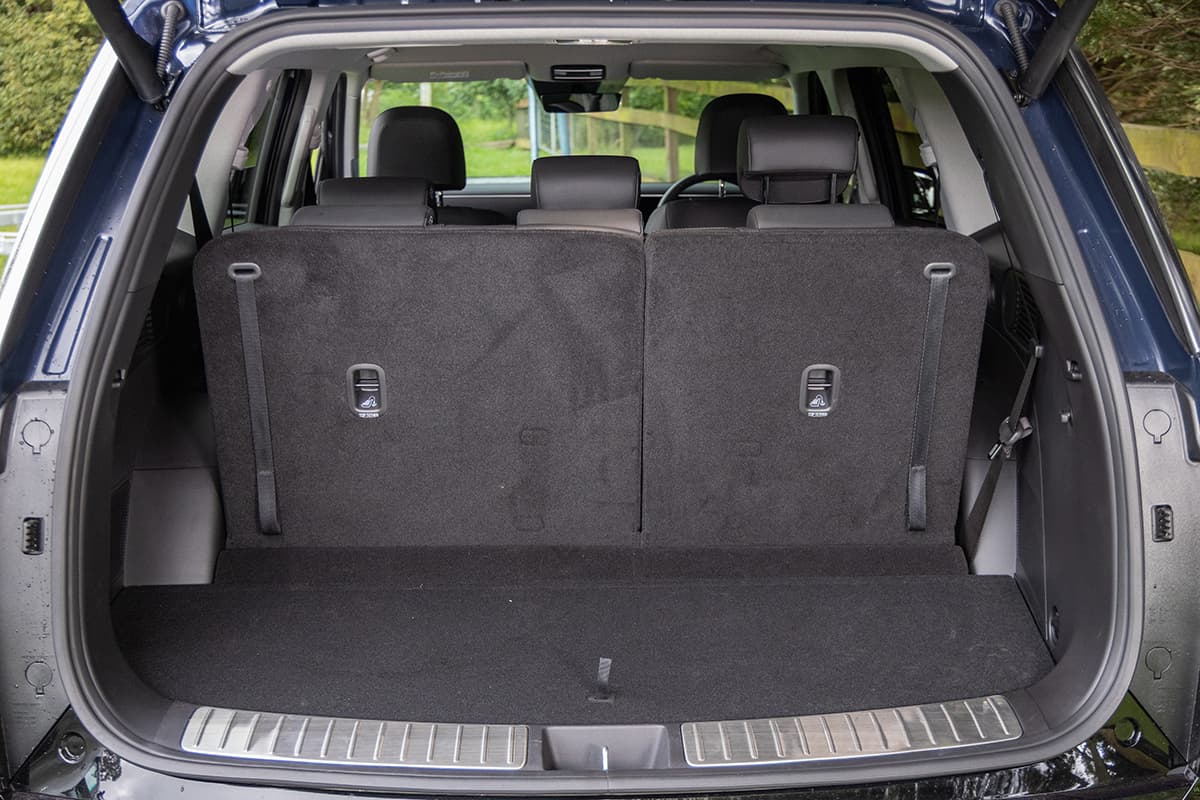
Boot space is another win. With the third row folded, you’ve got up to 712L to work with, and the flat loading area makes it easy to slide in prams, sports gear or a full grocery run. There’s also a bit of underfloor storage for smaller items, along with a full-size spare and a powered tailgate in this grade.
Under the bonnet – What are the key stats for its engine and transmission? 9 / 10
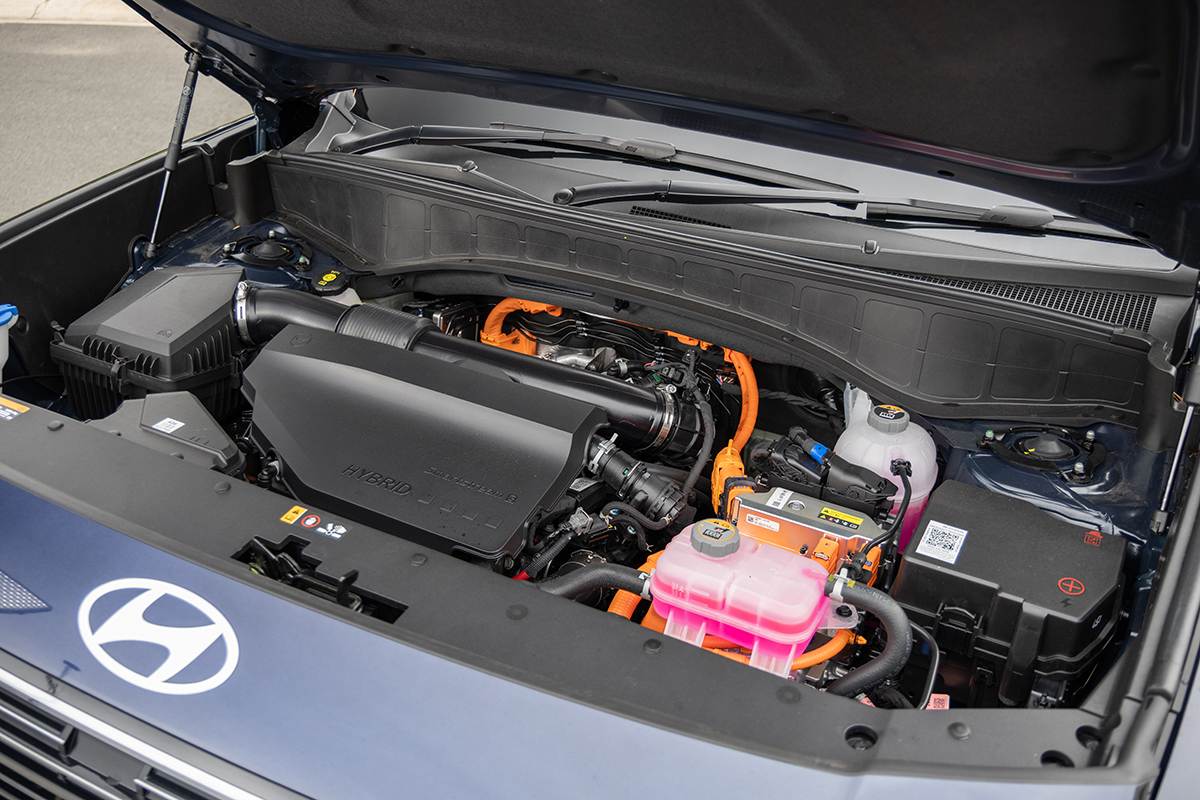
Under the bonnet, the Hyundai Palisade has made the full switch to hybrid, with the same powertrain offered across both trim levels. It pairs a 2.5-litre four-cylinder turbo-petrol engine with an electric motor, sending power to all four wheels.
Combined outputs sit at 245kW and 460Nm, which is a noticeable step up from the outgoing V6 petrol and 2.2-litre diesel it replaces.
On the road, the six-speed automatic does a smooth job of working through the gears, and the hybrid system keeps things impressively quiet at lower speeds. You’ll still notice the transition when the petrol engine cuts in, but it’s not especially intrusive.
It also retains a braked towing capacity of 2000kg, which should be enough for smaller weekend toys.
Efficiency – What is its fuel consumption? What is its driving range? 8 / 10
The new hybrid Hyundai Palisade has an official combined fuel cycle figure of just 6.8L/100km and a 72L fuel tank, giving this a theoretical driving range of just over 1000km, which is excellent for a big family mover. My real-world use, after doing a solid mix of open road and urban driving this week, is 7.7L/100km which is a decent result, especially given I’m not shy about utilising power!
Driving – What’s it like to drive? 9 / 10
On the move, the Hyundai Palisade hybrid system feels like a worthwhile addition. Power delivery is smooth and there’s enough on tap to keep up with traffic without any stress. You’ll occasionally notice the transition between electric and petrol power, particularly when accelerating harder from a standstill, but it’s otherwise fairly well resolved.
Where the Palisade really shines is in comfort. It’s an easy cruiser, whether you’re on the highway or just doing the school run. The suspension strikes a nice balance as it’s well-cushioned without feeling overly soft, and there’s enough road feedback to stop it from feeling floaty. For something this size, body roll is also kept in check, so it doesn’t feel out of its depth on a winding road.
Around town, it’s just as easy to live with. The steering has a reassuring weight to it and feels responsive enough, while visibility from the driver’s seat is excellent. You sit high, with a clear view out the front and sides.
The only real quirk is that the regenerative braking can feel a little firm at lower speeds, particularly in stop-start traffic, and it takes a bit of adjustment to smooth things out. But it’s not a deal breaker.
Cabin noise is kept impressively low, even at highway speeds, making it easy to hold a conversation across all three rows, something my passengers appreciated on a recent weekend trip.
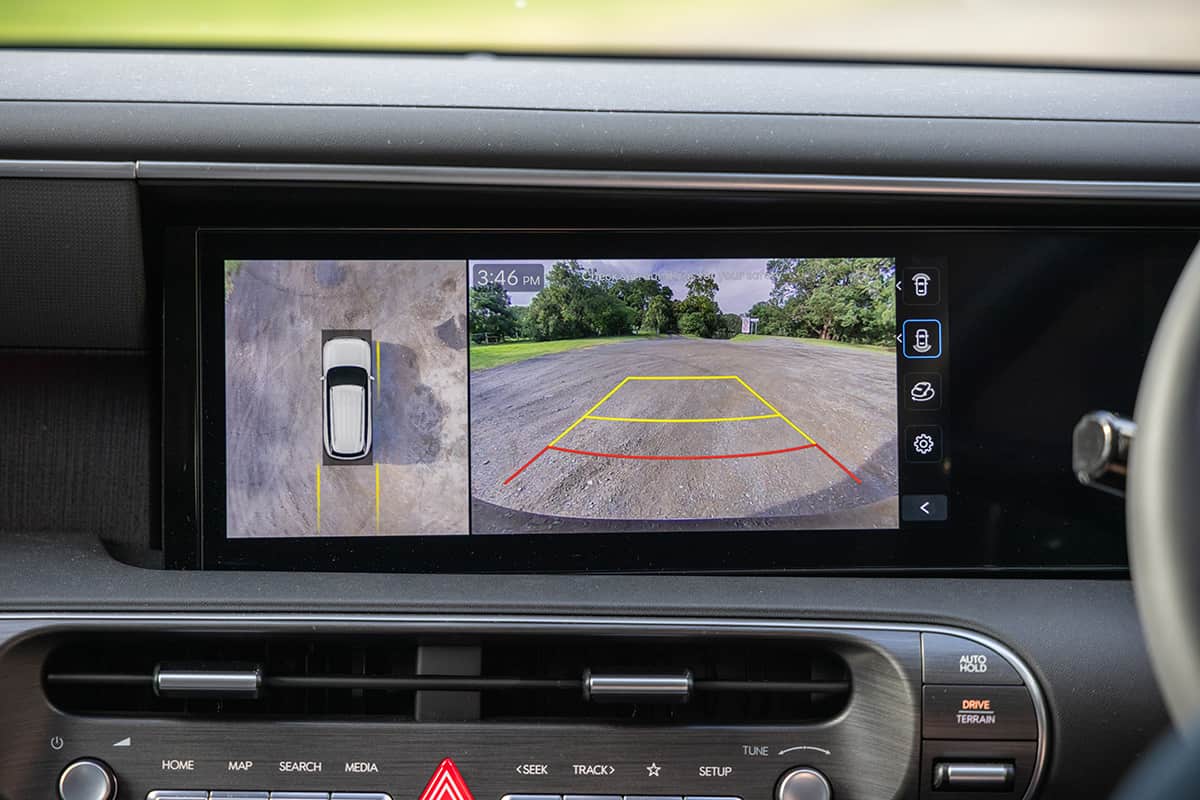
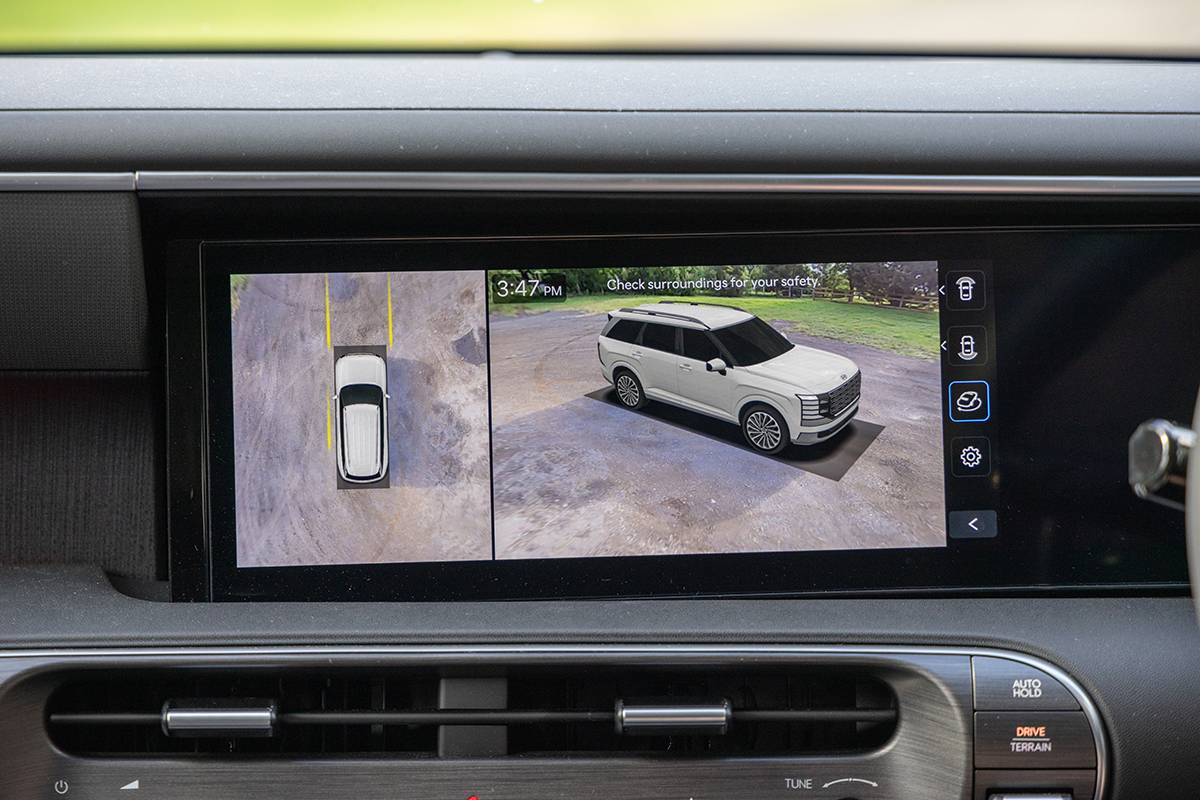
Despite its size, it’s not as intimidating to manoeuvre as it looks. The turning circle is a relatively tight 11.94 metres, and the 360-degree camera system does a lot of the heavy lifting when parking. You’re still aware of its footprint in tighter spaces, but it’s far from cumbersome.
Safety – What safety equipment is fitted? What is its safety rating? 7 / 10
The Hyundai Palisade holds a five-star ANCAP safety rating from testing conducted in 2025, and comes equipped with eight airbags, including curtain airbags that extend across all three rows.
The safety suite is comprehensive, covering most of the expected bases. You get blind spot monitoring, lane keeping assist, lane departure warning, forward collision warning, a 360-degree camera system, front and rear parking sensors, rear cross-traffic alert and side exit assist.
There are a couple of omissions worth noting. It misses out on emergency call functionality, and there are no seatbelt reminders for the two middle seats in the second and third rows.
The adaptive cruise control isn’t well-calibrated as it slows down firmly on hills, up to 10km below the set speed limit, which is better than going over the limit but still makes the system feel a bit clunky in real-world use.
Autonomous emergency braking with pedestrian, cyclist and motorcyclist detection is operational from 5.0-85km/h, and up to 130km/h for vehicle detection.
For families, there’s solid flexibility with four ISOFIX child seat mounts and five top-tether anchor points, making it well set up for multiple child seats across the rear rows.
Ownership – What warranty is offered? What are its service intervals? What are its running costs? 8 / 10
Ownership for the Hyundai Palisade is fairly straightforward and competitive for the segment. It’s backed by Hyundai’s five-year, unlimited-kilometre warranty, which can be extended by a further two years if you service exclusively through the brand.
Servicing costs are also reasonable for a large SUV. You can pre-purchase a three-, four- or five-year plan, with the latter coming in at $2630, which stacks up well against similar rivals.
Intervals are set at every 12 months or 10,000km, and with more than 100 service centres across the country, access shouldn’t be an issue for most owners.
Verdict
The new hybrid powertrain for the Hyundai Palisade is a welcome addition for families looking for an efficient three-row SUV that doesn’t drive like a brick and looks good at the school pick up or client lunch. Overall, the Palisade remains a solid, all-round package that deserves praise and the eighth seat is an added bonus.