
A New Era for Australia in Eurovision
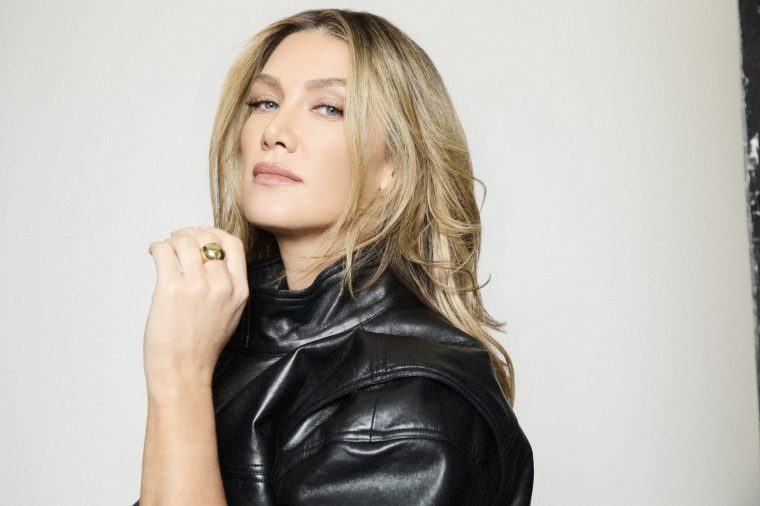
Australia’s participation in the Eurovision Song Contest has often been seen as a quirky addition to the event, a country that is geographically distant from its European counterparts but always welcomed with enthusiasm. However, this year, things have taken a different turn, thanks to Delta Goodrem.
Goodrem, an actor, singer, and the 2024 Australian entry, delivered a powerful performance of her song “Eclipse” during the semi-finals. Her emotional and soaring piano ballad left the audience in awe, signaling a shift in how Australia is perceived in the competition. No longer just a plucky outsider, the country is now seen as a serious contender for the title.
This change in perception comes as a surprise to many, but for Goodrem, it’s a natural progression. “I’m a measured person – I take everything in and allow it to simmer,” she says. She has always been passionate about the event, and when the opportunity came to represent Australia, she didn’t hesitate.
“I was always on a project or a tour, but last year, I was here doing shows when Eurovision was on, so I got to feel the energy in the air. It’s early in the morning when it’s on in Australia, so to be here experiencing it, I thought it was so incredible.”
Goodrem sees Eurovision as a celebration of creativity and individuality. “I’m bringing Australia with me in my heart, and I love seeing everyone there excited to get even more involved this year.”
While the possibility of receiving few or no points can be daunting, especially for established performers like Goodrem, she remains focused on her mindset. “I can’t control what happens. What I can control is my mindset and making sure that it’s the best it can be. That’s my job, and the rest of it… I feel grateful to be a part of this Eurovision community.”
Should she win, the question of hosting the event would arise. “It’d be so fun. I think we’d be a great host, we’d definitely want to look after everyone. Whether that’s possible or not, I have no idea – but imagine the pre-party barbecues.”
A Long and Successful Career
At 41, Goodrem has had a long and successful career. Starting out as a child star at 15 with a recording deal from Sony, she quickly rose to fame. At 16, she landed a role in Neighbours as Nina Tucker, which complemented her music career.
She has sold over eight million albums globally, and one in four Australian homes has a Delta Goodrem album on its shelves. For eight years, she was also a judge on The Voice Australia, where she worked alongside artists such as Joel Madden, Seal, Keith Urban, and Ricky Martin.
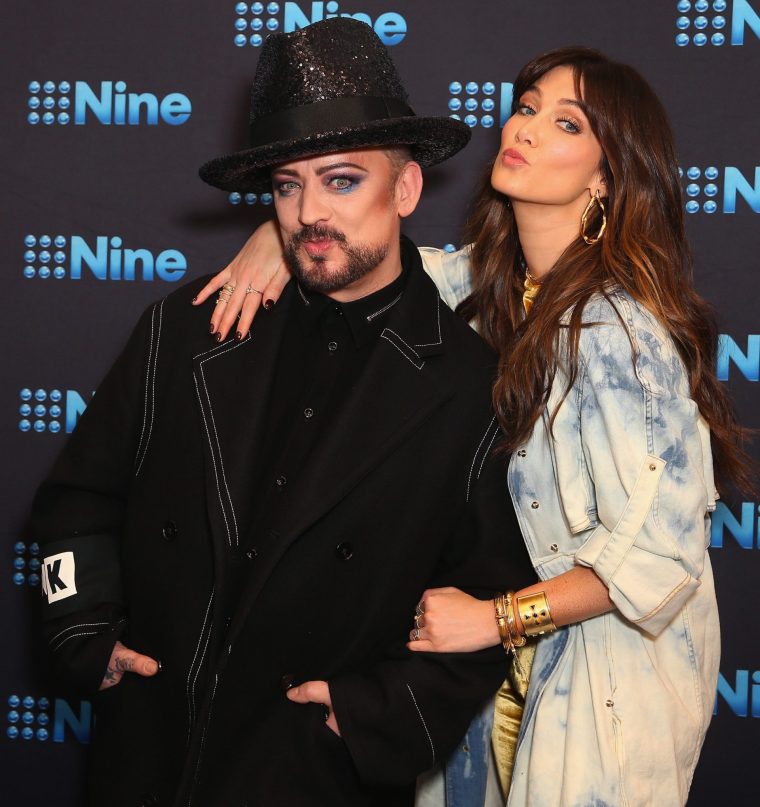
She also formed a close friendship with Boy George, who was involved in Eurovision this year. “I was like: ‘What do you mean George is going?’ Oh, he just can’t stay away!” Goodrem recalls. The Culture Club singer accompanied Senhit in representing San Marino in the semi-final, though he didn’t make it through to the final.
“Eurovision is all about individuality, creativity, joy, and the theatrics. It makes a lot of sense for George, who’s a trailblazer himself,” says Goodrem. “I love that George and I are doing the same year. We’ve always had a playful dynamic. We’ve been really supportive of each other from day one.”
Overcoming Health Challenges
Goodrem has faced numerous health challenges throughout her life. At 18, she was diagnosed with Hodgkin lymphoma, a cancer of the lymphatic system. At the same time, her debut album Innocent Eyes was at number one in the charts in Australia, where it stayed for a record-breaking 29 weeks.
“The challenge of going through cancer at the same time as having a number-one album was very unique and tough. But it did set me up so that, as a survivor, I’m able to be a pillar of hope,” she says.
She dealt with intense public interest in her private battle. “People were trying to get into the hospital to take photos,” she recalls. “But I understood that. As an artist, if your album is number one, you can feel it in the air, and you can go out and enjoy it, and I did not experience that for a long time.”
In 2018, a procedure to remove a salivary gland left Goodrem with paralysis to one of the nerves in her tongue. Devastatingly, she had to learn to speak – and sing – again. “There was a lot of surrender because, if you can’t talk, you can’t express yourself. You have to just take the temperature down because the second you start panicking, it’s so much worse.”
A New Chapter in Life
After six months, her voice returned, and it took a year to fully recover with the help of her speech therapist. “It was such a gradual process, you know, sort of slowly getting that articulation.”
She eventually released the single “Paralysed” in 2020, which led her to open up about her experience. “I couldn’t have predicted anything in my life. Life is full of surprises, but I know that I’ve got love and wonderful people and health and happiness. You’ve gotta be grateful.”
Last summer, Goodrem married Matthew Copley, a guitarist who plays in her band and with whom she runs her independent record label, Atled. “It’s amazing, it’s incredible. I love being married to my husband,” she says. “He runs everything with me, we developed it all together.”
Goodrem is approaching the Eurovision final much like an athlete preparing for a big competition. “You have to. You are the same as an athlete who is about to compete in a ski race or whatever.”
Having been in the public eye for 25 years, she is used to scrutiny. “I appreciate having started young. For me, it was a positive thing. Fame was just a part of something I loved and I guess I’ve become accustomed to the different phases of the media landscape.”
Delta Goodrem’s Eurovision single, “Eclipse”, is out now. The Eurovision Song Contest final airs on BBC One on Saturday, 16 May at 8pm.