Spain’s Culture Minister Condemns Eurovision’s Decision to Allow Israel’s Participation
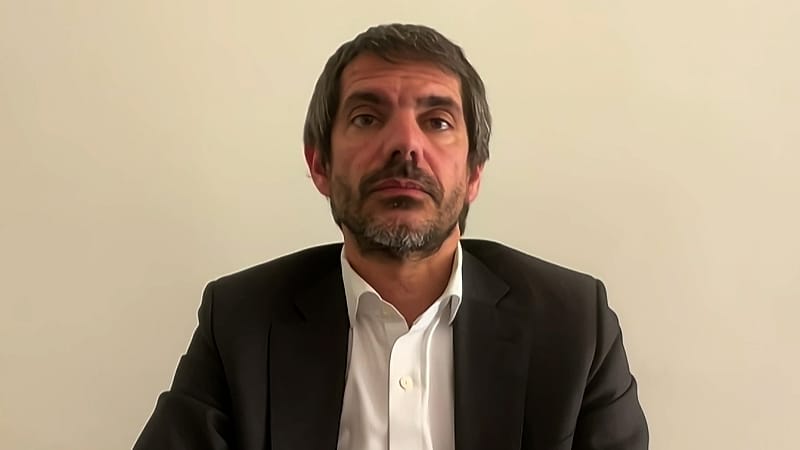
Spain’s Culture Minister, Ernest Urtasun, has raised serious concerns about the European Broadcasting Union’s (EBU) decision to include Israel in this year’s Eurovision Song Contest. He accused the organisation of using culture as a means to “whitewash” the ongoing conflict in Gaza, highlighting what he sees as a significant misstep in the event’s history.
In an interview with Euronews’ flagship programme Europe Today, Urtasun expressed his strong disapproval of the EBU board’s choice to allow Israel to participate. “The decision I would criticise, which I think is wrong, is the decision of the EBU board to allow Israel to participate,” he stated. “This is what is wrong from the beginning.”
Cultural Events Cannot Ignore International Conflicts
Urtasun argued that the controversy surrounding the contest stems not from the music itself but from the inclusion of Israel during a time of intense global scrutiny over its military actions in Gaza. “It’s not music that is dividing people,” he said. “Music is a moment of celebration. Eurovision has always been a moment of celebration.”
However, he stressed that cultural events involving national representation must consider the broader international context, particularly when it comes to conflicts and accusations against certain countries. “When you have a contest where countries are represented, and you have both Russia and Israel with the current investigation by the ICC, you cannot turn a blind eye to that,” he added.
He further claimed that allowing Israel to participate amounts to using culture as a tool to “whitewash” the situation in Gaza. “And when you allow Israel to participate, you’re actually using culture to whitewash what is going on there.”
Spain’s Stance: Not Up to Us to Tell Other Countries
Despite being one of the most vocal critics of Israel’s participation in international cultural events, Urtasun clarified that Spain’s criticism is directed at the EBU rather than individual countries. “It’s not up to me to say whether a country is right or wrong in participating,” he said. “We have decided not to.”
He noted that Spain’s decision to withdraw from the contest has received widespread public support, even though Eurovision is a highly popular event in the country. “People in Spain are very proud that our broadcaster decided not to participate,” he said. “It’s with pain, because people love Eurovision in Spain. It’s massively followed every year.”
“But I think the vast majority of Spaniards reject war, reject genocide, and are outraged by what is going on in Gaza.”
EBU Accused of Double Standards
The controversy surrounding Israel’s participation has led to growing pressure on the EBU, with protests, criticism from broadcasters, and political backlash overshadowing this year’s contest. Public broadcasters from Spain, Ireland, the Netherlands, Slovenia, and Iceland have either threatened to boycott or withdrawn from Eurovision due to the issue.
During Tuesday’s semi-final in Vienna, Israel’s contestant Noam Bettan faced audible boos and pro-Palestinian chants from parts of the audience, while several protesters were removed from the venue. The dispute has exposed deep divisions within Eurovision and raised questions about the contest’s claim of political neutrality.
Critics have pointed to the exclusion of Russia following its invasion of Ukraine, arguing that Israel should face similar treatment for its actions in Gaza. The EBU has defended its decision, stating that Eurovision is a competition between broadcasters rather than governments. However, mounting criticism from artists, broadcasters, and European politicians has made the 2026 contest one of the most politically charged editions in the event’s history.
Spain’s Possible Return Under Different Circumstances
Despite his strong stance, Urtasun indicated that Spain may be open to returning to Eurovision under different circumstances. “We are a country that loves to take part in Eurovision,” he said. “But we will only take that decision if a cultural event like that one will not be used to whitewash something very dangerous.”