A Unique Stage Experience: Krapp’s Last Tape
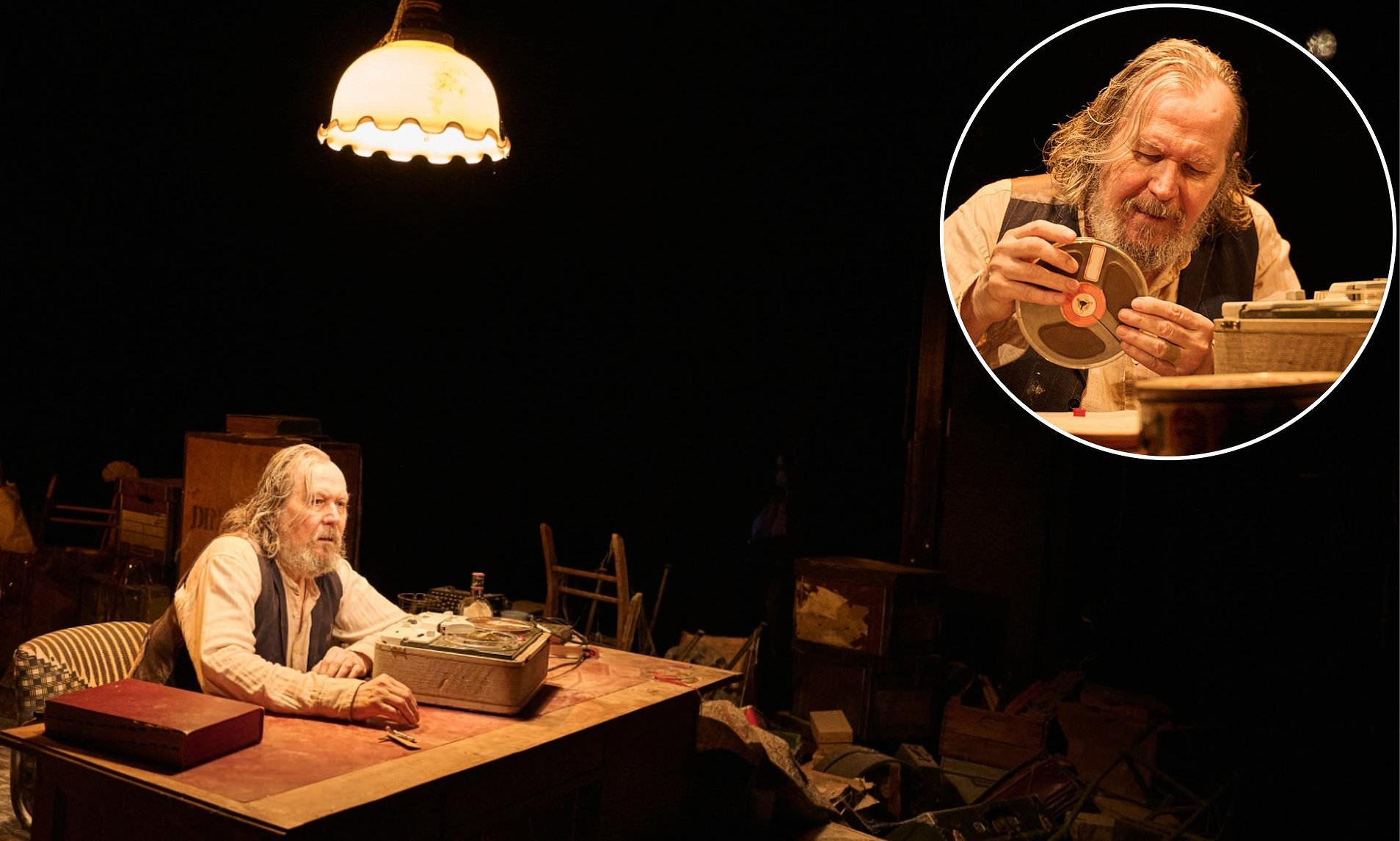
Krapp’s Last Tape, a short but powerful play by Samuel Beckett, recently made a return to the London stage with Gary Oldman in the lead role. This production, staged at the Royal Court, marks Oldman’s first appearance on the London stage in 39 years. His portrayal of Krapp, a grumpy and disheveled old man, is reminiscent of his character Jackson Lamb from the TV series Slow Horses.
The play opens with the song We Three by the Ink Spots, a choice that perfectly captures the essence of this mini-masterpiece. As Krapp, now 69, listens to a tape recording he made on his 39th birthday, he reflects on his past. The recording reveals a younger version of himself, full of hope and ambition, imagining he would become a great writer. However, he soon realizes that all of this is over, leaving him alone, regretful, and feeling as worthless as a banana skin.
Bananas feature prominently in this small playlet. The performance begins in silence, with a lightness before the darkness sets in. Krapp peels and eats a banana, tossing the skin into a box. He repeats this process, and later discovers another banana, darkly fossilized, much like himself.
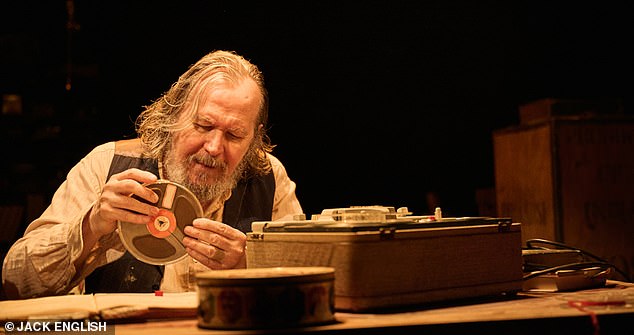
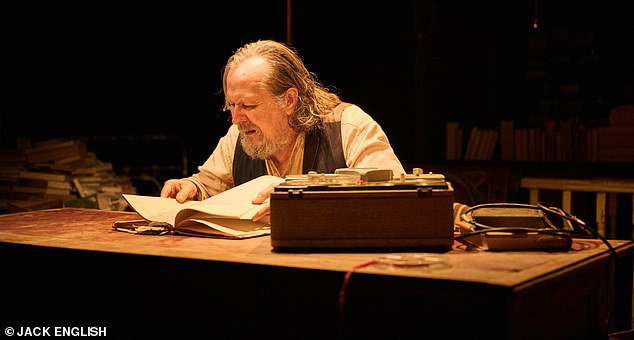
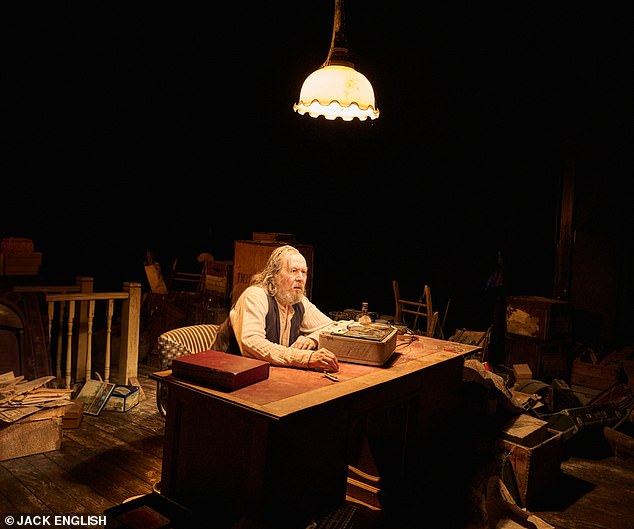
As Krapp sits at his desk surrounded by junk, he appears to be a hoarder. He searches for the right tin, affectionately calling them “scoundrels” as if they are naughty toys. He swills the word “spool” around his mouth, showing a level of care and attention to detail.
Oldman has directed himself, which may explain the restraint and lack of showiness in his performance. He makes it a portrait piece, focusing mainly on his face. The lighting by Malcolm Rippeth is superb, with the light fading as Krapp’s gaze becomes increasingly inward. He is still, sculptural, more dead than alive. The red button of the tape recorder blinks until it too is extinguished. This is a compelling performance that leaves the audience in awe.
Krapp’s Last Tape runs at the Royal Court until May 30.
Malory Towers: A Fun and Engaging Production
Malory Towers, a touring production based on Enid Blyton’s classic stories, brings a sense of high jinks and cliff-hangers to the stage. The play, adapted and directed by Emma Rice, received a 4/5 star rating for its engaging performances and playful approach.
The story follows Mary Lou, a lanky dreamer who is knocked unconscious and magically transported to Paddington station, where she joins other new students heading to boarding school on the Cornish coast. The school anthem, written by Emma Rice, celebrates the girls’ opportunity to grow and become “women the world can lean on.”
The cast includes characters such as Alicia, the class clown; Gwendoline, the beastly bully; Irene, who speaks through her music; and Darrell, who must learn to control her hot head. There is also Bill, a tomboy hero, and Sally, a bit too sensible. A clifftop drama allows the girls to discover more about themselves.
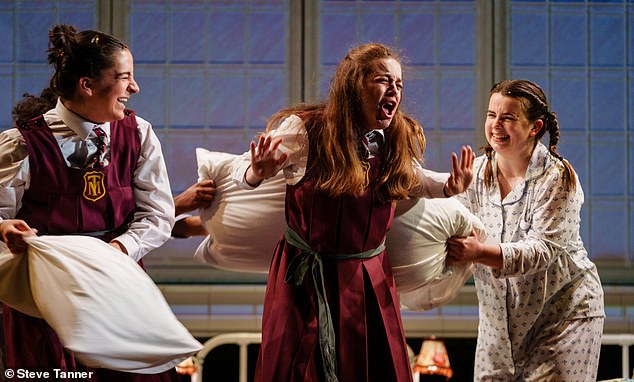
Originally staged in 2019 and interrupted by the pandemic, Rice’s revival returns with a lot of playfulness, spirited performances, and brand new puppetry by Lyndie Wright. The actors in swimsuits transform into tiny puppets, creating a magical underwater scene. Big puppet arms grip each other to save a life, adding a touch of humor and excitement.
The production is exceptionally silly, feeling like a private joke shared with a complicit audience. Filled with horrid behavior and super-wholesome sense and sensibility, this Forties set dorm-drama was well-received by both eight-year-olds and nostalgic 80-year-olds.
The songs include Benny Goodman’s Sandman, a gospel number for the train journey, and new songs by Ian Ross. In a charming staging of Midsummer Night’s Dream, Rice demonstrates the collaborative process of theatre-making, with the director as an enabler.
While there are some lumps and bumps, the production is ripping fun and well worth catching. For tour dates, visit emmaricecompany.co.uk.