The Power of Hobbies in Slowing Down Ageing
Have you practiced your singing today? Enjoyed a spot of painting? If so, you might be helping to keep the ageing process at bay. Research has found that people who engaged in artistic activities at least once a week seemed to age up to four per cent more slowly than those who rarely did. This discovery highlights the potential benefits of hobbies and creative pursuits in maintaining cognitive health as we grow older.
A recent study by University College London (UCL) analyzed survey and blood test results from 3,556 adults taken from the UK Household Longitudinal Study, using epigenetic clocks to measure how well someone is ageing. One arts session a week was found to have a similar effect on the ageing process as an extra workout, with cognitive stimulation being one potential benefit. While exercise has long been known for its brain-boosting powers, this study’s results suggest that arts and cultural engagement should be recognized as a health-promoting behaviour in a similar way to exercise.
Other activities that aren’t arts-focused can also help keep cognitive function sharp. “Hobbies give us a sense of meaning and purpose and make us feel connected, which all have evidence for being good for brain health,” says neuropsychologist Professor Catherine Loveday. Here are some of the best hobbies that can support brain health:
Practice a Musical Instrument – Several Times a Week
You might not be the next Yo-Yo Ma, but learning a musical instrument still lowers levels of the stress hormone cortisol – chronically elevated levels can interfere with attention. A study of 108 amateur musicians using MRI imaging found those with more musical experience, in particular singers, had better attention control.
Prof Loveday adds that “you learn how to communicate to another human in a unique and powerful way”. If you’re up for a challenge, “the piano is particularly cognitively demanding”, she says, suggesting learning the guitar or singing for faster (and cheaper) progression. “With any hobby, it’s really important in terms of stimulating the brain to find the right level of challenging – too challenging and you give up, too easy and you’re not immersed.”
Journal in the Evening Before Bed
Reflecting on your day in a diary supports your memory because you are literally rehearsing the things you’ve done, especially if you do it in the old-fashioned pen and paper way. Writing helps your fine motor control – the ability to coordinate eyes and brain to make small, precise movements using the muscles in our hands, fingers, and wrists.
The process of analysing emotions is another plus – a study of 207 college students found those asked to engage in expressive writing showed “significantly” greater autobiographical memory after six months. “The last couple of hours in the evening is a good time to do it as a way of winding down,” says Loveday, who stresses that – as with all hobbies – you shouldn’t be too regimented about doing it or the risk is you’ll get dispirited if you skip a day, give up, and stop reaping the benefits altogether.
Garden for 20 Minutes
Green fingers are good for our brain. A 2024 meta-analysis found “connectedness with nature replenishes cognitive resources, leading to improved concentration and attention”, while another study of 41 older adults found 20 minutes of low to moderate intensity gardening including digging, raking and watering showed levels of brain nerve growth factors related to memory “were significantly increased after the gardening activity”.
As with all hobbies, the social element – be it chatting to your neighbour over the fence or comparing courgettes at the allotment – is a benefit, says Loveday: “When you feel a sense of belonging and connection, inflammatory markers come down and managing [these] markers is very important for brain health. It reduces stress hormones, levels of inflammation and regulation of the flight or fight response.”
Join a Knitting Group
Knitting improves coordination and working memory – your brain’s ability to store and use short-term information, largely dependent on an area called the pre-frontal cortex. “You’re trying to hold stuff in your mind while physically doing something,” says Loveday. It also improves fine motor control, “and there’s the sense of creating something and watching it grow”.
A study of 3,545 knitters showed “a significant relationship between knitting frequency and feeling calm and happy. More frequent knitters also reported higher cognitive functioning”. The study also found knitting in a group “impacted significantly on perceived happiness”.
Spend 10 Minutes a Day Learning a Language
“Language learning is a complex cognitive thing to do,” says Loveday. So much so that a study in the journal Experimental Psychology found learning a second language, especially in childhood, changed the thickness of the left inferior frontal gyrus, part of the prefrontal cortex involved in attention and working memory.
Word-finding – that frustrating moment when you can’t remember the name for something – is a worry for people very early on in the ageing process, adds Loveday, and learning a second language helps improve our ability to retrieve words. She spends 10 minutes a day honing her French, German and Russian on the language-learning platform Duolingo.
Give Minecraft a Go
Surprisingly, perhaps, gaming may be good for our brain, with a 2024 systematic review finding it could improve college students’ stress, anxiety, and depression, as well as increase happiness and psychological satisfaction. Part of the reason, says Loveday, is that a video game will automatically give you the right amount of challenge needed. “It’s been shown to be good for mental health for many people, because it’s so immersive.”
She cites Minecraft, which has a building element that helps improve spatial representation – your brain’s ability to map objects and navigate spaces – as well as improving processing speed and reaction time, as a good game to try. Gaming also trains our psychomotor coordination – the connection between what we want to do and what our body does – by improving connections between different areas of the brain.
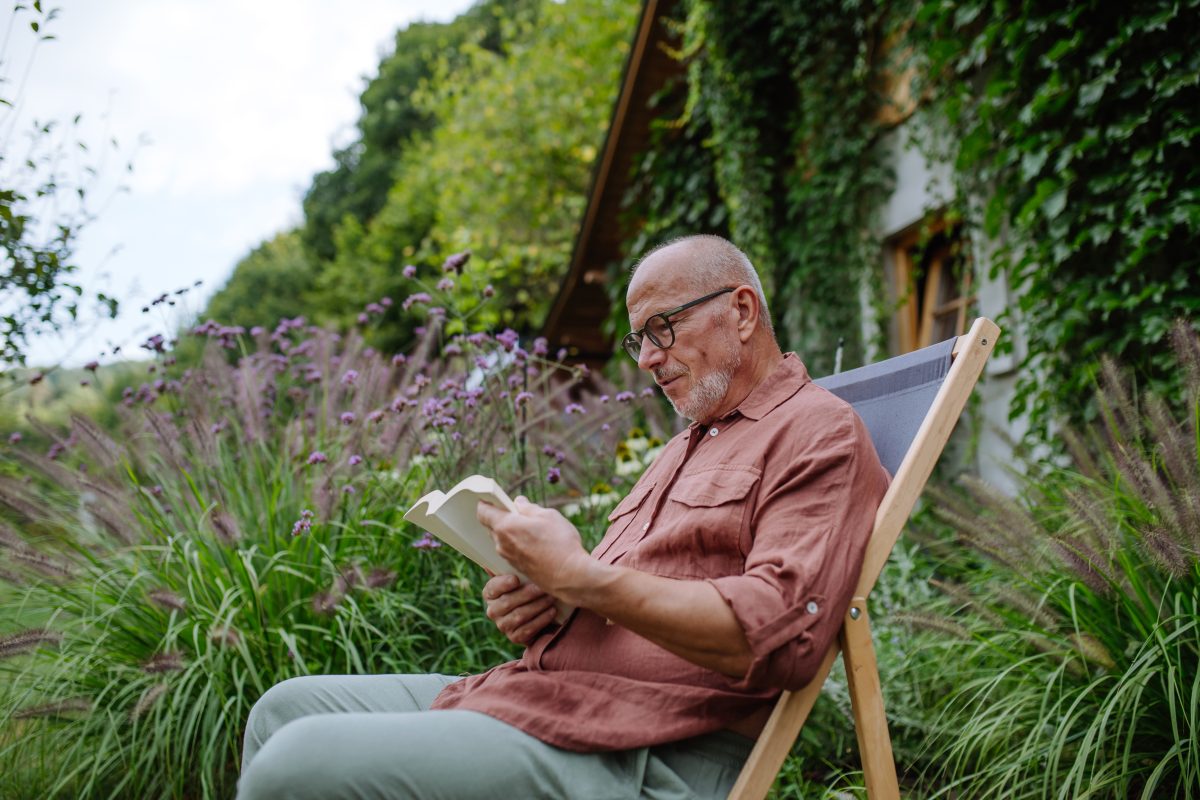
Read Fiction Twice a Week
Reading improves imagination and word-finding skills, says Loveday. “The more you read the better you’re stimulating the language parts of your brain. Even if you don’t belong to a book club, there’s often a social element because a lot of fiction centres around relationships.”
A study in the journal Science found literary fiction was better than non-fiction or popular fiction at developing Theory of Mind – the ability to understand other’s mental states – while a longitudinal study of nearly 2000 people over 64 found frequent reading at least once or twice a week was “associated with a reduced risk of cognitive decline for older adults”.
Enjoy a Game of Chess to Become Less Impulsive
Last year, a study comparing a group of 25 chess players and 25 non-chess players found chess players had better cognitive reflection when given three mathematical questions to answer that triggered an intuitively obvious but wrong answer, and greater focus on long-term outcomes.
The study was correlational – it wasn’t clear whether chess had honed these skills, or the people with these skills were more predisposed to chess, but Loveday says: “You’re always having to think three steps ahead. It’s a good executive function workout.” Executive function primarily takes place in the prefrontal cortex and there are two executive functions involved in chess, she adds, “creating a strategy and being able to plan three or four steps ahead, and not being impulsive, but stopping and thinking – what are the consequences of these actions”.