A Passion That Began at Birth
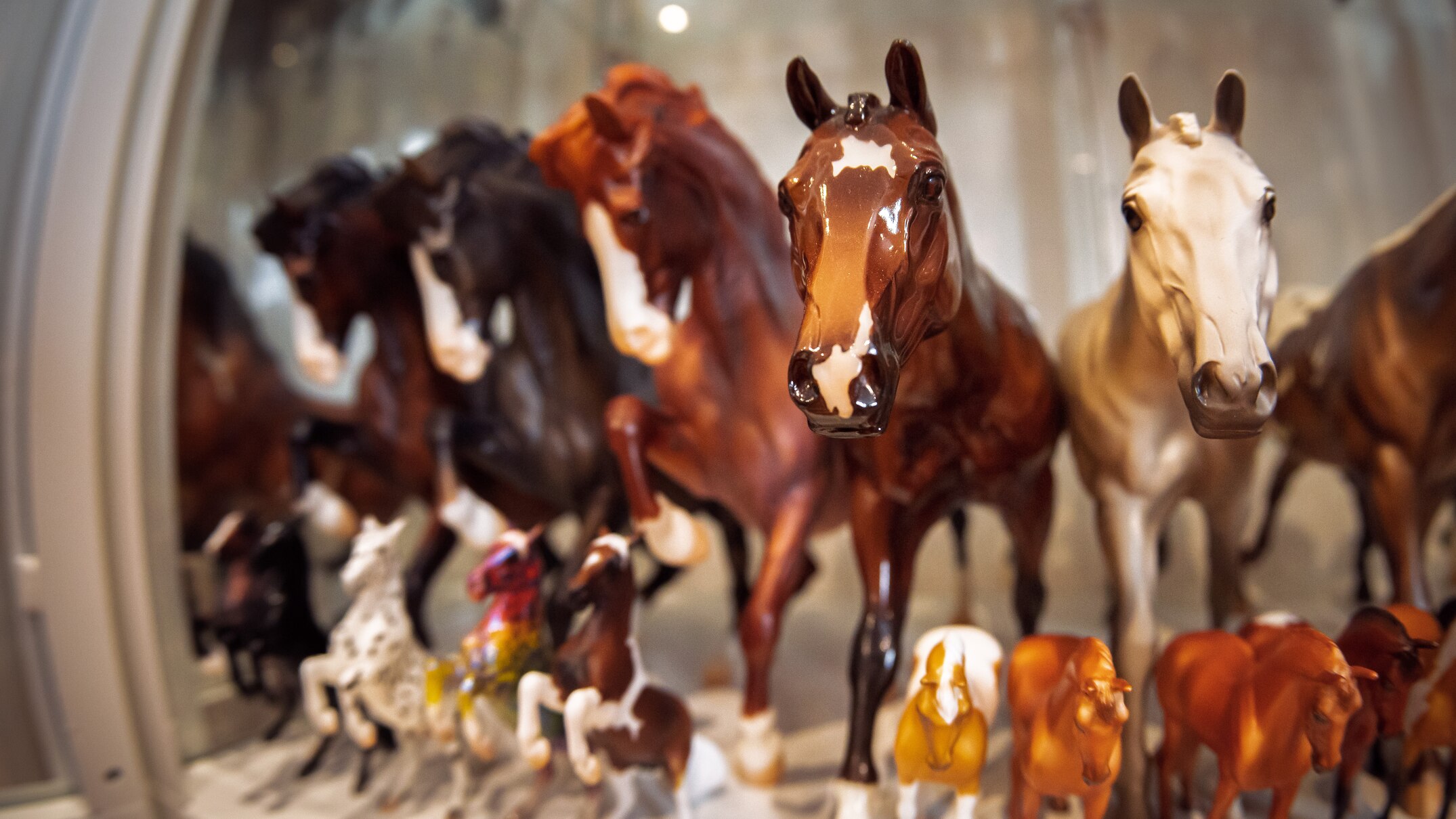
Maeve King’s love for horses began before she even took her first breath. From a young age, she was captivated by the tiny figurines of these majestic animals, which were about the size of today’s smartphones. This early fascination sparked a 25-year journey into the world of model horses, a hobby that has grown to include hundreds of pieces in her collection.
Living in Sydney, Maeve is part of a global community that gathers to celebrate and showcase intricate replicas of various horse breeds. For many, this hobby involves significant financial investment, with some models costing hundreds or even tens of thousands of dollars. However, to those outside the community, these “little plastic ponies” may seem like simple toys.
“It’s kind of a dichotomy of yes, they are just toys, and no, they can represent so much more,” Maeve explained. “They are an avenue for community, for creativity, for self-expression, and for people to engage in horses in a way that can be cheaper than having an actual horse.”
The Art of Model Horses
Model horses can be crafted from a variety of materials, including plastic, resin, porcelain, and even 3D printed components. Each piece is handpainted, ensuring that no two models are exactly alike. While some are custom-made, the majority are commercially produced and sold as-is.
The traditional size of a model horse is around 20cm tall, but they can be as small as 7cm, with prices starting at approximately $60 per model. Kerren Hampton, an early importer in the 1990s, recalls shipping these models across Australia via mail order. Today, limited edition, vintage, or special-run horses can fetch $10,000 or more.
While some models take on a fantastical theme, most are valued for their realism, often inspired by famous horses. “We even have ones after Australian horses like Winx and also Black Caviar … and many years ago, they did a model of [New Zealand-born] Phar Lap,” said long-term collector Kerri Afford from South Australia.
Showcasing the Collection
Hobbyists gather for live shows where they present their collections and compete in different categories. These events feature models adorned with tack such as saddles or reins, set up in realistic scenes accompanied by rider figurines. Models can be judged based on breed or color class, and are separated by size.
“There are some that just blows my mind and you’ve got to look twice … because it looks so real,” Kerri said.
Building a Community Down Under
The model horse community is spread across Australia, but members stay connected online. Maeve described the Australian collectors as close-knit, with everyone knowing each other. “It’s a nice group of people who all have each other’s backs and are overwhelmingly supportive and just have a really fun time in the face of what I think people often think is a really, really weird hobby,” she said.
“I’ve experienced a lot of judgment before so it’s nice being around other people who just sort of get it.” Kerri added that the community was “quite big” with “thousands” involved nationwide. While not everyone attends live shows, a “big” turnout could see dozens of participants. Meanwhile, a convention hosted by US manufacturer Breyer draws 30,000 attendees to Kentucky each year.
“I don’t know that we need to be as big as America or as crazy,” Kerri said. Kerren noted that despite the larger population and deep “horse heritage” in the US, the same love for horses exists in Australia. “You’ve got your stockmen, your drovers and your light horseman, you’ve got your brumbies; there’s still quite a horse culture in Australia,” she said.
Overcoming Misconceptions
Kerri admitted that there are always people who think collecting is for “nut cases.” “They think, ‘What do you do? Do you gallop them around the table?’” she said. “There are people out there that just want to ridicule what somebody does just because they don’t understand it.”
Despite this, Kerri sees new people discovering the hobby weekly — especially recently due to the Year of the Horse. “I just see [the hobby] going forward and getting better. I myself don’t plan on stopping collecting anytime soon.”
Maeve believes the horses represent an “escape from reality.” “I think people would just dismiss it as silly and frivolous … and it kind of plays into the ‘crazy horse girl’ trope that exists. But this isn’t hurting anyone and we’re having a good time … it’s brought a lot of joy to my life.”