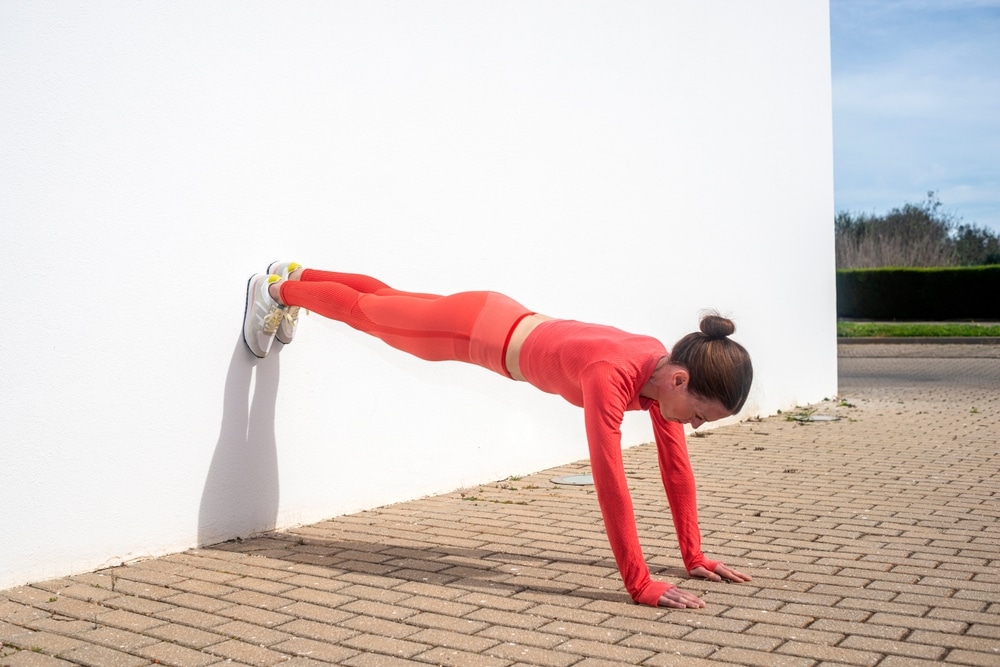
The Evolution of the Plank: Why Shorter Holds Are Better
For years, fitness enthusiasts have chased the elusive two-minute plank, believing that a longer hold signified a stronger midsection. However, recent research is challenging this long-held belief. A 2025 study on plank performance and back pain has revealed that longer hold times do not necessarily translate to a lower risk or reduced severity of back pain. In fact, some individuals with back issues were found to outlast those without. This finding has prompted spine specialists and strength coaches to emphasize that when it comes to planks, a shorter, perfectly executed set is more effective than a drawn-out struggle.
Dr. Stuart McGill, a leading spine biomechanist, has long advocated for 10-second plank intervals instead of endurance marathons. His protocol involves holding a plank for 10 seconds, resting briefly, and repeating for multiple rounds. Similarly, Dr. Edward Phillips, a specialist in physical medicine and rehabilitation at Harvard Medical School, notes that the ability to maintain a plank for up to a minute can be a marker of reduced back pain.
Experts at NYU Langone’s Sports Performance Center and the American Council on Exercise suggest that any hold beyond 40 to 60 seconds offers no additional strength benefit and often invites injury. This convergence of expert opinion is reshaping how trainers prescribe one of the world’s most popular core exercises.
The Science Behind Shorter Holds
The reason quality trumps time lies in how the body compensates under fatigue. A plank is an isometric exercise designed to teach the core muscles to stabilize the spine. Once those muscles tire, the lower back begins to sag or the hips lift, shifting the load onto the shoulders, neck, and passive spinal structures. At that point, the strengthening effect vanishes, and the risk of joint strain rises.
Certified personal trainer Kendra Madigan, as quoted in Prevention, emphasizes that “when your form breaks, come out of the position so it doesn’t place stress on your shoulders, back, or other parts of your body.” In other words, the set ends when the body says so, not when a timer beeps.
Electromyography Studies and Core Activation
Electromyography (EMG) studies have repeatedly shown that the plank activates the rectus abdominis, transverse abdominis, and obliques more effectively than traditional crunches. However, the activation depends on a maximal muscle contraction that can only be sustained briefly. As fatigue sets in, the nervous system begins recruiting passive structures such as ligaments and spinal joints to hold the position, defeating the exercise’s strengthening purpose and raising the risk of overload.
The 2025 study, covered by Prevention, adds a critical nuance. It observed that back pain sufferers sometimes demonstrated greater plank endurance than pain-free individuals, and that “longer plank times may not indicate lower risk or severity of back pain.” In other words, hitting a two-minute hold does not prove a healthy spine; it may simply show that someone has learned to compensate poorly. This aligns with biomechanical principles: a hold that outlasts muscular stamina becomes a test of joint tolerance, not core strength.
Fitness Author Dan John’s Perspective
Fitness author Dan John captures the diminishing returns with a memorable rule of thumb: “A maximum of 2 minutes, anything longer is meaningless.” Beyond that threshold, the exercise shifts from building stability to testing mental grit, often at the expense of the lower back.
What Perfect Plank Form Actually Looks Like
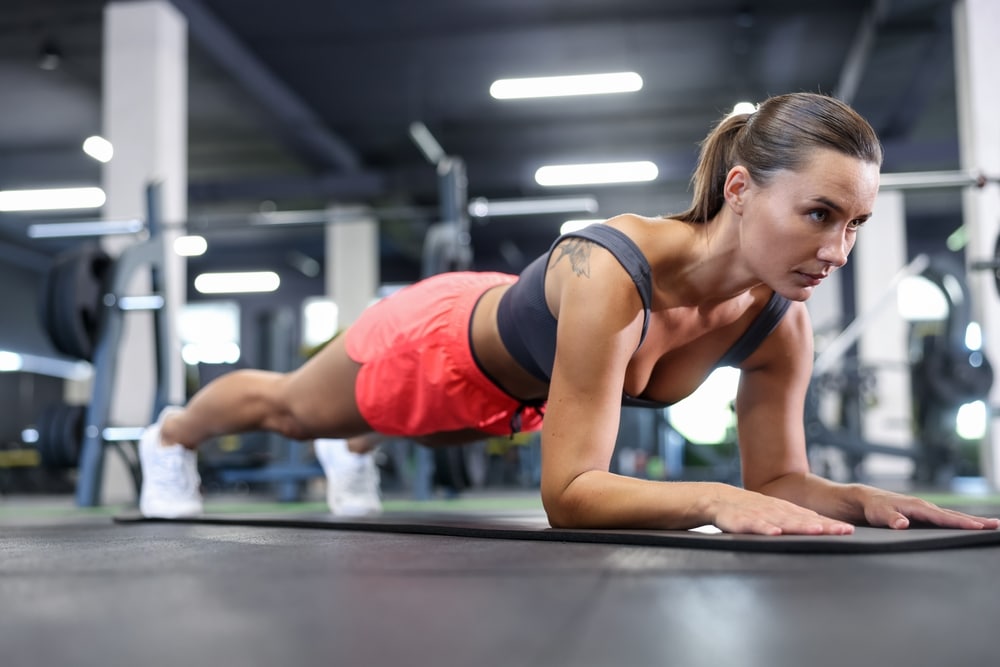
Form is the non-negotiable foundation of any plank. The position demands a straight line from head to heels, with elbows stacked directly under the shoulders, core braced, and glutes and quads actively squeezed. A proper plank engages the entire core, glutes, and shoulders. The gaze should stay on the floor a few inches ahead, keeping the neck neutral, while steady breathing prevents the breath-holding that often precedes a form collapse.
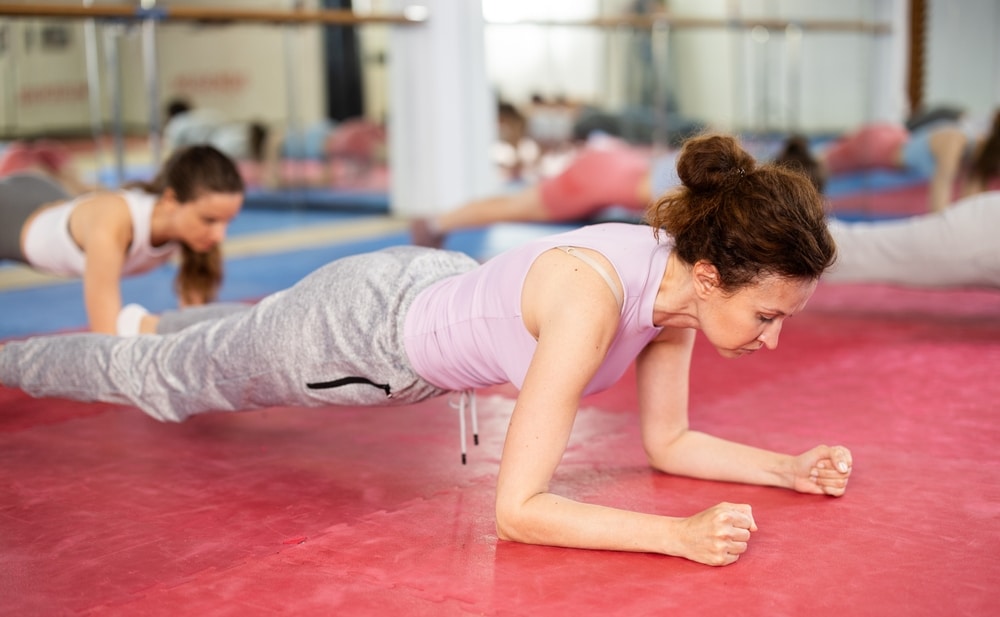
The Moment Form Falters
The moment the hips sag or the lower back arches, the core disengages. The load then transfers to the spine’s passive structures and the shoulder joints, which is precisely when injury risk climbs. That is why experts at institutions like Harvard Medical School emphasize that the plank is only as good as the alignment it enforces. A 20-second plank with immaculate posture builds far more spinal stability than a 90-second plank that lets the belly droop.
Common Plank Myths That Won’t Die
Despite the clarity of these guidelines, several misconceptions continue to circulate. The most stubborn is the belief that longer is always better. As the data shows, after about 60 seconds, the return on investment plummets. Holding for three minutes does not double the strength gain; it simply rehearses poor mechanics under fatigue.
Another widely held idea is that the plank can spot-reduce belly fat or carve out a six-pack. The plank is an isometric drill, meaning it builds endurance without moving joints. It does not burn significant calories, nor does it create the muscle hypertrophy that dramatically reshapes the midsection. A visible rectus abdominis depends overwhelmingly on low body fat percentage, achieved through diet and higher-intensity training, not on marathon floor holds.
The Plank as a Back-Pain Fix
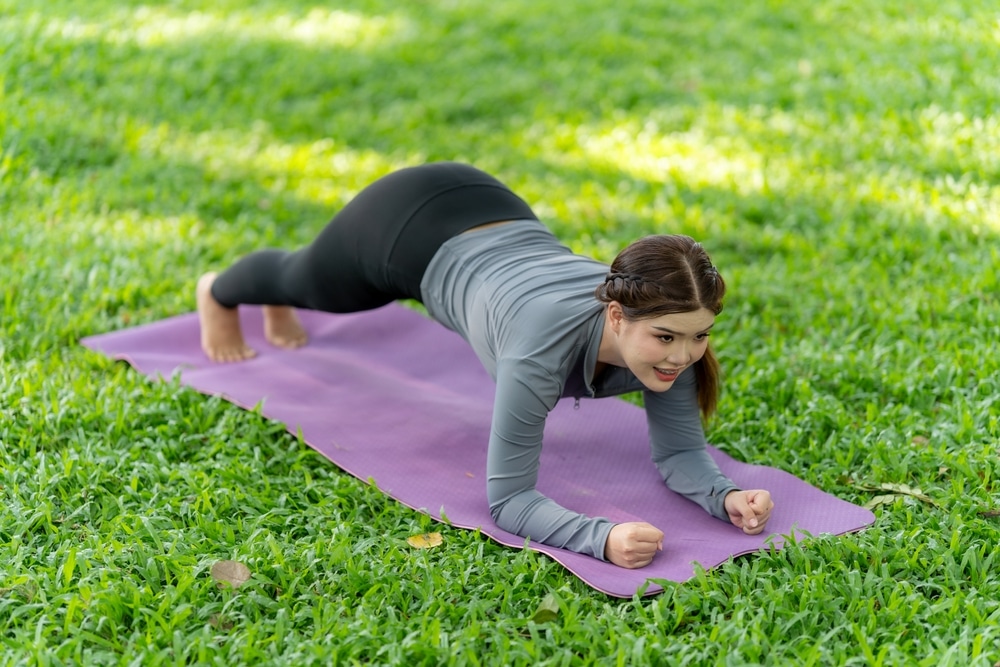
A third myth is that the plank is a one-size-fits-all back-pain fix. While the ability to hold a well-formed plank for up to a minute correlates with reduced back discomfort, the relationship is not linear. The 2025 findings reinforce that endurance alone does not equal resilience.
A Smarter Plank Routine for Any Fitness Level
The evidence points toward a handful of practical strategies. One is McGill’s 10-second interval method: holding a maximal-effort plank for 10 seconds, resting 5 to 10 seconds, and repeating for three to six rounds. This builds endurance while preserving the spine’s integrity and makes the plank accessible even to beginners.
For those who prefer a single hold, the goal is to find a personal baseline by stopping the instant form falters. That time becomes the starting point, and each week, 5 to 10 seconds can be added until a rock-solid 40- to 60-second hold is achieved. Aim to practice planks three to four times per week, allowing a day of rest between sessions. Once the 60-second mark becomes easy, progression should come from variations like lifting a foot, adding a side plank, or incorporating dynamic movements, rather than simply chasing more time on the clock.
Final Thoughts
The 2025 study’s finding that longer plank times don’t guarantee a healthier back reinforces the expert consensus that stopping as soon as form falters is the only way to make the plank effective and safe.