Innovations in Microgravity: A New Era for Science and Technology
In 2025, the International Space Station (ISS) became a hub of innovation, with over 750 investigations pushing the boundaries of science in microgravity. These studies have the potential to transform astronaut health, robotic surgery, material science, and energy storage, while delivering benefits for life on Earth.
Robotic Surgery Tested in Microgravity Could Revolutionize Space Medicine
NASA researchers investigated whether a miniature robotic system could perform surgical procedures in space. Using rubber bands to simulate tissue, the team tested how communication delays from Earth impacted robotic precision. Results revealed that while timing delays slightly extended procedure durations, accuracy remained high.
This experiment demonstrates that complex surgical tasks could one day be conducted on a lunar base or Mars outpost. Robotic surgery also offers compact, reliable options for remote medical care on Earth, including disaster zones and isolated communities. Precision, adaptability, and the ability to overcome communication latency make this technology a potential game-changer for both space exploration and terrestrial medicine.
Levitating Bone Growth Offers Hope for Astronauts and Regenerative Medicine
The Magnetic 3D Bioprinter, a collaborative investigation by Roscosmos, employed magnetic levitation to build intricate tissue structures with minimal material. By arranging calcium crystals into synthetic bone scaffolds, researchers achieved superior structural organization and regenerative potential.
Bone loss is a significant risk for astronauts on long-duration missions, raising the likelihood of fractures. This technique could enable on-demand fabrication of bone grafts in space, providing a critical tool for skeletal injury treatment far from Earth. Beyond space, the technology holds promise for tissue engineering and regenerative medicine, potentially accelerating recovery times and improving outcomes in clinical settings.
Melanin-Infused Materials for Radiation Protection
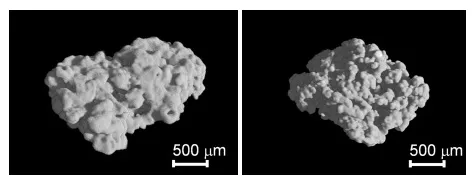
NASA examined how prolonged exposure to space vacuum and radiation affects polymers, thermal shields, and biomaterials. Researchers tested materials infused with fungal melanin, a naturally occurring pigment that provides ultraviolet protection. These materials demonstrated exceptional radiation resistance and durability in space conditions.
Biologically derived shields like these could reduce the weight and cost of future spacecraft while offering safer, sustainable protection for astronauts. Applications extend to Earth-based solutions, including radiation-resistant medical equipment, UV-protective coatings, and robust construction materials in extreme environments.
All Solid-State Lithium Ion Batteries Prove Resilient in Space
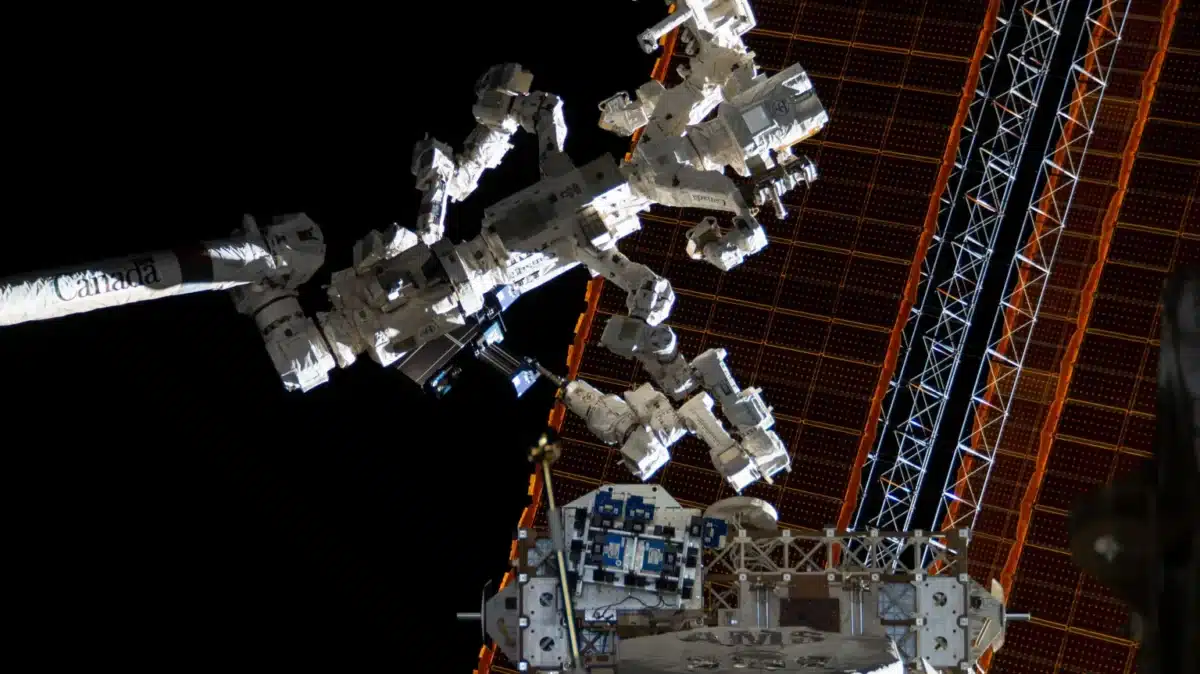
A JAXA investigation explored the performance of all solid-state lithium ion batteries in orbit, exposing them to extreme temperatures and the vacuum of space for 434 days. The batteries exhibited stable electrical behavior, minimal degradation, and only a 2% loss in capacity.
These findings suggest that such batteries could provide safer, more reliable energy for lunar and Martian missions. Their enhanced chemical stability, temperature tolerance, and resistance to ignition make them ideal for spacecraft and applications in harsh terrestrial environments where traditional lithium ion batteries may fail.
Astronauts’ Piloting Skills Temporarily Impaired After Spaceflight
NASA’s Manual Control investigation studied the effects of long-duration spaceflight on astronauts’ ability to pilot aircraft. Five astronauts performed simulated landings before and after missions, revealing temporary declines in reaction speed and precision, including higher touchdown speeds and navigational errors.
Most astronauts regained baseline performance within hours, indicating that microgravity affects critical motor skills temporarily. These findings underscore the importance of countermeasures and retraining programs for astronauts returning from extended missions to maintain safety and operational readiness.
Electrical Phenomena Above Thunderstorms Tracked From Orbit
The European Space Agency examined sprites, blue jets, and elves, electrical events occurring above thunderstorms. Combining orbital observations with ground-based radio measurements, researchers confirmed that strong lightning bursts can trigger these phenomena and identified a correlation between brightness and electrical current.
Understanding these processes improves weather prediction and upper-atmosphere modeling, critical for satellite operations, communication systems, and monitoring severe storms. These insights could lead to enhanced forecasting and a better grasp of the dynamic energy transfer between Earth’s atmosphere and space.