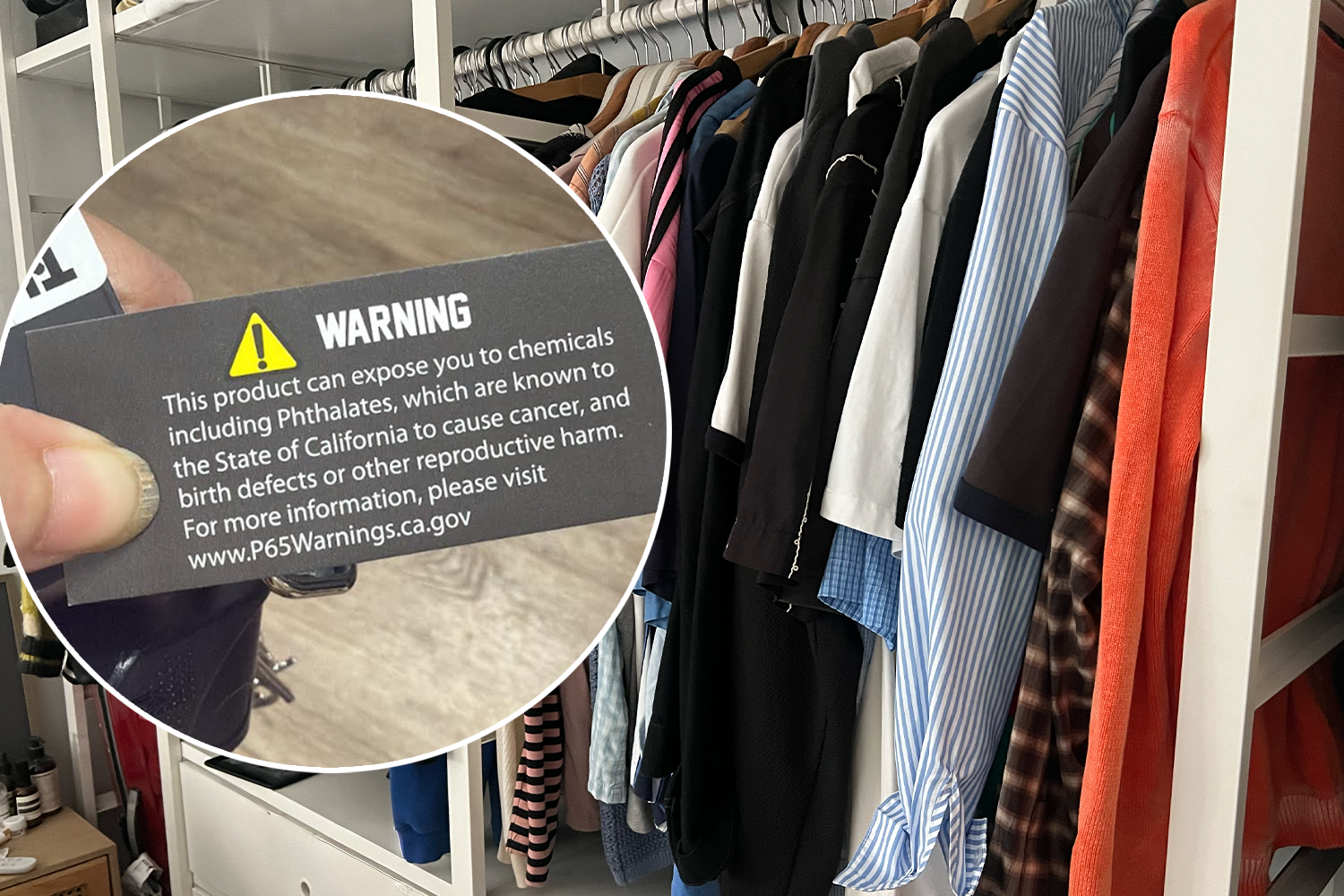
A small message on a clothes tag at a popular retail store has served as a warning to Australians about the hazards hidden in some of our favourite clothes. Experts this month sounded the alarm about PFAS — dangerous chemicals that Australians often wear on our skin, unwittingly.
PFAS — short for per- and polyfluoroalkyl substances — are added to fabrics to create water-resistant, sweat-repellent and stain-proof finishes and are commonly used in children’s school uniforms and activewear. Dr Carol Tan said they’re known as “forever chemicals” because they don’t break down.
“Research has linked long-term PFAS exposure to serious health concerns, including certain cancers, thyroid disruption, immune system impacts, and reproductive issues,” Dr Tan explained.
Dr Tan, an Associate Professor and Program Manager of the Master of Fashion Entrepreneurship at RMIT University, shared another example of what to look out for on tags. Over the weekend, she found a puffer jacket and a bag with a California Prop 65 warning for phthalates still attached at a TK Max store in Melbourne.
“This was probably manufactured for the US market and still has the American label on it,” she said. “California legally requires this disclosure, but Australia has no equivalent requirement, so Australian shoppers are only seeing this warning by accident! ‘Who would buy this now with this kind of warning?’”

What are phthalates?
Dr Tan said most people would see that warning label and “have no idea what phthalates even mean”, pointing to one of the labels seen at the TK Max store. Phthalates are chemicals used to soften plastics, often found in PVC and synthetic coatings, and they can be present in some consumer products, including certain bags and printed materials.
Some phthalates have been linked to developmental and reproductive health concerns, which is why their use is restricted or closely monitored in many products worldwide.
“I wonder, will they react like someone seeing a cancer warning for the first time and put the bag straight back?” Dr Tan said. “Or treat it like a cigarette packet warning and just carry on? Either way, it proves the point. Voluntary warnings are not enough. We need mandatory standards, not just labels.”
What are PFAS?
PFAS are not the same thing as synthetic fabrics themselves, meaning polyester or nylon clothing does not automatically contain the chemicals. Dr Tan said PFAS have already been found in a huge range of consumer products, including carpets, food packaging and personal care items, with the chemicals building up in the environment for decades.
“[They are] extraordinarily common, and it goes well beyond activewear,” she said. “This is not just a fashion problem. It is a broader chemical system problem that fashion is part of.”
Some major global brands have already begun phasing PFAS out of their clothing ranges.

How are they regulated?
Companies, including Uniqlo, Patagonia, H&M and Levi’s, have all removed PFAS from large parts of their manufacturing. Newer PFAS-free waterproofing technologies are increasingly being adopted internationally. Australia banned three specific PFAS chemicals in 2025, but experts say that only scratches the surface, with more than 14,000 PFAS chemicals believed to exist globally.
Unlike California and New York, Australia has not introduced bans on PFAS in apparel or school uniforms.

RELATED: Warning about danger lurking in millions of wardrobes: ‘Accumulate over time’
Aussie council introduces new bin after scrapping FOGO program
Termite mound protected by twin electric fences: ‘Dire straits’
What should I look out for?
Experts recommend paying closer attention to marketing claims around stain resistance, water repellence and wrinkle resistance. Words like water-repellent, stain-resistant, or wrinkle-resistant often indicate chemical treatments.
But it’s the coating applied to the fabric that matters, not the fabric itself.
You can also follow us on Facebook, Instagram, TikTok, X and YouTube.