A New Dawn for Female Veterans
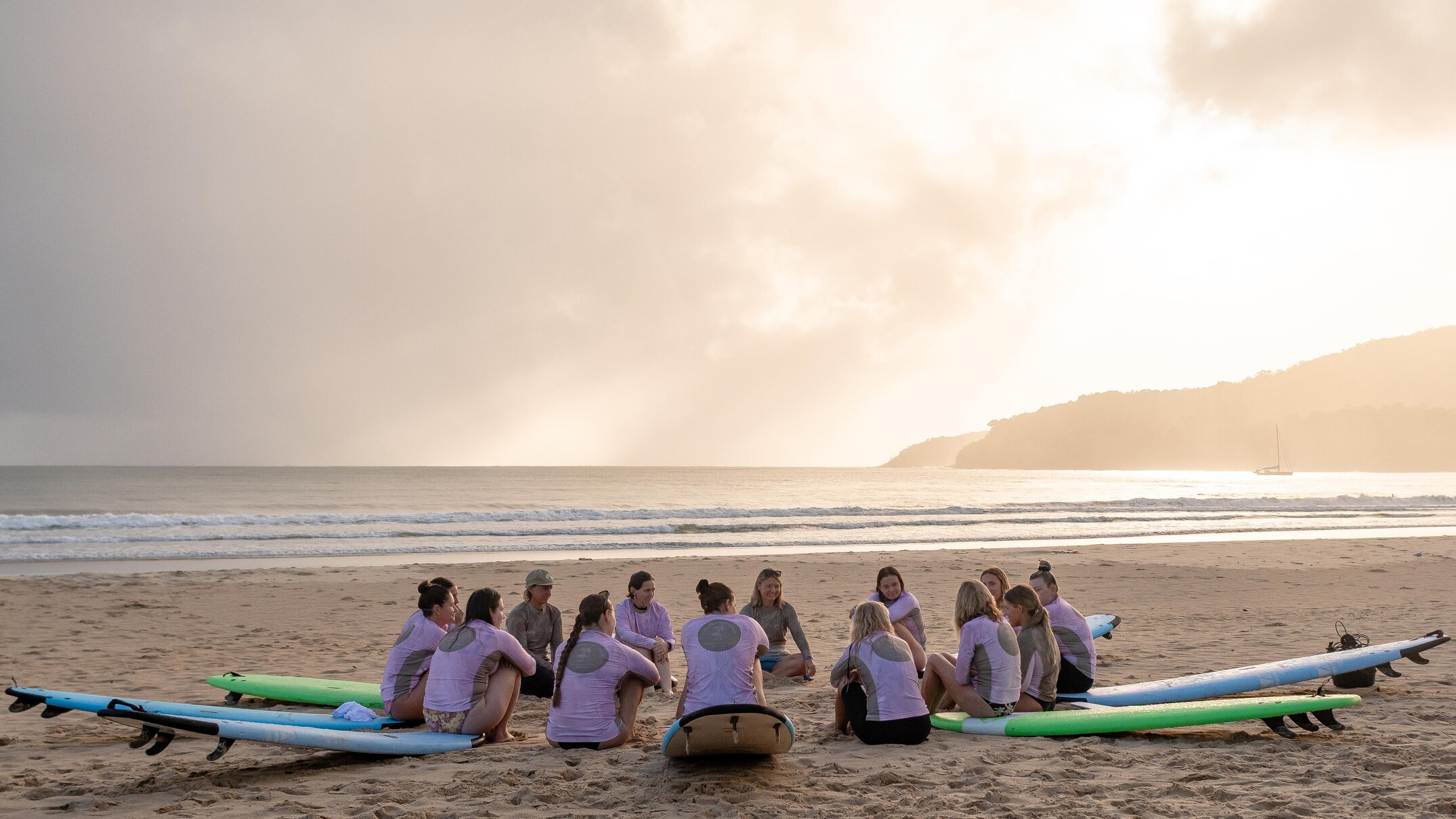
As dawn breaks over Mudjimba Beach, on Queensland’s Sunshine Coast, a woman rallies the troops for their morning mission. They are armed with surfboards and there is a nervous energy in the crisp autumn air. Most of the women have just met, and the ocean did not get the memo that a bunch of beginners was about to hit the waves.
“The surf on day one was massive, like six to eight feet, and I was like, ‘Oh my God, how am I going to host this?’” Tammy Grant said. Ms Grant, the event organiser, soldiered on knowing that if anyone could handle a challenge it would be a group of female veterans.
“We ended up getting them out on the boards and in the whitewash,” Ms Grant said. “Just to see the very same people who were so depressed just two hours earlier have these massive smiles … let go of the ‘strong girl’ facade and enjoy the moment with a bunch of other bad-ass women — it was incredible.”
The Power of the Surf
The surf therapy retreat, believed to be the first of its kind in Australia tailored specifically for female veterans, was held in March. Ms Grant spent 14 years in the defence force, and the next seven years trying to recover from her experience.
“I came from quite a traumatic childhood, then I went on to join the army when I was about 19 years old, experiencing my first deployment to Afghanistan when I was 22, so it’s a bit of a shock,” she said. Having initially served as a transport operator, she then became a nursing officer.
“I got diagnosed with PTSD as a result of my childhood, stuff that’s happened in my service in terms of deployment, and some sexual assault kind of stuff,” she said. She tried all kinds of therapies until she finally found solace in the surf, through the Waves of Wellness program.
“When I was out in the water, I could feel my body responding — I could feel alive,” she said. “I felt amazing when, the last six, seven years I’d felt just … nothing.”
Ms Grant decided to do a deeper dive into the program, studying for a postgraduate degree in mental health and neuroscience. She also went to Scotland last year for the International Surf Therapy Organization’s inaugural global conference and “just sponged everything up”.
“I decided this is the perfect blend of all my skills that I have developed and my life experiences,” she said, adding that she was also collaborating with the Women Veterans SURF Project in the US, with the aim to raise awareness globally.
Navigating Civilian Life
Hannah Jagger, who was medically retired after spending 10 years as an army medic, said she was initially hesitant to join the retreat to help with her PTSD. “My psychologist actually pushed me to go,” Ms Jagger said. “I was pretty stand-offish day one. I really struggled. I think day two everybody kind of opened up and then the flow started.”
Ms Jagger travelled up from New South Wales. “When we leave the military, we lose those friendships and people that just get you,” she said. “We are expected to go back into everyday civilian life and become an everyday person and it’s really challenging.”
She described the experience as “life-changing” and was so inspired she has now come on board as a sponsor to enable Ms Grant to offer subsidised enrolments for future programs.
Finding Peace in the Ocean
Lee Feakes joined the defence force later in life, serving as a technician for a decade. “I was like a dog with two tails when I first joined the military. I was 45. This is what I want to do with my life,” Ms Feakes said. “I loved every day — until I didn’t.”
“Being bullied, sexually harassed, assaulted, it ruined the whole experience for me.” She said she tried everything to get past her PTSD, but most veteran programs were geared towards men. “I’ve done programs with males and I have had to change the way I speak, withhold information, because I know it would start something,” she said.
Ms Feakes said being in the ocean instead of a “clinical” environment with a therapist also felt less intimidating. “If you’re in a group and you don’t feel like sharing today, that’s OK,” she said. “When you’re out in the ocean on a surfboard, it’s complete mindfulness because you can only think about what you’re doing and suddenly your brain is in relaxed mode.”
A Call for Change
Lyndsay Free, board director of Women Veterans Australia, said many women found leaving the defence force a “big and confronting adjustment” as they also navigated caregiving, parenting and relationship pressures.
“Current statistics show that former-serving women veterans are more than twice as likely to die by suicide as Australian civilian women,” Ms Free said. “We need to stop pretending all veteran trauma comes from combat. For some women, the deepest trauma came from experiences within the system itself.”
“Military sexual trauma is an uncomfortable conversation, but an essential one if we’re serious about veteran wellbeing. PTSD doesn’t care whether your trauma came from deployment, assault, chronic exposure to stress, or a combination of all three — trauma is trauma.”
She commended Ms Grant on her program, which would help women who might otherwise “suffer in silence”. “Women veterans aren’t a niche subset of the community,” Ms Free said. “We’re more than 125,000 Australians who’ve served, yet veteran programs can’t effectively support people they still struggle to properly see.”