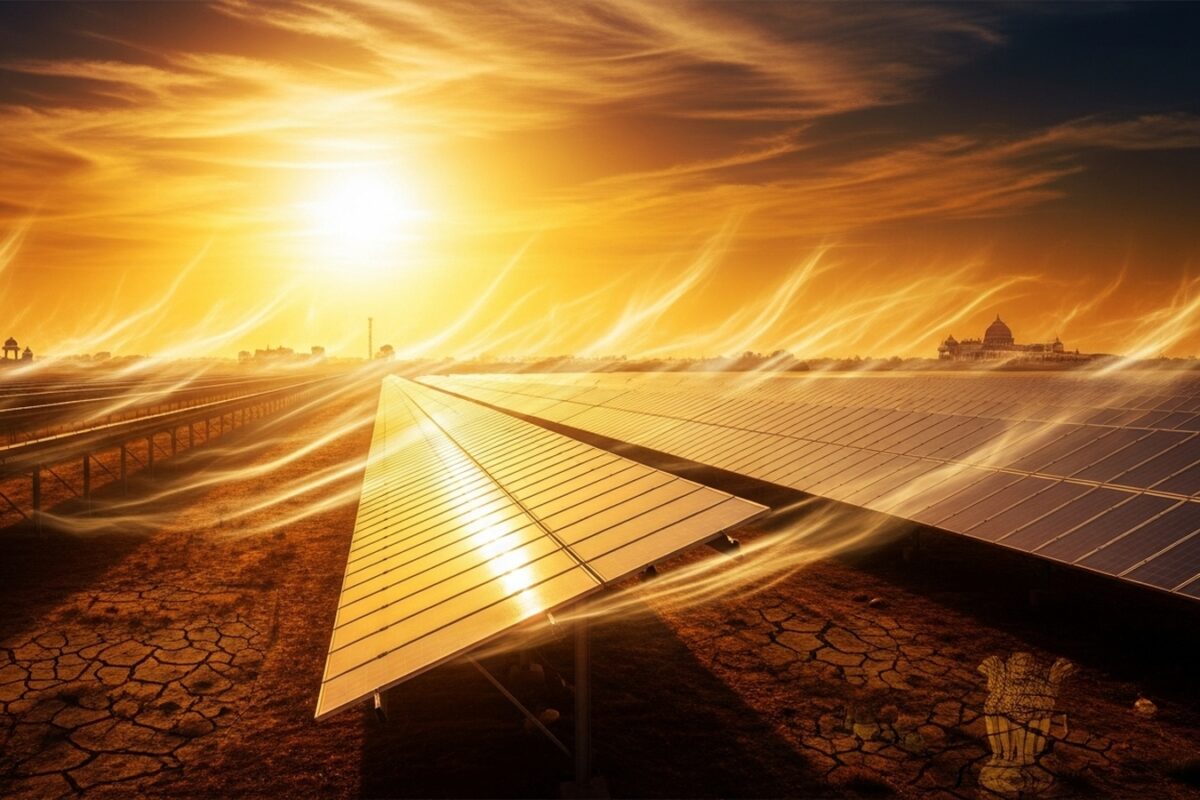
India’s record summer heat does not translate to record solar power output because high temperatures actively degrade solar panel efficiency, while the peak demand for electricity shifts to hours when the sun is no longer shining. Explains the science.
As India’s peak power demand scales to unprecedented highs amid intense heatwaves, a widening mismatch has emerged between maximum solar generation and the grid’s most critical cooling needs. The underlying scientific, operational, and structural reasons explain why extreme summer heat complicates rather than accelerates India’s solar energy transition:
The Physics of Solar Cells: Light vs. Heat
Solar photovoltaic (PV) panels generate electricity from light (irradiance), not heat. They are tested at a standard laboratory temperature of 25°C. When ambient temperatures cross 40°C in the Indian summer, the internal temperature of a dark, heat-absorbing solar cell can soar between 50°C and 70°C.
Inside a solar panel, semiconductor material creates electricity when photons knock electrons free. When a panel overheats, those electrons naturally absorb thermal energy and start moving randomly. Because they are already excited, the “jump” they make when struck by light is smaller. This causes a minor increase in electrical current, but a massive drop in voltage.
Most standard commercial panels lose roughly 0.3% to 0.5% of their power output for every single degree Celsius the temperature rises above 25°C. In scorching states like Rajasthan or Punjab where internal panel temperatures can hit 65°C, a system can lose 12% to 20% of its rated capacity purely due to thermal stress.
The Evening Mismatch (The Duck Curve)
The most severe strain on India’s electrical grid happens when solar panels stop producing power completely. While intense air-conditioning use causes massive daytime electricity spikes, the real danger point for the grid happens between 7:00 PM and 11:00 PM. Millions of families return home and turn on ACs and cooling appliances at night while outdoor temperatures remain high.
Solar energy hits zero at sunset, leaving a massive power gap that must be filled immediately. Coal-fired thermal power plants and hydropower must aggressively ramp up production within a narrow window to prevent blackouts, an operational strain known globally as the “duck curve”.
Dust, Humidity And Transmission Bottlenecks
Intense summer heat in India is often accompanied by dust storms and high suspended particulate matter, particularly in western and northern regions. Dust settles on the panels, blocking sunlight and creating “soiling losses” that further diminish performance.
Ground-mounted solar plants have a slight advantage because natural winds create convective airflow underneath them, helping them stay cooler. Conversely, crowded rooftop solar installations lack adequate ventilation, trapping high ambient heat from concrete or metal roofs, which heavily dampens efficiency.
The regions with the highest solar yields (like remote desert areas in Rajasthan) are often far from coastal or urban mega-cities where power is consumed. High summer temperatures increase electrical resistance in overhead transmission lines, leading to higher power losses as electricity moves across long distances.
Is There A Solution?
To make sure India’s massive 150+ GW solar network functions reliably during extreme summers, developers and grid managers are deploying specific fixes:
- High Cell Temperatures: Switching to newer panel types (like n-type TOPCon or Heterojunction) with lower temperature coefficients, or using Floating Solar where water serves as a natural coolant.
- Nighttime Peak Supply: Deploying massive Battery Energy Storage Systems (BESS) and pumped-hydro storage to capture excess afternoon solar and discharge it at night.
- Soiling & Dust Accumulation: Deploying automated robotic dry-cleaning systems that sweep dust off panels daily without wasting scarce summer water.
- Consumer Demand Behavior: Enforcing Time-of-Day (ToD) tariffs that charge lower rates during peak solar hours (afternoon) to encourage users to run heavy appliances during the day rather than at night.
KEY FAQs
Does hotter weather make solar panels produce more power?
No. Solar panels use sunlight, not heat. Very high temperatures actually reduce panel efficiency.Why can India still face power shortages during heat waves?
Extreme heat sharply increases electricity demand from ACs and cooling, often faster than solar supply can grow.Can heat damage solar systems?
Yes. Excess heat and dust can stress panels, batteries, inverters, and grid equipment, lowering performance.