NASA’s Vision for a Lunar Base
NASA has set an ambitious goal to return humans to the moon by 2028, with a long-term vision of establishing a permanent lunar base. This initiative marks a significant shift from the Apollo missions of the 1960s and 70s, which focused on short-duration visits rather than sustained human presence. The agency’s plan involves building a self-sustaining settlement that could support future exploration beyond the moon, including potential missions to Mars.
Phased Development of the Moon Base
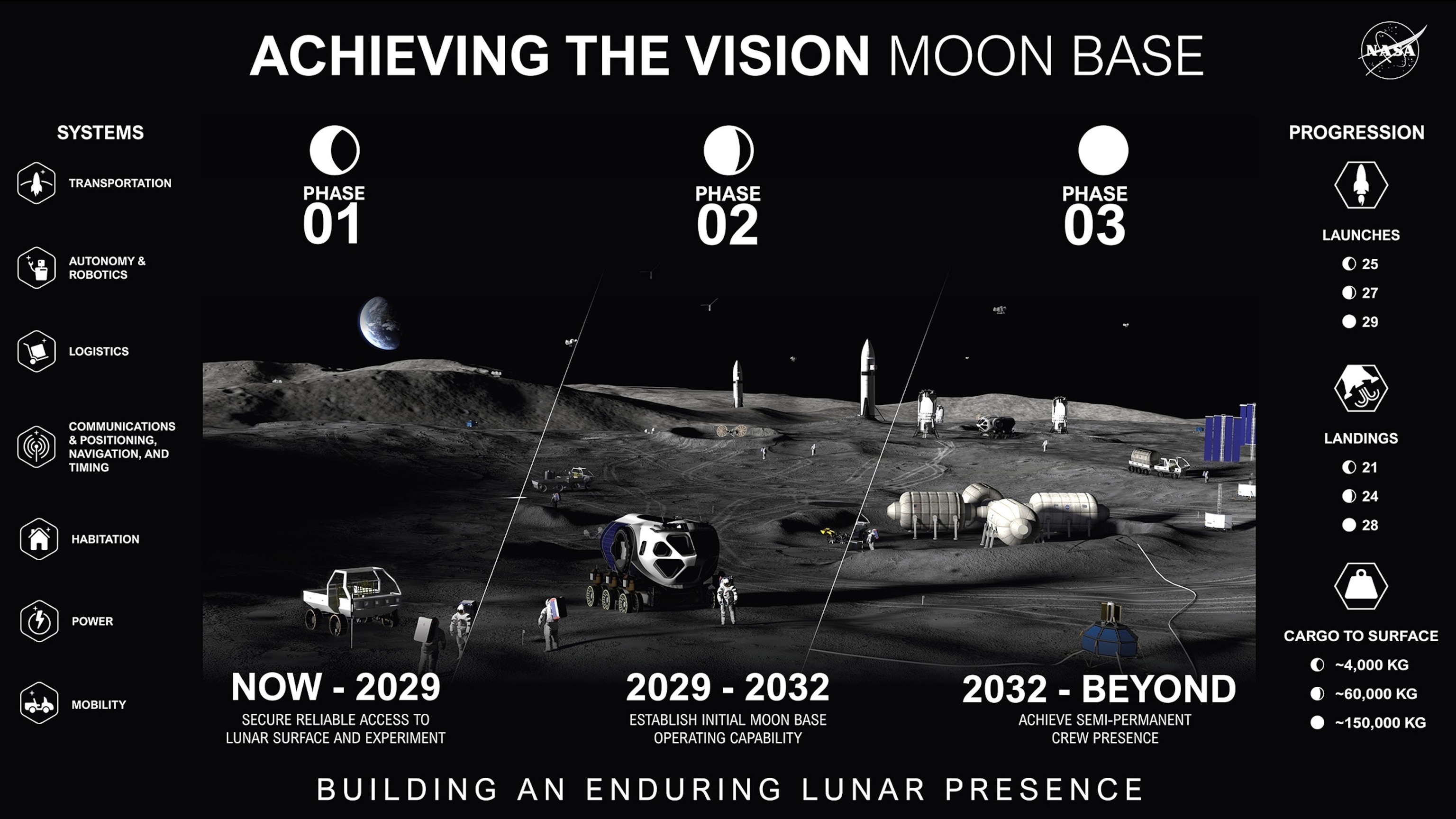
The development of the moon base will occur in three distinct phases, each with its own objectives and milestones. Phase 1 focuses on demonstrating the feasibility of the technology and ensuring that private companies can deliver the necessary hardware. This phase is already underway, with NASA working to ensure reliable access to the lunar surface.
During Phase 1, NASA anticipates 25 launches and 21 landings, with the goal of sending about 4 metric tons of cargo to the moon. This will serve as a foundation for future phases, where more advanced infrastructure and habitation systems will be developed.
Key Partners and Missions
To achieve its goals, NASA is relying heavily on private space contractors. Several companies have been selected to provide critical equipment for the moon base:
- Blue Origin is developing the Blue Moon Mark 1 Endurance Lander, which will be used for the Moon Base I mission. This mission aims to send scientific payloads to the South Pole region of the moon.
- Astrobotic, a Pittsburgh-based aerospace company, is building a second lander to deliver over 1,100 pounds of cargo during the Moon Base II mission.
- The Moon Base III mission will include the first payload selected through NASA’s Payloads and Research Investigations on the Surface of the Moon initiative, along with contributions from international partners such as the European Space Agency and the Korea Astronomy and Space Science Institute.
In addition to landers, NASA has awarded contracts to Astrolaub and Lunar Outpost to build lunar terrain vehicles. These vehicles, capable of carrying two people and traveling at speeds between six and nine miles per hour, will play a crucial role in supporting Artemis astronauts during their lunar visits.
Supporting Technologies and Future Missions
NASA is also investing in technologies that will aid in the development of the moon base. One such project is the Moonfall mission, which involves sending four drones to the moon. These drones will help study the lunar surface, identify natural resources, and locate potential landing sites. They will also assist in creating a “Moon Base perimeter” to define the boundaries of a future settlement.
The Firefly Aerospace has been contracted to build the spacecraft that will transport these drones to the moon. NASA hopes to launch this mission in 2028, marking a key step in the development of the lunar base.
Building a Lunar Economy
NASA’s vision extends beyond just exploration; it includes the establishment of a lunar economy. According to NASA Administrator Jared Isaacman, the government cannot fund space exploration indefinitely. Instead, the agency is working to develop a system where value can be generated in the unique environment of the moon.
“This is vitally important,” Isaacman said. “We need to figure out what generates value either in the unique environment of microgravity or on the lunar surface in excess of the cost that it takes to go into it.”
Challenges and Opportunities
The moon presents extreme conditions, with temperatures ranging from over 250 degrees Fahrenheit in sunlight to below -250 degrees Fahrenheit in the dark. It lacks an atmosphere, leaving astronauts exposed to radiation, space weather, and meteorite impacts. Despite these challenges, NASA remains committed to its vision of a permanent lunar base.
As Isaacman noted, the journey to the moon is not just about exploration but also about advancing technology, conducting scientific research, and inspiring future generations. The knowledge gained from these missions will ultimately benefit life on Earth and pave the way for deeper space exploration.