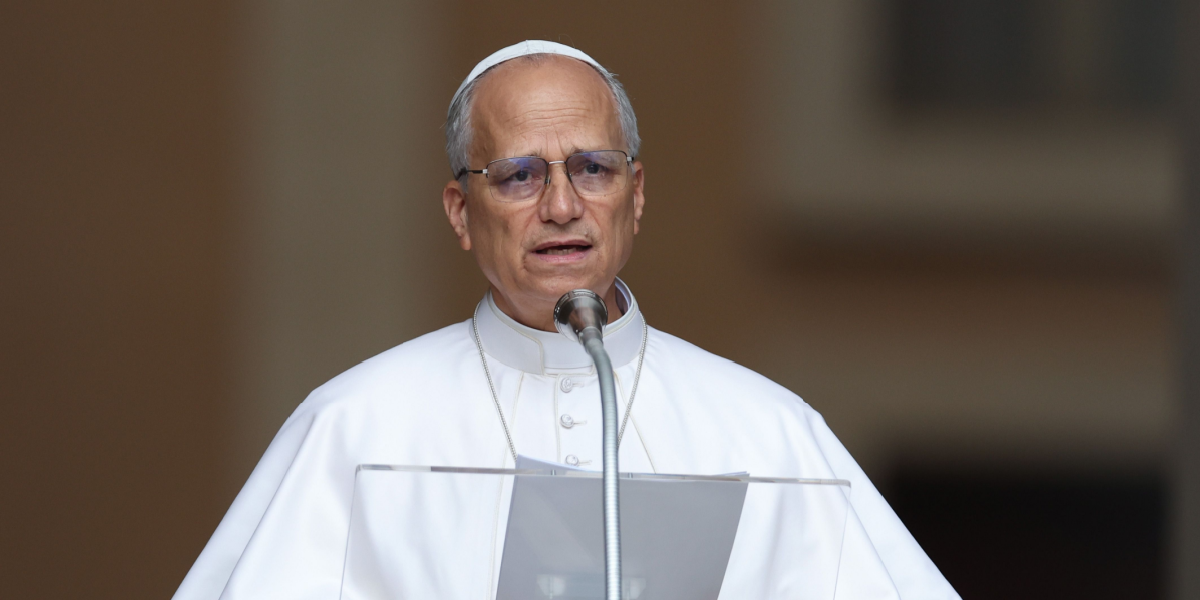
Pope Leo XIV has issued a strong call for international oversight of artificial intelligence, highlighting the potential dangers of unregulated development. He warned that without proper control, AI could deepen inequality, speed up conflicts, and diminish human moral responsibility.
In his first papal encyclical, the leader of the Catholic Church framed AI not just as a technological issue but as a significant political and ethical challenge of our time. He expressed concern that governments may already be losing control over this rapidly evolving field.
A warning from Rome
During a speech at the Vatican on Monday, Pope Leo emphasized the need for regulation to “safeguard humanity” before technology outpaces democratic oversight. He criticized the global race for dominance in AI, describing it as a “dehumanizing ambition” to develop increasingly powerful technologies or to gain control over them.
“Let us not sleep,” he said during the release of the document. “Vigilance is necessary.”
Beyond technology
The encyclical, titled Magnifica Humanitas, marks the first major policy document of Leo’s papacy and reflects years of Vatican concern about artificial intelligence and automation. The pope placed AI within a broader context of labor, war, inequality, and human dignity, drawing parallels to the Industrial Revolution that transformed society in the late 19th century.
Similar to Pope Leo XIII’s landmark 1891 encyclical Rerum Novarum, which addressed workers’ rights during industrialization, Leo XIV’s document seeks to position the Catholic Church as a key player in one of the defining debates of the century.
The pope warned that AI systems could exacerbate social fragmentation, weaken accountability, and make warfare easier by distancing political leaders from the human consequences of violence. He also raised concerns about autonomous weapons systems, arguing that AI risks detaching conflict from moral responsibility.
A battle over control
The Vatican’s intervention places Pope Leo increasingly at odds with governments that are aggressively expanding AI development for military and economic purposes, including the United States, China, and Russia. The document was released as Washington and Beijing continue to invest billions into AI infrastructure, military applications, and strategic competition.
Christopher Olah, cofounder of Anthropic, attended the unveiling and argued that outside pressure is needed because AI companies are driven by market competition and personal ambition. While Olah noted that AI systems are becoming more capable of human-like functions, Leo maintained that machines will never possess genuine conscience, morality, or human relationships.
“No computational system, however sophisticated, can create a heart that gives itself, or a conscience that discerns good from evil,” the pope wrote.
The Vatican is creating its first AI commission as Pope Leo prepares a major warning about artificial intelligence. This initiative underscores the Church’s commitment to addressing the ethical implications of AI and ensuring that its development aligns with human values.
Key points from the encyclical include:
- Urgent need for regulation: Pope Leo stressed the importance of regulating AI to protect humanity and prevent technological development from outpacing democratic oversight.
- Ethical concerns: The encyclical highlights the potential for AI to deepen inequality, weaken accountability, and make warfare more accessible.
- Moral responsibility: The pope emphasized that AI systems cannot replace human moral judgment or conscience.
- Global competition: The Vatican’s stance contrasts with the aggressive expansion of AI by major world powers, raising questions about the role of international cooperation in AI governance.
As the debate over AI continues to evolve, the Vatican’s involvement adds a new dimension to the discussion, emphasizing the need for ethical considerations in the development and use of artificial intelligence.