Jannik Sinner’s Shocking Exit from Roland-Garros
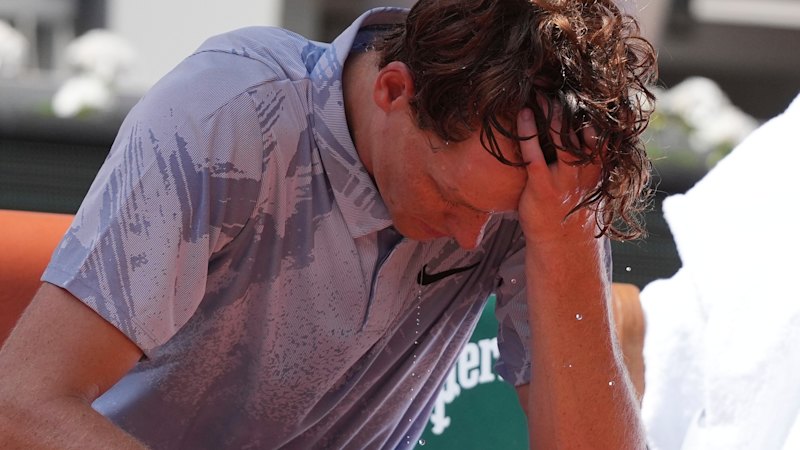
Jannik Sinner’s seemingly unstoppable path to this year’s Roland-Garros title and a career grand slam has come to an abrupt end, as his body failed him at the most critical moment in Paris’ extreme heat. The world No.1 led 56th-ranked Argentine Juan Manuel Cerundolo 6-3, 6-2, 5-1, but suddenly collapsed physically and lost 20 of the final 22 games in a stunning 3-6, 2-6, 7-5, 6-1, 6-1 second-round defeat.
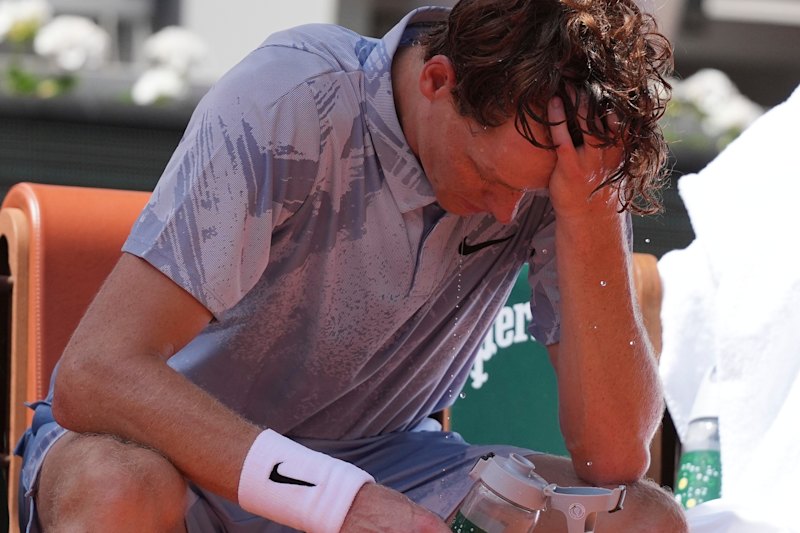
This loss adds to Sinner’s heartbreak in the French capital after he lost last year’s final to Carlos Alcaraz from two sets and triple match-point up. “I struggled and started to feel very dizzy and low on energy,” Sinner admitted. “I tried to serve it out, but didn’t have a lot of energy. In the fourth set, I let it go a little bit, trying to have more energy in the fifth. It was a very important game, the first one, but I couldn’t hold, then it went a bit downwards.”
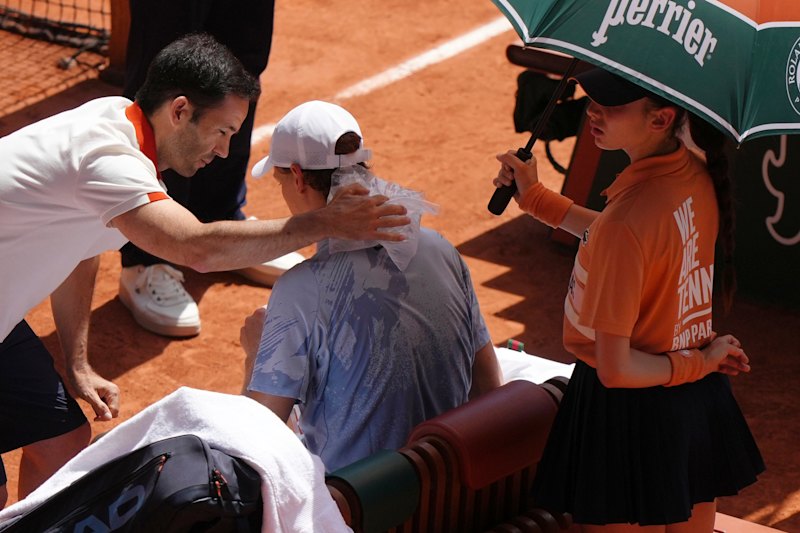
Sinner said he woke up feeling unwell and tried to keep points short. Initially, he hit cleanly and well, but then “hit the wall.” At one point during the third set, Sinner was serving at 0-40, 5-4, and chair umpire Aurélie Tourte suggested a medical timeout due to his distress. However, Sinner insisted his issues were not weather-related.
The timeout did little to halt his physical decline, nor did the extended break between sets. Sinner spent much of the final two-and-a-half sets on his haunches, including dry retching at the back of the court after holding serve in the second game of the fourth set.
A Streak of Success and a Sudden Setback
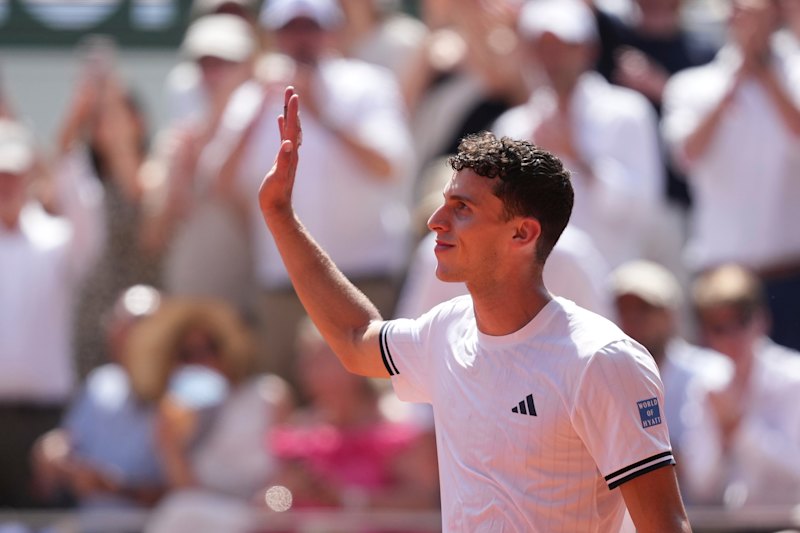
Sinner entered the claycourt major on a 30-match winning streak and had won five consecutive Masters titles, including three on the red dirt, since his last defeat in February. His form and Alcaraz’s absence with a wrist injury made him the second-shortest favorite to win a men’s grand slam singles title in history, behind only Rafael Nadal in 2009. Nadal, too, failed to win that year, losing in the fourth round.
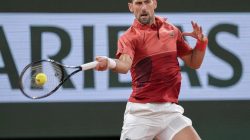
One of Sinner or Alcaraz had won the past nine major titles since Novak Djokovic claimed the 2023 US Open. Now, there is a huge chance for Djokovic to capture an elusive 25th grand slam championship, while players like Alexander Zverev, Casper Ruud, or Australia’s Alex de Minaur feel more confident they could win a maiden trophy at this level.
Fifth-seeded American Ben Shelton also lost in straight sets to Belgian Raphael Collignon.
There were also physical struggles for Sinner in the third round at this year’s Australian Open against American Eliot Spizzirri, but the tournament’s heat policy triggered a suspension of play for officials to close the roof, after which he managed to escape. He also retired from last year’s Shanghai Masters with severe cramping and has now lost 12 of his 18 matches that extended to a fifth set. But Sinner said his Paris woes were an entirely different scenario, and he could not remember the last time he felt so “weak.”
Nothing could save Sinner this time, even as he resorted to serve-volleying and drop shots on high rotation as he desperately attempted to keep rallies short with ultra-aggressive play. Sinner generated repeated break points on Cerundolo’s serve, most tellingly in the third game of the fourth set, but the left-hander kept wriggling clear as he continually outlasted his rival who was physically incapable to compete as usual.
“At the beginning of the match, I couldn’t win more than three games in a set, so I think I was a little bit lucky,” Cerundolo said. “I feel sorry for him because he deserved to win a lot of matches, and of course, he was deserving to win this match, but then I don’t know what happened.”
Temperatures at this year’s tournament have been unseasonably high and regularly north of 30 degrees, as they were for most of Sinner’s match. He tried everything from ice towels to using a mini-fan to try to cool himself, but it became obvious that there was no way back for him as Cerundolo claimed his maiden top-10 scalp.
Other Notable Performances
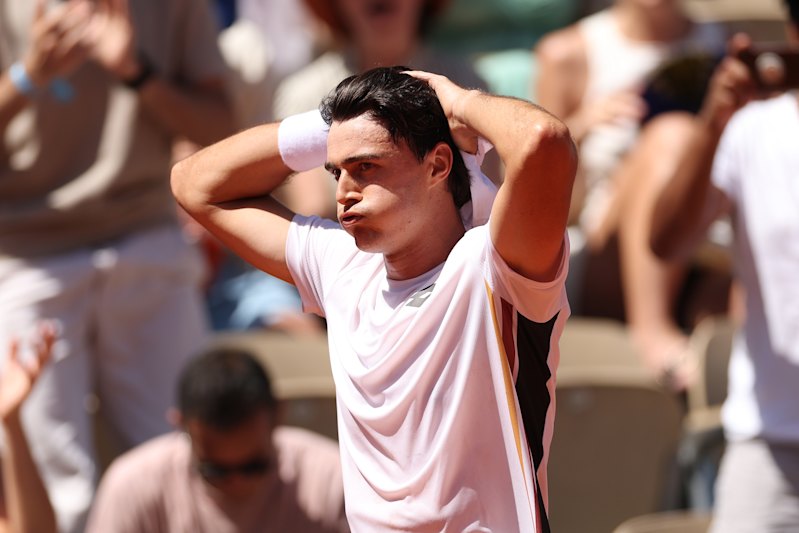
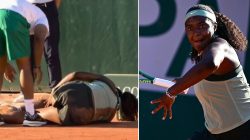
Kim Birrell looked for a moment like she was going to live up to her “Kim Possible” nickname before her brief but memorable Roland-Garros run came to an abrupt halt. Two days after the best win of her career over world No.5 and perennial grand slam title contender Jessica Pegula in the first round, Birrell suffered a 6-3, 0-6, 7-6 [10-5] defeat to Ukrainian Oleksandra Oliynykova on another scorching Paris day.
American Zachary Svajda picked off another Australian shortly after, beating fellow college graduate Adam Walton 6-3, 6-4, 6-7 (4-7) 6-2, after eliminating Alexei Popyrin in four sets in his opening match. Walton was also trying to back up a titanic upset after stunning former world No.1 Daniil Medvedev in five sets.
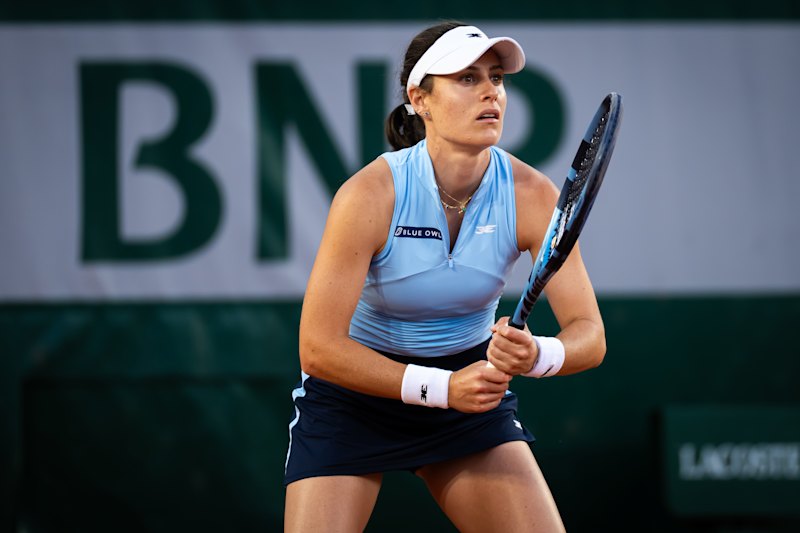
Daria Kasatkina ensured it was not an Australian wipeout, reaching the third round at Roland-Garros for the eighth time in her career with a 7-5, 7-6 (13-11) victory over Swiss qualifier Susan Bandecchi. Kasatkina’s reward is a third-round date with world No.1 Aryna Sabalenka, who ousted Frenchwoman Elsa Jacquemot 7-5, 6-2 as she seeks her maiden title in Paris.
Oliynykova, who still lives in war-torn Ukraine when she is not playing on the tour, is best known for her outspoken stance on the ongoing devastation in her home country and draped herself in her national flag post-match in the middle of the court. The 25-year-old is also becoming a heck of a tennis player, and bounced back from losing a lopsided middle set in barely 20 minutes to have Birrell on the ropes at 5-1 in the super tiebreak.
Birrell earned her nickname – loosely based on the Disney animated character who saves the world in her spare time from being an average schoolgirl – off her never-say-die spirit on the court and resilience to break into the top 100 after two elbow surgeries. She continued to play aggressively as the match loosened from her grasp, having already recovered a break deficit during the set, and was rewarded with the next four points to lock the match tiebreak at five-all.
However, Birrell’s brave comeback bid unravelled as quickly as it started. After Oliynykova blasted a brilliant inside-out backhand winner to edge 6-5 in front, Birrell missed a backhand on a rally ball then double-faulted into the net to as good as cruel her chances. She knew it, too, with the usually serene Queenslander tossing her racquet into the red dirt in disgust.
There was an uncharacteristically high amount of negative emotion from Birrell, who also hit herself twice in the head with her racquet strings in the second game of the final set after a routine miss on return. Oliynykova cheekily threw in an underarm serve on match point – but Birrell was ready for it, only for the 65th-ranked Ukrainian to come out on top in one last bruising baseline exchange.
Like Birrell, Walton will leave the claycourt major with some regret. The world No.97, who received Tennis Australia’s reciprocal wildcard to play at Roland-Garros, was up a break in the second set and had chances to do the same in the fourth, but could not capitalise on either occasion. Svajda generally showed more willingness to be aggressive – and created far more opportunities than his 27-year-old rival – but Walton earned two break points in the third game of the fourth set that could have changed the course of the match. The American saved both with two of his 70 winners, compared to Walton’s 50, then made his move in the sixth game. Walton, who was trying to reach the third round at a major for the first time, never recovered after dragging a cross-court backhand wide to go 4-2 down.