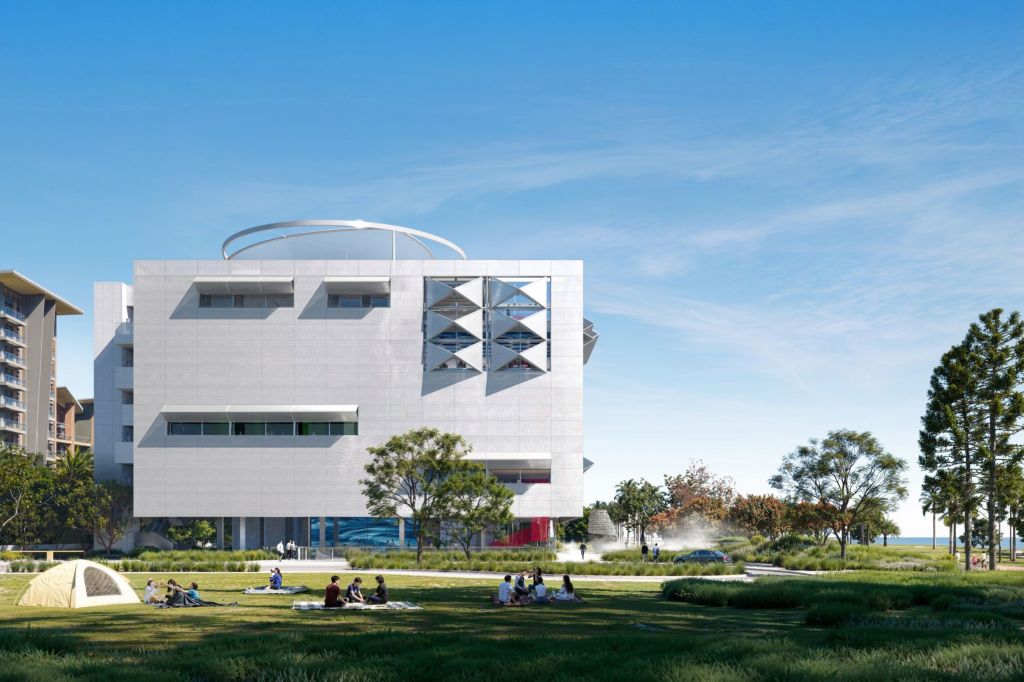
A groundbreaking arts center is currently under construction along the coastline of Xiamen, a city in southern China. This new development, known as the Meitu Cube Visual Arts Center, has been designed by OPEN Architecture for Meitu Inc. The structure is intended to serve as a cultural hub shaped like a cube, offering panoramic views of Xiamen’s East Rim coastal area, which is known for its beautiful beaches and lush greenery.
Dubbed “The Cube of Change,” the project represents an innovative approach to architecture, emphasizing adaptability. The design team at OPEN Architecture describes the center as a space that can evolve alongside shifting cultural needs and technological advancements. The groundbreaking ceremony was held in late April, and with excavation completed, the foundation work is now underway. According to the design team, “The construction has just begun.”
China’s architectural landscape has undergone significant transformation over the years, becoming one of the most dynamic in the world. This evolution has been driven by rapid urbanization, technological progress, and a renewed focus on cultural expression. Recent projects, such as the Goldin Finance 117—once considered the world’s tallest abandoned skyscraper and recently reported to be nearing completion after nearly 18 years of construction—alongside iconic structures like the Shanghai Grand Opera House, reflect a growing maturity in Chinese architecture.
Chinese architects are also exploring ways to integrate ecological sustainability and digital technologies into their designs, positioning architecture as a medium for fostering connections between people, cities, and the environment.
The Concept Behind The Cube of Change
The idea behind The Cube of Change began with a simple yet powerful concept: the cube as a symbol of reinvention. The design team explained that the choice of a cube shape was deliberate, as it offers “the ability to transform itself into myriad possibilities.” This flexibility emerged from extensive experimentation and refinement.
“We tested countless design options before arriving at the moment of ‘that’s it!’—the simplest form, a cube, that can transform itself into myriad possibilities,” the firm shared. “This approach allows for maximum flexibility to accommodate the evolving needs of digital media and public programming while making the most of the compact site.”
Perforated Facade That Reduces Heat and Filters Light
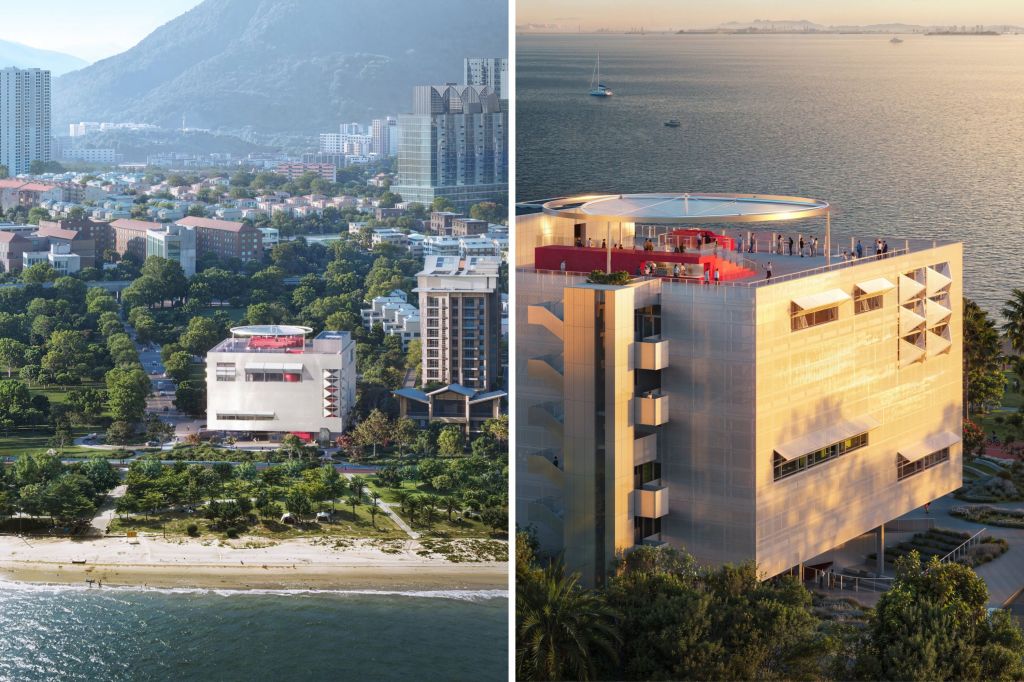
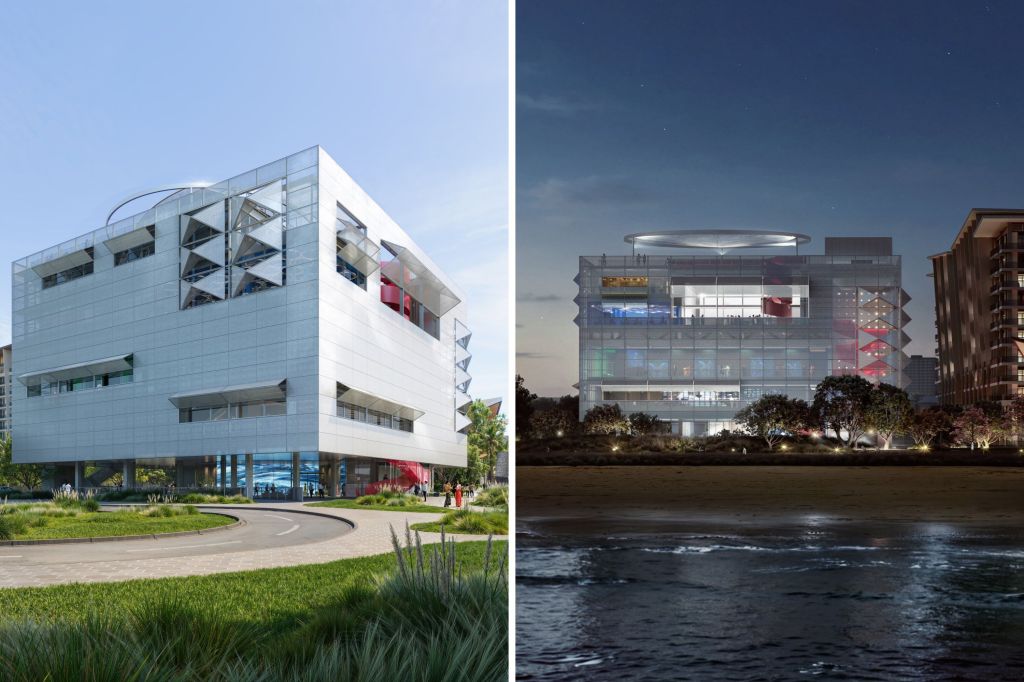
The Cube measures 42 meters (approximately 138 feet) in both length and width, with a total height above grade and basement depth also reaching nearly 138 feet. Its standout feature is its unique facade, which can open and close to reduce solar heat, improve air ventilation, and filter incoming light. The double-skin PTFE (polytetrafluoroethylene) facade allows for spatial and visual porosity, creating a sense of lightness despite the building’s geometric rigidity.
PTFE is a material known for its durability, chemical resistance, and self-cleaning properties. At night, the Cube transforms into a luminous projection canvas, with its open facade revealing the interior space, which includes a striking red spiral staircase.
Inside, the building features “interlocking spatial components” that include configurable exhibition and gathering spaces, a library, and rooftop terraces that offer stunning sea views. The galleries and public areas have been designed to be flexible in scale, atmosphere, and function, allowing them to host a wide range of activities, from exhibitions and installations to performances and events.
Building Designed to Evolve
OPEN Architecture framed the design around broader questions about how architecture can respond to rapid cultural, technological, and social changes. “How do we respond, through architecture, to our time of accelerating change? Can architecture itself change?” These were central to the project’s development.
The firm also drew inspiration from the ancient Chinese Book of Changes, which influenced the name “Cube of Change.” According to the design team, “This title crystallizes our reflection on flexibility—not merely as a functional strategy, but as an architectural ethos.”
The Cube’s design embraces a philosophy of continuous transformation. “The facade can open and close, the internal spaces can combine or subdivide, the circulation and the functional space can interchange, and spaces can multi-function,” the firm explained. “We believe that in a time defined by constant transformation, architecture must also be capable of change.”
Safe embed will be rendered here
The Latest Unique Architectural Projects in China
Service URL:
https://public.flourish.studio/visualisation/29087834/embed
Do you have an architecture or design-related story to share? Let us know via s.kim@, and your story could be featured by.
Related Articles
Story of the Man—and Company—That Turned Gas Stations Into Destinations
World Cup Short-Term Bookings Surge Despite Unsold Tickets, Hotels Warning
Map Shows Where Americans Told Not to Travel Amid Ebola Outbreak
Start your unlimited trial