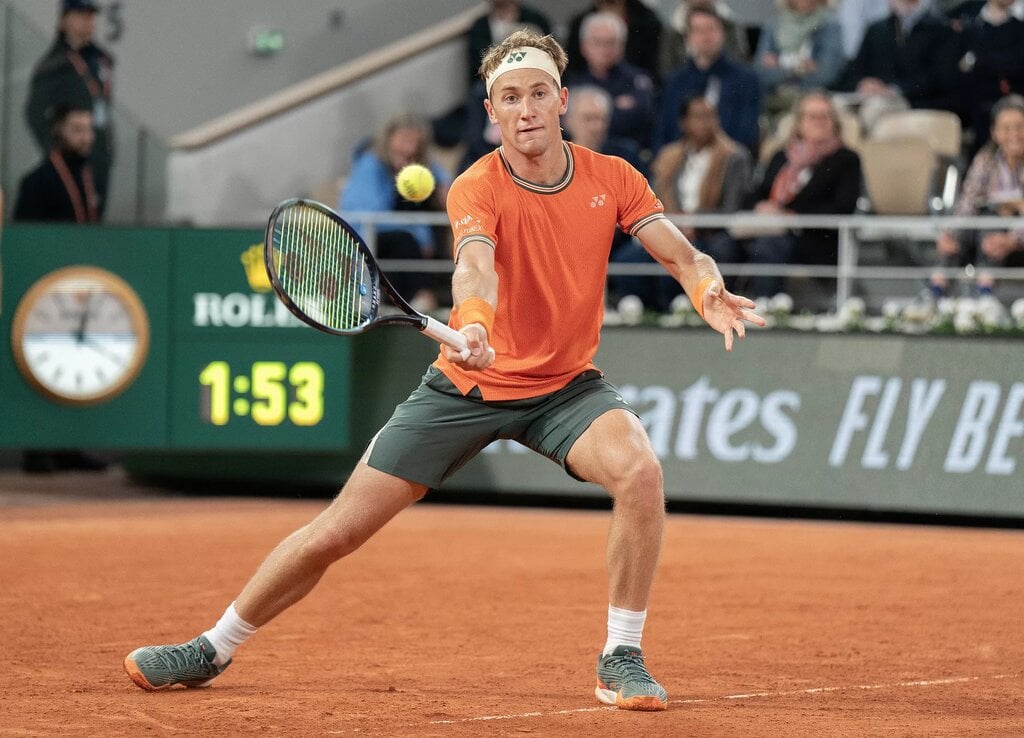
A Controversial Match at Roland Garros 2026
The Round of 16 encounter at Roland Garros 2026 between Casper Ruud and João Fonseca on Court Philippe-Chatrier delivered compelling tennis, but it was marred by repeated line call controversies. These incidents highlighted the French Open’s reluctance to adopt electronic line calling (ELC), a technology that has already been embraced by the other three Grand Slams.
On clay, where ball marks are traditionally checked by human officials, the risk of human error remains significant. This can have a dramatic impact on careers and historical opportunities, as seen in this high-stakes match.
The French Open’s Reluctance Costs Ruud
Ruud, a two-time Roland Garros finalist chasing his first major title, faced 19-year-old Brazilian sensation Fonseca, who had just produced a stunning comeback victory over Novak Djokovic. In the second-set tiebreak, with Ruud leading 8-7 on set point, Fonseca struck a forehand. Broadcast Hawkeye graphics indicated the ball was out, yet no line judge called it.
A spectator’s “out” shout added confusion. The chair umpire inspected the mark and ruled it good, awarding the point to Fonseca. Momentum shifted decisively. Fonseca won the tiebreak and took a two-sets-to-love lead. Additional disputed calls followed, further frustrating Ruud.
Criticism from a Tennis Legend
TNT commentator and two-time French Open champion Jim Courier repeatedly criticized the situation during the broadcast. He advocated strongly for electronic line calling, directly calling out the French Tennis Federation’s reluctance and highlighting how outdated officiating undermined fairness. His comments resonated widely, amplifying debates about modernization in the sport.
Courier’s criticism emphasized the importance of adapting to technological advancements to ensure fair play. His remarks underscored the growing tension between tradition and progress in the world of tennis.
Fonseca’s Rise and the Impact of Controversies
Fonseca, the young talent with genuine potential to make history as one of the youngest champions in the Open Era, played powerful tennis and advanced in four sets. Yet the controversies left many feeling the outcome was tainted. For Ruud, another near-miss at his favorite major may have been influenced by calls that technology would have corrected instantly.
The match highlighted the challenges faced by players who rely on precise officiating to achieve their goals. For Fonseca, the path to success is now intertwined with the decisions made by human officials, which can be both unpredictable and inconsistent.
The French Open’s Tradition vs. Modernization
Roland Garros remains the lone Grand Slam clinging to tradition, citing the importance of line judges for grassroots tennis development in France. While this preserves a certain charm, it risks undermining the integrity of results at the highest level.
In an era where precision defines legacies, such reluctance may prevent deserving players from achieving historic breakthroughs—whether a first major for Ruud or a fairy-tale run for Fonseca. As tennis modernizes elsewhere, the French Open’s stance increasingly appears outdated, potentially costing players the fair chance their talent and effort deserve.
The Future of Officiating in Tennis
The debate over electronic line calling continues to gain momentum. Supporters argue that ELC enhances accuracy and ensures fair play, while opponents emphasize the role of human judgment and the traditional aspects of the game.
As the sport evolves, the question remains: how will the French Open balance its commitment to tradition with the need for modernization? The match between Ruud and Fonseca serves as a poignant reminder of the stakes involved and the importance of adapting to new technologies to maintain the integrity of the game.