Rising Concerns Over Influenza and Other Respiratory Viruses
Many Australians have shifted their focus away from respiratory viruses, with the pandemic now a distant memory and influenza often seen as a routine winter illness. However, recent data from the Australian Bureau of Statistics (ABS) reveals a different story.
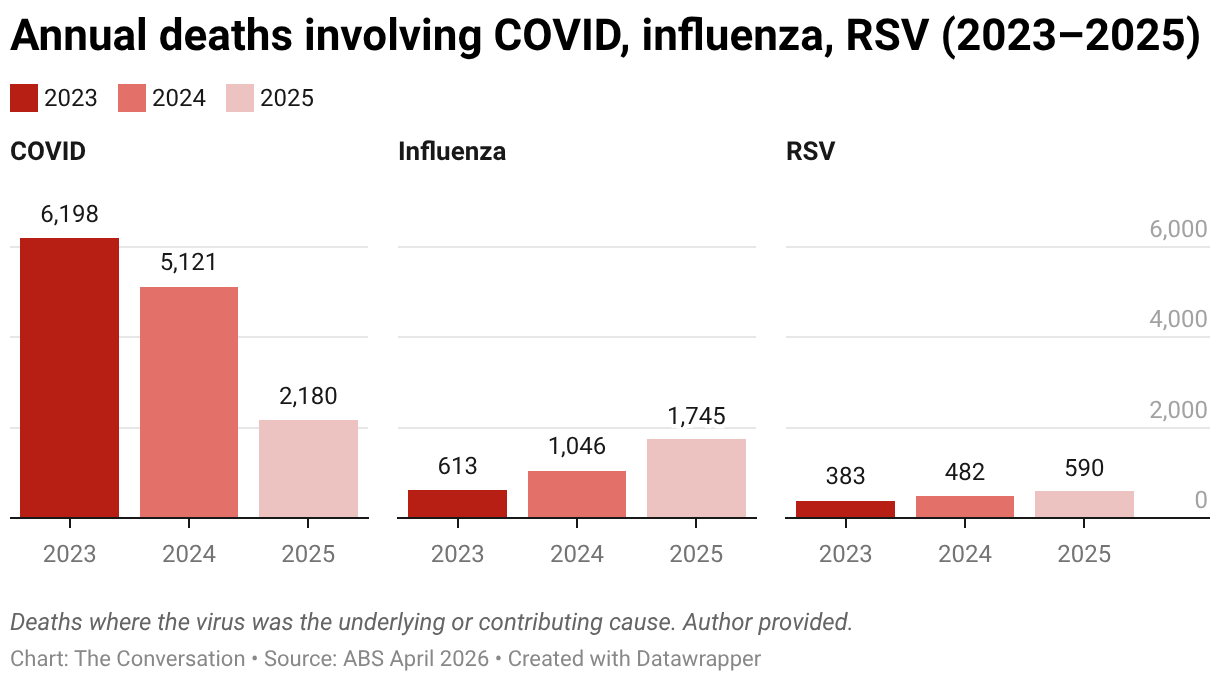
In 2025, there were 1,455 deaths in Australia directly attributed to influenza. This is the highest number recorded by the ABS in modern times, surpassing previous peak years such as 2017 (1,276 deaths) and 2019 (1,072 deaths). Meanwhile, the number of deaths from COVID-19 has continued to decline. In 2025, there were 1,718 deaths due to COVID, down from 3,908 in 2024 and 4,613 in 2023.
The charts below provide further insight into these trends. Notably, between August 2025 and January 2026, influenza was the underlying cause of more deaths each month than COVID, a pattern not seen since the pandemic began. 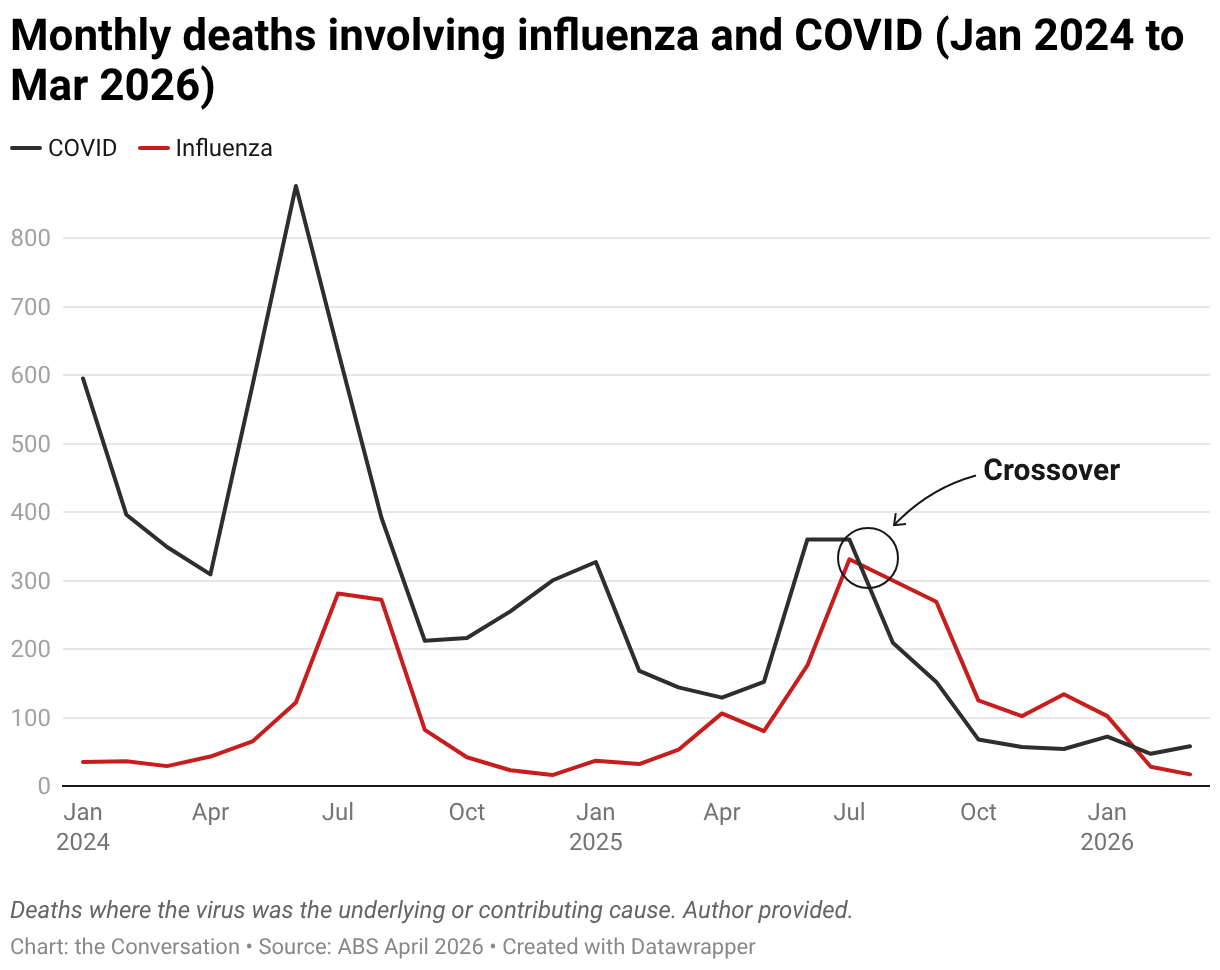
While this does not mean that COVID has disappeared, it highlights a shift in the mix of respiratory viruses. Another virus that often goes unnoticed is respiratory syncytial virus (RSV).
Beyond Case Numbers
When people hear about a “bad” respiratory virus season, they often think about case numbers—the number of people testing positive for a particular disease. However, case numbers have become increasingly unreliable. Many individuals with symptoms like coughs or fevers do not get tested, and even when they do, tests are not always accurate.
Epidemiologists often focus on severe outcomes such as hospital admissions and deaths, which are more reliable indicators. While hospital admissions are a better measure than case notifications, not all Australian states and territories report them consistently. As a result, deaths remain the most reliable measure for comparing the impact of respiratory viruses over time.
Influenza vs. COVID Deaths
One reason influenza appears to be causing significant damage is that it is being compared to a less deadly version of COVID. Population immunity from vaccination and prior infection has reduced the risk of severe disease. Additionally, effective treatments for high-risk individuals and improved hospital care have contributed to lower mortality rates from COVID.
In contrast, influenza behaves differently. The virus evolves rapidly, and vaccine effectiveness varies each year. Immunity from last year’s infection or vaccination may not protect against this year’s strains, which is why a new influenza vaccine is needed annually. Some years see relatively few severe cases, while others can be much worse.
In 2025, Australia experienced one of those severe years. A late-emerging H3N2 subclade K influenza variant, known as super K, extended the season and was poorly matched to the H3N2 strain in that year’s vaccine. At the same time, influenza vaccine coverage among Australians aged 65 and over was around 62%, down from 64% in 2023 and well below the World Health Organization target of 75% for this age group.
The Role of RSV
RSV is often overlooked in discussions about flu and COVID. It is best known for causing illness in babies and young children, but older adults can also become seriously ill. In 2025, RSV was the underlying cause of 198 deaths in Australia. However, it is often recorded as a contributing factor rather than the main cause of death because it can worsen conditions like chronic lung disease or heart failure.
In 2025, another 392 deaths listed RSV as a contributing factor. Together, these figures suggest that RSV plays a much larger role in respiratory deaths than previously recognized.
What Does This Mean for Winter?
Will 2026 be another severe flu year? It is too early to say. What is clear, however, is that all three viruses—flu, COVID, and RSV—are circulating side by side, and any one of them could surge.
Early data suggests that influenza deaths during January and February 2026 were roughly double those recorded during the same period in 2025. However, these figures can fluctuate early in the year, so firm conclusions are not yet possible.
While COVID deaths remain relatively low, RSV continues to circulate in the background. Older Australians remain at the greatest risk of death from all three viruses.
Vaccination Still Matters
Vaccination remains a critical defense against these viruses. People aged 65 and over, aged-care residents, those with chronic health conditions, Aboriginal and Torres Strait Islander people, pregnant women, and young children should ensure they are up to date with recommended vaccines.
The 2026 flu vaccine has been updated to better match last year’s problematic H3N2 strain. Importantly, influenza, COVID, and RSV vaccines can all be administered during the same visit.
Adrian Esterman receives funding from NHMRC, MRFF, and ARC.