The Struggle for Health in a Cost-of-Living Crisis
For Hobart teacher Mary Holton, health is everything. She started feeling the squeeze from cost-of-living pressures when fuel prices spiked again. “Going out for just fitness alone was a bit much,” she said. Many Tasmanians are feeling cost-of-living pressures in a very physical way, with locals saying exercise routines are being dropped, health appointments delayed and wellbeing pushed to the bottom of the list as budgets tighten.
Ms Holton relies on multiple physiotherapy sessions each week, but says paid fitness classes simply are not an option. “That costs … so to actually go to other classes as well, it’s out of my budget really.” National data shows that almost half of Australians already fall short of minimum physical activity guidelines, and rising prices are making even basic care unaffordable for many.
Unhealthy Patterns Begin
Consultant clinical psychologist academic Kimberley Norris says this is exactly how unhealthy patterns begin. “We tend to focus on the most stressful thing first … and health is one of those things we don’t think about until things go wrong,” Professor Norris said.
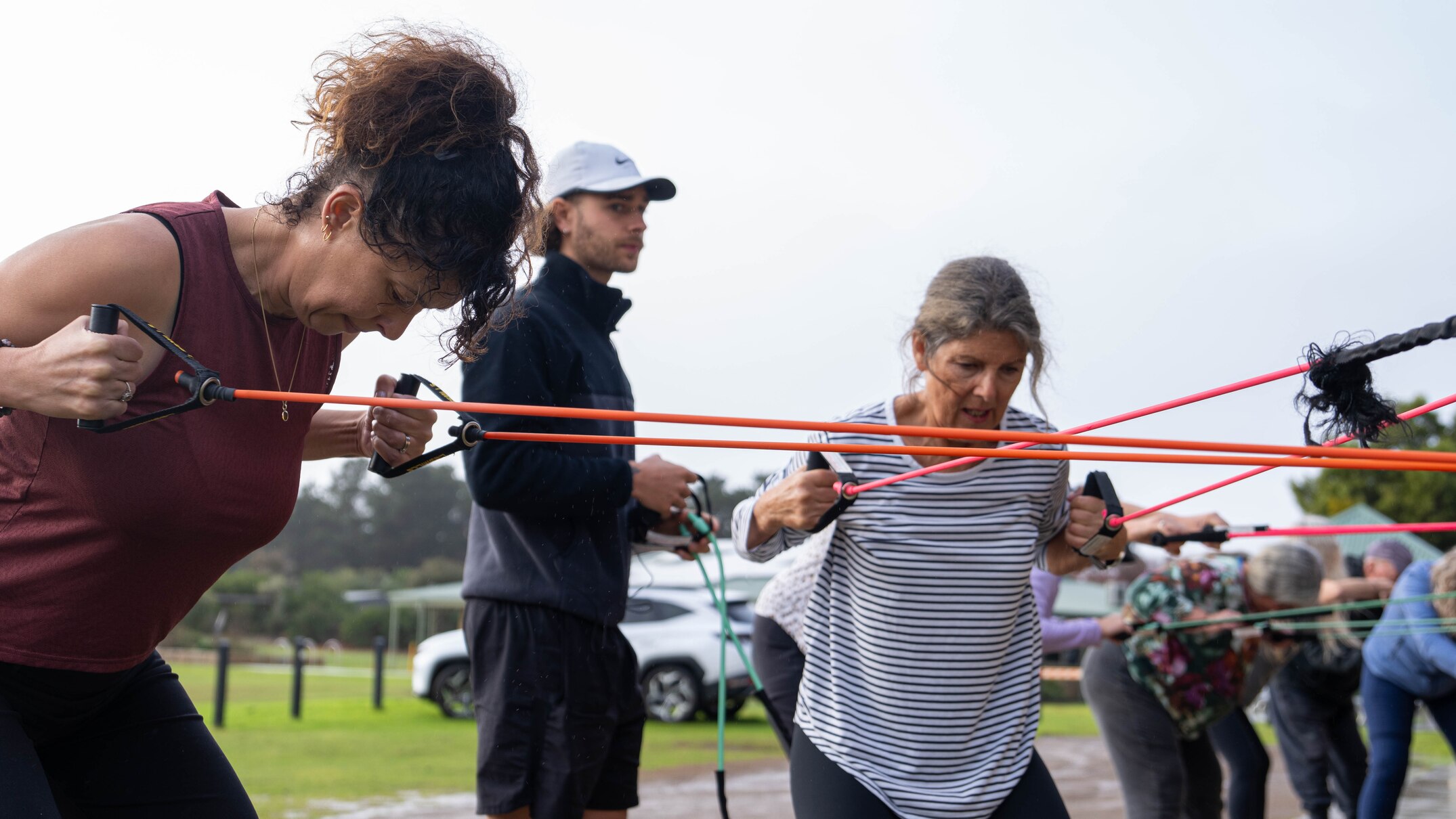
For Ms Holton, going to a free workout group in her local community was a game-changer. “Came down and absolutely loved it. It’s really nice to have a group and it just keeps growing,” she said. Finding a free exercise group has drastically improved her health, as noted by her GP, and she is part of a growing trend.
Free Exercise Classes Become a Lifeline
At a community exercise class in South Arm, south-east of Hobart, the mood is upbeat, with laughter, movement, and a sense of relief. Participation has more than doubled in the past year, with more than 100 Tasmanians now involved.
Trainer Ollie Mathewson said the surge was unmistakable. “It’s free of charge for everybody … and over the last 12 months I’ve noticed a lot more people starting to come along.” Across greater Hobart, free and low-cost alternatives are multiplying and include walking groups, community-run circuits, and morning and afternoon fitness meet-ups.
Tasmanians are increasingly organising their own solutions. Mr Mathewson said connections drive outcomes. “A lot of people talk about weight and strength, which are obviously insanely important, having other people there to push you single every week makes it a hundred times easier.”
Prioritising Health for Free
Professor Norris said one’s health can be prioritised for free. “What we know about health is, it’s more about sustainable wellbeing, it’s about quality of life,” she said. “So rather than focusing on how much you can deadlift, how far you can run, it’s about how your life has improved and how close your life is to the way you want to live it.”
She said free options were vital because once people stop moving, it becomes harder to start again. “If we develop routines in which health is not a priority, then we almost get stuck in this cycle of health always being last.”
Health Appointments Being Delayed or Dropped
For some Tasmanians, the financial pressure is forcing even tougher choices. Amy Dakin, who lives with a compromised immune system, often has no choice but to delay essential care. “My health needs to be prioritised, but your bills come first, really,” she said.
Jordyn Rowbottom has seen the same pattern around her. “People are being forced to cut what they can access,” she said. Professor Norris warns that these short-term decisions can create long-term harm, not just for individuals, but for the broader health system.
She said the combination of financial pressure and reduced physical activity would create a public health challenge. Trainers adapting to shrinking budgets.
Personal Trainers Adapting to Shrinking Budgets
Personal trainer Nickola Orr works with clients across different income levels, ages and needs. She said affordability now shapes almost every program she designs. “You want to make sure they can get as much help as they can within their price range,” she said.
With the median individual spend on fitness in Tasmania sitting at almost $600 last year, Ms Orr said the warning signs were already visible. “We’re going to see more results of long-term neglect; higher injuries, more need for mental health assistance. It’s going to snowball.”
Her concerns echo Professor Norris’s academic findings that once healthy routines break down, the consequences ripple for years. “The changes are very small … while they add up over time, there is no immediate impact,” Ms Orr said.
Calls for More Free and Low-Cost Options
Mr Mathewson hopes the success of free community classes will inspire governments and private operators to expand accessible fitness programs. “More free options would be a great thing. There are a few now, but there should be more,” he said.
The Tasmanian government has said it will release its 20-year preventive health strategy this month, titled The Health Revolution. A Department of Health spokesperson said the strategy “will address the broader social, economic, and environmental factors that influence health and wellbeing.”
“Specific issues about access to health services and programs are being considered through the Access to Health Services project, a Commonwealth-State partnership. The Health Revolution will complement that project by addressing the root causes of poor health and the underlying conditions to make it easier for Tasmanians to live well.”