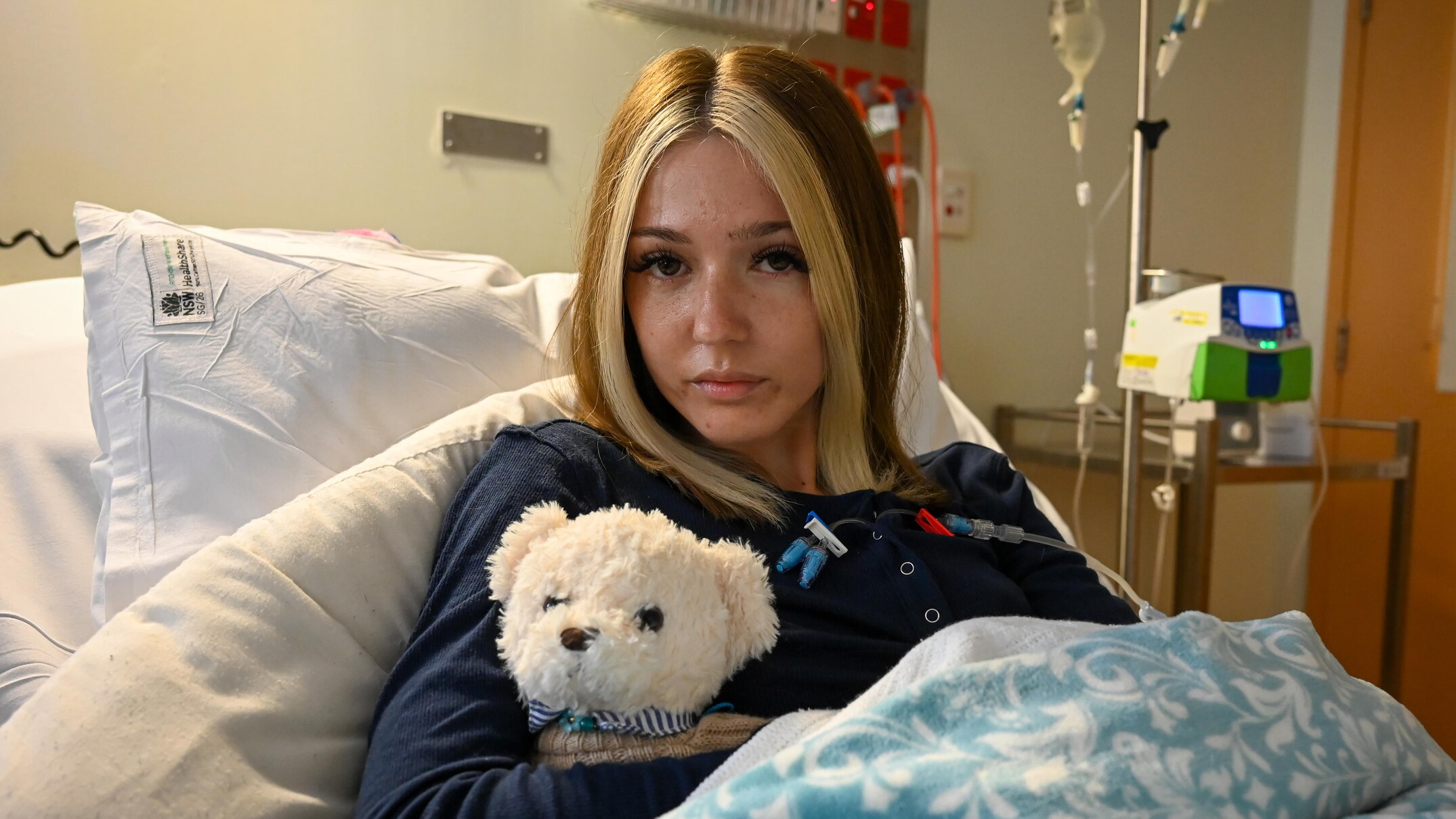
The Struggle of a Young Woman Facing Blood Cancer
In December last year, Sarah Taylor began experiencing symptoms that would soon change her life. She felt constantly fatigued, suffered from nosebleeds, and had prolonged periods. As the months passed, her condition worsened, forcing her to quit her job and leaving her unable to leave her bed. After multiple misdiagnoses, she was finally diagnosed with a rare blood cancer and told that the only solution was a stem cell transplant.
“I can’t just live a normal life as a 28-year-old. I can’t do anything really because everything is too risky for me,” she said. Now, she receives blood and platelet transfusions almost daily to keep her alive. Ms Taylor is one of approximately 1,200 Australians urgently waiting for a life-saving stem cell transplant, according to the Leukaemia Foundation.
A Declining Donor Registry
Australia’s donor registry has seen a significant decline over the years. The number of registrants has dropped from about 173,000 in 2009 to 165,000 in 2024. “The registry in Australia is pretty pathetic,” said Leukaemia Foundation chief executive Chris Tanti. “We don’t have a really great campaign to engage people in the donation.”
The ideal age for a bone marrow donor is between 18 and 25 years old; however, only 1.2 per cent of Australians within that age range are registered. Australia’s registry is “ridiculously small” compared to other nations such as Germany, which has 22 per cent of 18 to 35 year olds registered, Mr Tanti said.
“There isn’t a way of driving donors in this country. We’re terrible at it. We are terrible at collecting. We’re terrible at raising awareness.”
A Stressful Process
Ms Taylor was diagnosed with myelodysplastic syndrome (MDS), a group of blood cancers that affects the production of normal blood cells. In February, she was told her platelet infusions weren’t enough and she would need a stem cell transplant.
“I was absolutely shattered. I didn’t know what to do. I didn’t know what to even think. We had no plan at the time,” she said. The process of waiting for a transplant has made her feel “very stressed”.
None of Ms Taylor’s family members were suitable for donation, so her medical team turned to the volunteer donor registry. Of the three potential donors, only one was a 100 per cent match, she said. But Ms Taylor said her doctors told her the donor travelled to countries with a high rate of malaria, potentially putting her at risk of infection.
“[I am] terrified. Absolutely terrified. Knowing my body has no neutrophils [white blood cells]. I don’t have anything to keep me from fighting off any infections,” she said. “So if I do contract it, it’s going to be an even longer battle.”
A spokesperson from Western Sydney Local Health District told the ABC in a statement staff were continuing to examine Ms Taylor’s treatment options. “Stem cell donors are carefully selected to ensure a close match for the patient, and cells are tested to ensure they are safe to use,” it said. “We are continuing to provide care for Ms Taylor and discussions about her treatment options are ongoing.”
Ms Taylor is now booked to receive her transplant this week.
Reliant on Overseas Donors
Australia is heavily reliant on other nations for donations, with eight out of 10 patients receiving a transplant from overseas. “We generally look to Germany for donors because they have a reasonable system,” Mr Tanti said. “Their online registration process is incredibly easy, they focus heavily on younger donors through university students, high school graduates, sporting clubs, festivals and workplaces where young people flock.”
Unlike Germany, which maintains one of the world’s largest and best-funded registries, Australia’s registry operates with far more limited resources. Ethnicity is a key factor in a patient finding a viable transplant; for countries as diverse as Australia, this presents a problem, Mr Tanti said.
“First Nations people, they are not going to get a match in Germany, they’re just not. So we rely on Pacific Islanders, we rely on local people to make that contribution.”
The registry must grow to at least 10 per cent of 18 to 35 year olds to serve the needs of Australia’s diverse cultural community and lessen the reliance on overseas donors, Mr Tanti said. “Other countries seem to be able to do it. I don’t know why we can’t do it,” he said. “And the consequences of people not getting a match [are] devastating, like fatal, absolutely fatal.”
Lack of Awareness and Education
Mr Tanti believes Australia’s low registry rate comes down to two major factors: a lack of awareness and education of the process. There is a common misconception that donating stem cells is painful and time-consuming, Mr Tanti said. In 90 per cent of cases, stem cells are collected via a process similar to plasma donation.
To find a transplant, a potential donor will take a swab of their cheek to be tested to see if there is a genetic match. Once a match is found, blood is taken from one arm, stem cells are collected, and then the blood is returned through the other arm.
Mr Tanti believes Australia should mirror Germany’s stem cell donation approach, with donor drives targeting schools and universities, to combat misconceptions about the process and increase awareness. “They’ve [Germany] created a continual influx of new registrants … essentially creating a movement where being a stem cell donor is normalised,” he said.
More Funding Needed
It took months of testing, two misdiagnoses — which resulted in unnecessary chemotherapy — before Ms Taylor eventually found out she had MDS in April this year, she said. “It’s been getting to me a lot, especially this long process of six months in and out of the hospital. It’s been a lot.”
Like Ms Taylor, 90 per cent of Australians waiting for a stem cell transplant have a form of blood cancer. The incidence rate of blood cancer has risen by 79 per cent in the past two decades, according to the Leukaemia Foundation. Between 2012 and 2020, blood cancer only received 12 per cent of research investment in prevention, early detection and diagnosis.
With blood cancer incidence expected to double over the next decade, the Leukaemia Foundation has called on the government to invest a further $125 million in blood cancer research. “We need more investment right across the board in blood cancers,” Mr Tanti said. “There’s a lot of researchers out there doing work, but there’s not the money around to invest. We need to do that.”