The Impact of Mango Twig Tip Dieback on Northern Territory Orchards
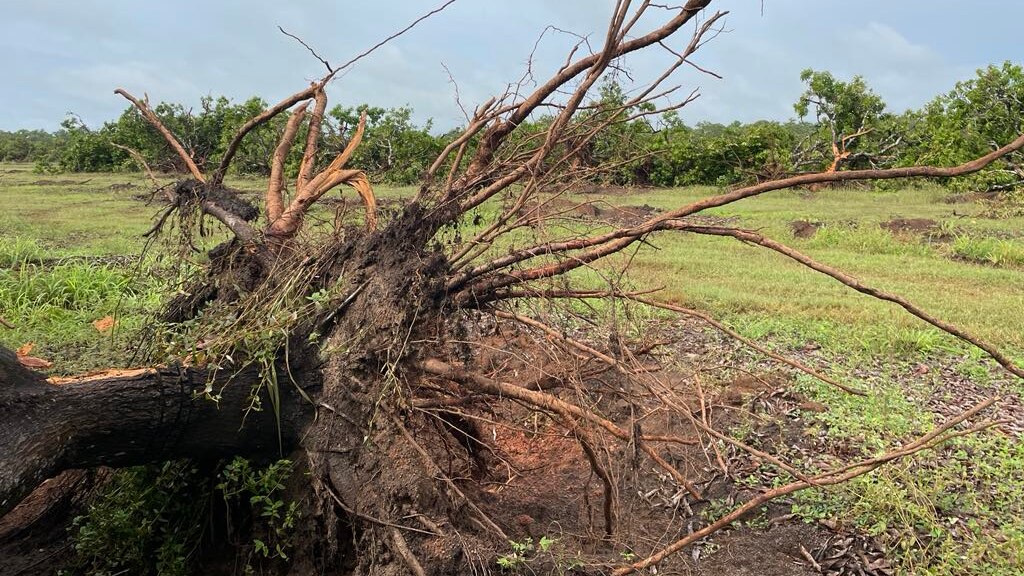
It is estimated that between 30,000 and 40,000 mango trees have been bulldozed in the Northern Territory as growers face a growing challenge from a fungal disease known as mango twig tip dieback (MTTD). This issue has significantly affected farms across the Greater Darwin region, with the renowned Kensington Pride (KP) variety showing a high level of susceptibility.
The impact of MTTD has been particularly severe, with up to 90 per cent of KP orchards in the Darwin region experiencing some level of infection. Australian Mangoes chief executive Trevor Dunmall described the situation as a serious threat to the industry. “To see mango trees looking so sick, it would make you cry,” he said, recalling a visit to orchards where trees were being bulldozed and prepared for burning. “You can’t get more serious than that.”
Although MTTD outbreaks are currently limited to the Greater Darwin region, the entire industry is closely monitoring the situation. Mr Dunmall noted that researchers believe the pathogens associated with MTTD are present across many regions. However, the severity of symptoms observed in Darwin remains a key area of focus for ongoing research, with the goal of developing effective management strategies.
In its 2025 budget, the NT government allocated $1 million over two years to support an integrated research program aimed at combating MTTD. Early findings from this initiative were shared during a field day in Berry Springs, drawing a large audience of growers eager to learn about the latest developments.
Understanding the Disease
For many years, the cause of mango twig tip dieback remained a mystery. However, recent research has identified it as a plant disease linked to Botryosphaeriaceae fungi and plant stress. According to the NT Department of Agriculture’s progress report, the disease affects young shoots, twigs, and branches, leading to canopy thinning, reduced flowering, and lower yields.
“Early detection and pruning out of infected twigs can reduce spread and minimize yield loss,” the report stated. It also highlighted that the dieback is becoming increasingly prevalent across Darwin orchards, affecting both young and mature trees and multiple cultivars.
The department emphasized that once MTTD becomes established in an orchard, it is challenging to manage. Growers were advised that no single control method will be effective, and the disease requires integrated management and continued research.
Management Strategies and Research Efforts
During its presentation, the department urged growers to consider several key practices:
- Reassess high-stress floral induction practices
- Avoid pruning during humid and wet conditions if feasible
- Protect vulnerable flushes, particularly during the wet season
- Track spores using AI
It is understood that MTTD spreads through spores produced on leaves, dead twigs, and branches of infected trees, which are then dispersed by wind and rain splash. Various experiments are underway in the NT to better understand the disease and develop effective control measures.
One trial involves real-time monitoring of airborne spores using a unit developed by Australian agtech company BioScout. Charles Simons of BioScout explained, “We are doing lab-grade analysis on pathogens and spores, but outside in this mango orchard in real time.” The technology uses automated microscopy to inform farmers about the diseases and pathogens present in their environment and the risks to their crops.
He added that the artificial intelligence within the system has been trained to detect spores linked to MTTD. “We can now detect the spread of that spore across a farm and alert farmers to say, ‘Don’t prune today or maybe you need to spray something,’” he said.
Mr Simons noted that while there is currently no fungicide available for MTTD, the situation could change quickly. He also mentioned that global spending on fungicides by farmers is increasing, with many spraying to prevent diseases that may not even be present in their crops.
Looking Ahead
Despite the challenges, Mr Simons remains optimistic. “I think this battle can be won,” he said. “It’s going to take some time, but there’s some exceptional young farmers in the NT, and we’ve just got to better understand it (MTTD).”