The Diversity of Chinese Food Heritage
Chinese food heritage is vast and diverse, reflecting the unique geographical and historical influences of various cultural identities. For many migrants in Australia, Chinese cuisine plays a significant role in their daily lives. Jing grew up eating regional dishes from northern China, while Wilfred’s childhood was shaped by Cantonese food. Catherine, who grew up in Singapore, enjoyed home-cooked Chinese meals with an Eurasian twist.
Each individual has a different approach to understanding, enjoying, and cooking Chinese food. This variation led us to explore how food serves as a vital part of the lives of other migrants of Chinese ancestry.
Tracing Food Heritage
We spoke to Chinese-Australians aged between 18 and 40 to understand how their food heritages have helped them navigate and adapt to life in Australia. Many shared stories about incorporating non-traditional Chinese ingredients, experimenting with new cooking methods, and sourcing different kitchen equipment.
In their Australian kitchens, these individuals blended recipes learned from their families with interpretations of what they consider “Chinese” cuisine. They expressed varying concerns about authenticity, health, and taste when preparing traditional dishes. Food heritage also played a crucial role in connecting intergenerational families.
Fei*, who is ethnically Chinese and was born in Indonesia, has lived in Australia for 12 years. She shared how her family’s cooking evolved over time:
“Whenever I go back to Indonesia, my auntie would cook for us, so I would ask a lot of old recipes. I love their response because they will always say, when you were a child, you liked to eat this food. They will give you some feedback, but they’ll say, there’s a new way of cooking this.”
Fei’s cooking became a collaborative effort with family members, even across different countries. The art of cooking became a way for her family to stay connected despite the distance.
Food as a Bridge Between Generations
Sally* migrated to Australia nine years ago from Yunnan Province. She shared a touching story about her grandmother, who had Alzheimer’s:
“Even my grandmother [who] had Alzheimer’s and she barely remember who am I, but when she had – before I hang up the phone call, she’s like, remember to eat vegetable.”
For Sally’s grandmother, food remained an expression of care, even in her later years. Food not only connects generations but also helps maintain relationships, even with those who have passed away.
Lynn*, an undergraduate student who migrated to Australia as a baby, describes herself as “ethnically Chinese, but culturally Singaporean.” She shared how she discovered her grandfather through her father’s cooking:
“I actually have never tried my grandpa’s chilli crab. I didn’t know that he actually made chilli crab until I think it was like two years [after] he’d passed when my dad made this recipe. […] I’m not sure how similar it was to the original, but it was pretty good.”
Lynn’s father cooked his father’s chilli crab recipe as a way to honor him and keep his memory alive.
New Habits and Adaptations
Food heritage refers to the traditional cuisines that define our cultural identities, including ingredient sourcing, food preparation, and consumption. However, food heritage is not static—it evolves as migrants adapt to life in Australia.
Australia’s multicultural food landscape creates transcultural experiences for Chinese-Australians. Sally shared how she and her mother blend Italian and Chinese ingredients:
“If I cook dishes that require Yunnan’s ham, I use Italian prosciutto ham to replace it. It tastes really similar to Yunnan’s ham. My mum does that as well. She likes to get Italian Deli ham, smoked cured bacon, and then she’ll think it tastes like the actual thing from Yunnan.”
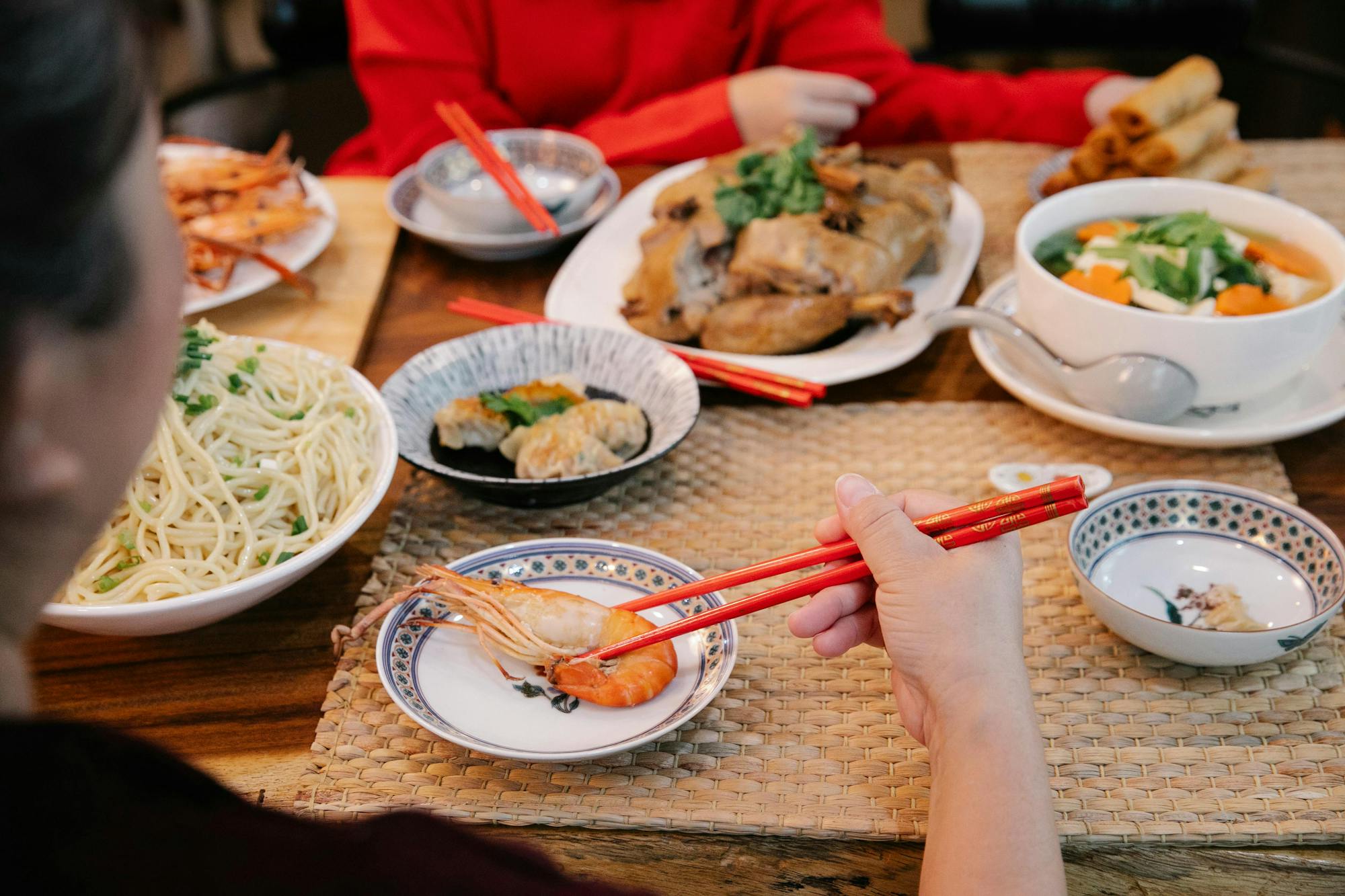
Rong*, who came to Australia 10 years ago from Shandong Province, shared how she adapted her cooking for her daughter, who loves noodles:
“I need to bring something healthier to her table, and then I was like, okay, I’m not going to use the noodles, the Chinese noodles. I’m going to use pasta noodles, which is low GI, healthier. So, I just tried to figure different kind of ways of the noodles, not only Chinese noodles, but also Italian noodles, Vietnamese noodles, like pho. So all those kinds of things, and she loved them.”
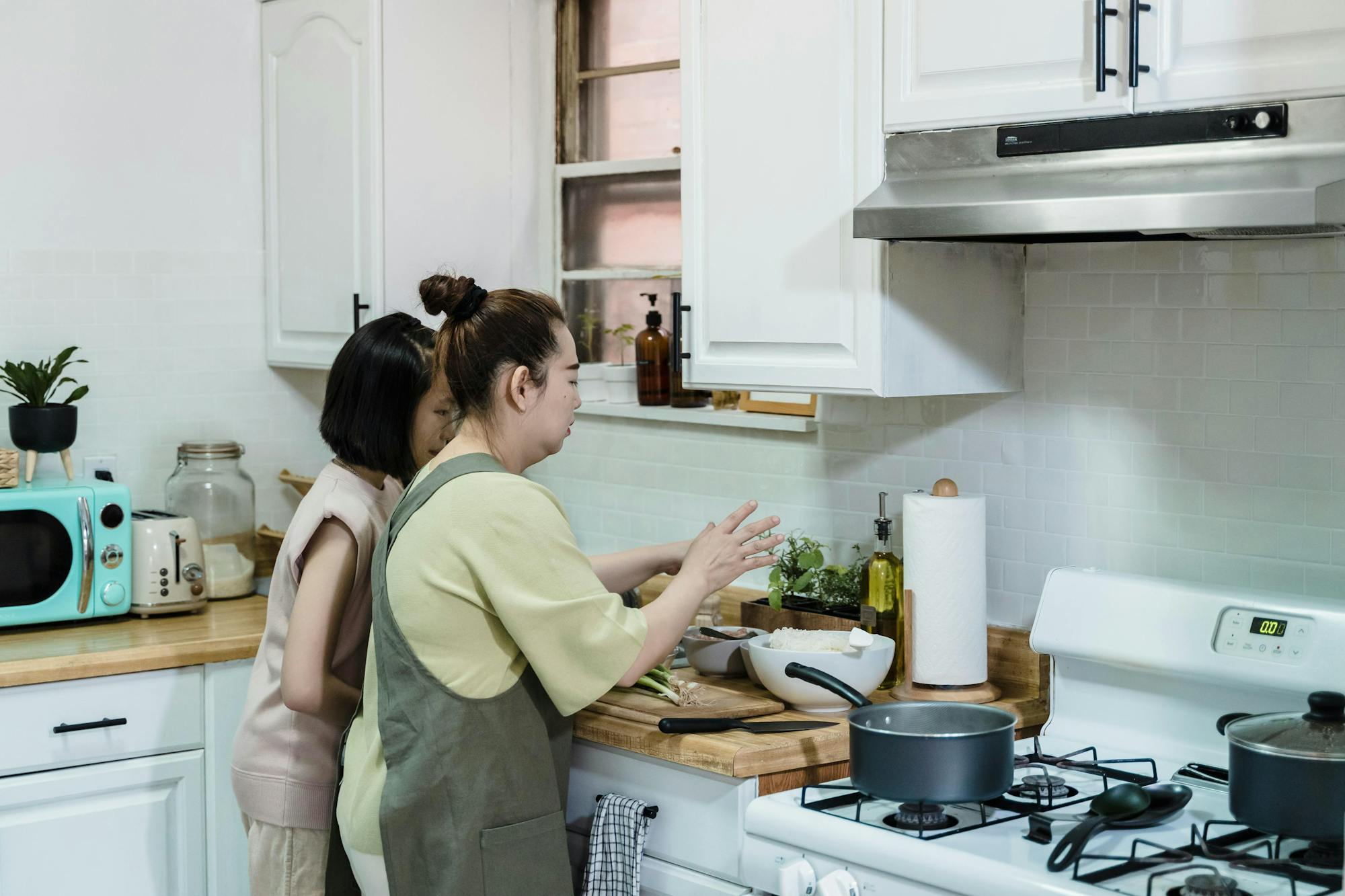
Rong also mentioned that she had to change her cooking style due to the induction stove in her apartment. While gas stoves are common in China, many participants noted that stir-fry and other dishes often taste better on a gas stove with a wok. Rong admitted that now, when she returns to China, she struggles to cook in a traditional Chinese kitchen.
Adapting to Life in Australia
Food culture is central to migrant adaptation, acculturation, and wellbeing. By understanding how food heritage practices evolve in Australia, we gain insight into how migrants creatively navigate their new environment. These transcultural connections serve as an anchor for settlement and belonging.
*Names have been changed.
Catherine Gomes is a member of The Australian Sociological Association.
Jing Qi is affiliated with the RMIT Chinese-Australian Studies Forum, and the Chinese Community Council of Australia Victoria Chapter.
Wilfred Yang Wang is affiliated with Centre for Holistic Health, a not-for-profit organisation that supports the social and mental wellbeing of the Chinese communities in Melbourne, Australia.