Alarm Bells Ringing: Teachers Sound Off on Rampant Grade Inflation in Philadelphia Schools
A growing chorus of educators in Philadelphia’s public school system is raising serious concerns about pervasive grade inflation, with many claiming they are effectively prohibited from failing students, even those who struggle significantly with fundamental skills like reading and writing. The situation, as described by two dozen teachers, paints a stark picture of a system where academic standards appear to be taking a backseat to the relentless pursuit of higher graduation rates.
Teachers who have spoken out anonymously, often to the Philadelphia Inquirer, describe a disheartening reality. Many report passing students who have demonstrably done little to no work, failed to grasp core concepts, or demonstrated minimal attendance. The pressure to pass these students, they allege, comes directly from school administrators. Some teachers claim they are actively discouraged or outright forbidden by their principals from assigning failing grades. In instances where a failing grade is deemed necessary and assigned, it is frequently overridden by administrators, effectively negating the teacher’s professional judgment.
For those teachers who are permitted to fail students based on merit, the administrative hurdle is described as a significant deterrent. The process of documenting and justifying a failing grade, even for students with egregious attendance issues, is so burdensome and time-consuming that it becomes an almost insurmountable task.
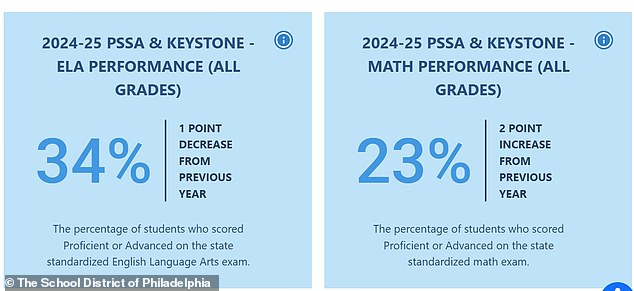
This alleged systemic issue is reflected in stark statistics. State test results reveal a worrying trend: only 33 percent of students in the city are meeting reading standards, and less than a quarter are achieving proficiency in mathematics. This stands in sharp contrast to the School District of Philadelphia’s four-year graduation rate, which has climbed to 84 percent for the 2024-25 school year, a notable increase from 69 percent a decade prior.
The “Subtle Shift” Towards Lowered Expectations
One middle-grades teacher, a veteran of the district for three decades, articulated the sentiment shared by many: “I don’t know of anyone who’s been able to keep anyone back, and we’re just setting kids up for failure.” She candidly admitted to her own struggles, stating, “I have a bunch of kids in my class that have F’s in reading, and I’m probably going to pass them – I’ll bump it up to a D and call it a day.”

Officially, district policy in Philadelphia public schools allows for students to fail courses or be held back a grade, provided they are offered appropriate interventions and support. The district states its commitment to academic excellence and a promotion policy that aims to move all schools towards models of achievement. Monique Braxton, a spokeswoman for the school district, reiterated this stance, asserting that policies emphasize grades accurately reflecting academic performance and progress toward learning standards. She added that schools are mandated to provide and document interventions for students facing academic challenges and that the district remains committed to high expectations while ensuring necessary support.
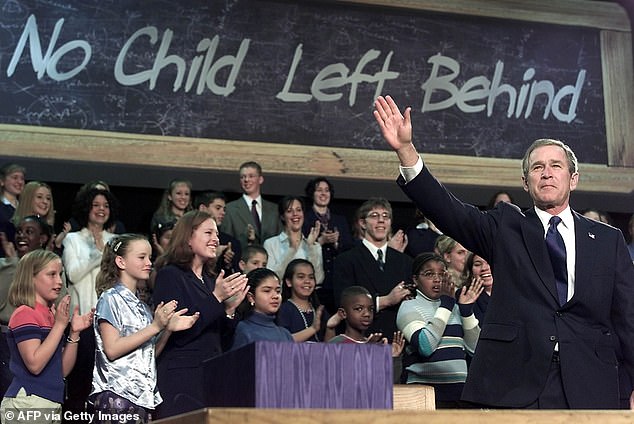
However, the veteran teacher points to a “subtle shift” that began in the early 2000s, coinciding with the implementation of former President George Bush’s “No Child Left Behind Act.” She believes the increased pressure on schools to demonstrate rising promotion and graduation rates, coupled with a district-wide focus on data, has fundamentally undermined the integrity of grading. “Now it’s a joke,” she claimed.
Adding to the concerns, Philadelphia revised its grading policy in 2017, lowering the minimum score for a D from 64 to 60. While district leaders at the time cited the move as an effort to standardize grading and prevent student discouragement, critics had already voiced fears that it would dilute academic standards.
The Ripple Effect: From Classroom to Career
The consequences of this alleged grade inflation are far-reaching. Teachers describe students progressing through the system despite completing virtually no work. One middle-grades teacher shared the case of a student who had “done no work all year,” yet was still being “pushed forward.”
At the high school level, educators report a palpable push from administrators immediately after grades are due, with requests to “bump up” student scores. This pressure, they explain, is directly linked to the district’s overarching goal of increasing graduation rates. “There’s all this pressure from the district to increase the graduation rate – there are so many layers to it,” lamented one educator. “I know it happens in a lot of places. It’s not just our school. But this year it was huge margins and huge numbers.”
In some instances, teachers claim administrators have directly altered grades without teacher input. One teacher recounted a student’s grade inexplicably jumping from a 50 to an 82 overnight, despite the student having missed 63 out of 84 classes and submitted no additional work. The impact is so profound that even students themselves acknowledge their undeserved success. One student, after being passed despite not completing required coursework, reportedly remarked, “Yeah I didn’t deserve to pass. I don’t know how that happened. But I’m excited to graduate.”

A third teacher, who does uphold failing grades when warranted, understands the temptation for other educators to assign D’s rather than F’s. He highlighted the immense workload teachers face, making it nearly impossible to dedicate the extensive time required for the mandated documentation and support for struggling students. “Who has time to do that when you have 30 other kids?” he asked. “And the system is inherently causing laziness from teachers also, to just shut up, pass them and you don’t get grief.”
The issue extends beyond traditional district schools. A fourth teacher reported teaching at a city charter school where middle-grade students were performing at kindergarten reading and math levels. The school’s rationale, she explained, was to avoid a “school-to-prison pipeline,” but she found the academic gaps to be “huge” and was “shocking[ly]” surprised by the ease with which students were passed.

The consequences of this grade inflation are already manifesting in the workforce. The middle-grades teacher who also works in the service industry witnesses firsthand the shortcomings of students who were passed without earning it. “We see people who don’t come to work on time, they can’t take orders, they can’t use a computer or figure things out, and this is why,” she stated. “They’re not being held to standards for all their years in schools.”
A similar observation came from a high school teacher whose former student lost his first three jobs after graduation due to a lack of accountability. “He had to learn that lesson in a much harder, more adult way and he could have learned that in high school,” the teacher lamented.
The problem is also impacting higher education. UC San Diego reported in November that approximately one in five incoming students struggled to write at an entry-level standard, with 20 percent requiring placement in remedial analytical writing courses.
Across the nation, universities are grappling with inflated grades and declining academic rigor. Harvard University, for instance, is considering capping the number of A grades, following a report that warned its generous grading system was undermining academic integrity. While students at Harvard are reportedly working harder than ever, the sheer volume of As awarded – over 60 percent of undergraduate grades – has been deemed “too compressed and too inflated” by university leadership.