Driving Test Pass Rates Hit Five-Year High in the UK Amidst Strategic Reforms
The United Kingdom’s driving test pass rate has climbed to its highest point in five years, signalling a positive shift as learner drivers appear to be heeding advice to book their tests only when they feel thoroughly prepared. Data released by the Driver and Vehicle Standards Agency (DVSA) reveals a success rate of 51.4 per cent for tests conducted in May, a notable increase from 50.9 per cent in the preceding month. This figure represents the strongest performance observed since May 2021, when the pass rate stood at 51.9 per cent.
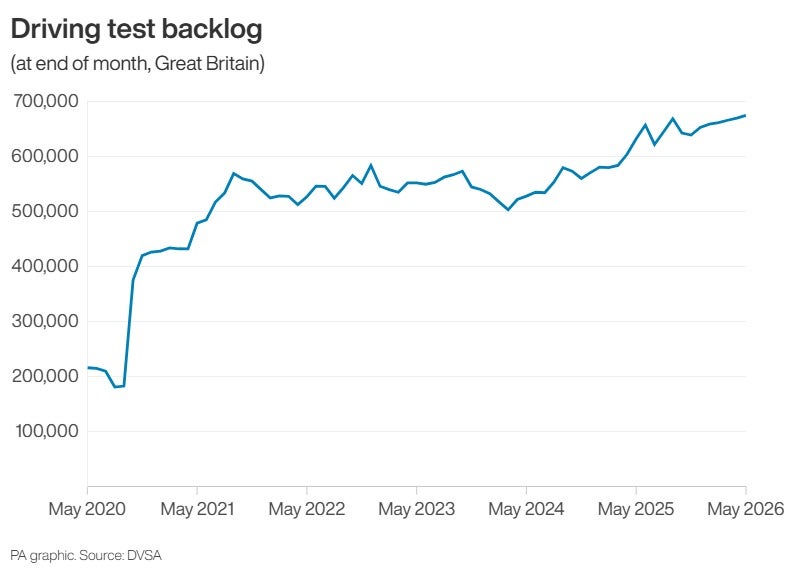
This upward trend is attributed, in part, to official encouragement for learners to postpone their test bookings until they feel confident and ready. This strategy is also a key component in the ongoing effort to address and alleviate a persistent backlog of driving tests. Despite a significant increase in the number of tests conducted in May – with 173,200 tests administered, up from 147,698 in the same period last year – the number of future bookings remained exceptionally high, reaching an unprecedented 674,165 by the end of the month.
Tackling Test Slot Shenanigans: New Rules Introduced
To combat the backlog and curb unfair practices, the UK government has implemented a series of stricter rules surrounding driving test bookings. Effective from a recent Tuesday, a new regulation dictates that learners can now only reschedule a test slot to one of the three nearest test centres to their original booking location.
This measure is designed to put a stop to individuals booking tests indiscriminately across various locations with no genuine intention of attending. Such practices have been exploited by individuals seeking to profit from reselling test slots or by genuine learners attempting to secure more convenient dates and locations as they become available. The previous free-for-all booking system made it exceedingly difficult for the DVSA to accurately forecast and allocate necessary capacity at each individual test centre.
Furthermore, a ban on driving instructors booking tests came into effect on May 12th. Under the new system, only learner drivers themselves can now book and manage their test appointments. This change is anticipated to make it significantly harder for unscrupulous individuals to use automated programmes, commonly known as “bots,” to rapidly secure available slots and then resell them at inflated prices.
The Growing Wait Times: A Pre-Pandemic Perspective
The impact of these booking challenges on aspiring drivers is evident in the waiting times. Freedom of Information data, obtained by AA Driving School, highlighted a steady increase in the average waiting time to book a practical driving test. This figure rose from 20.8 weeks in January to 22.4 weeks by April 6th.
For stark comparison, in February 2020, prior to the widespread disruption caused by the coronavirus pandemic, the average waiting time for a driving test was a mere five weeks. This dramatic increase underscores the pressure on the system and the challenges faced by learners eager to obtain their licences.
Expert Commentary on the Current Landscape
Steve Gooding, director of the RAC Foundation, commented on the current situation, stating, “Knowing there’s a queue ahead for a practical test is frustrating for learners, but a pass rate hovering around 50 per cent suggests many would still benefit from more practice and real-world experience before taking a test which is the gateway to the freedom and responsibility of unaccompanied driving.” His remarks highlight the delicate balance between the desire for timely tests and the imperative for learners to be adequately prepared for the responsibilities of driving independently. The DVSA has been approached for further comment on the ongoing situation and the effectiveness of the new regulations.