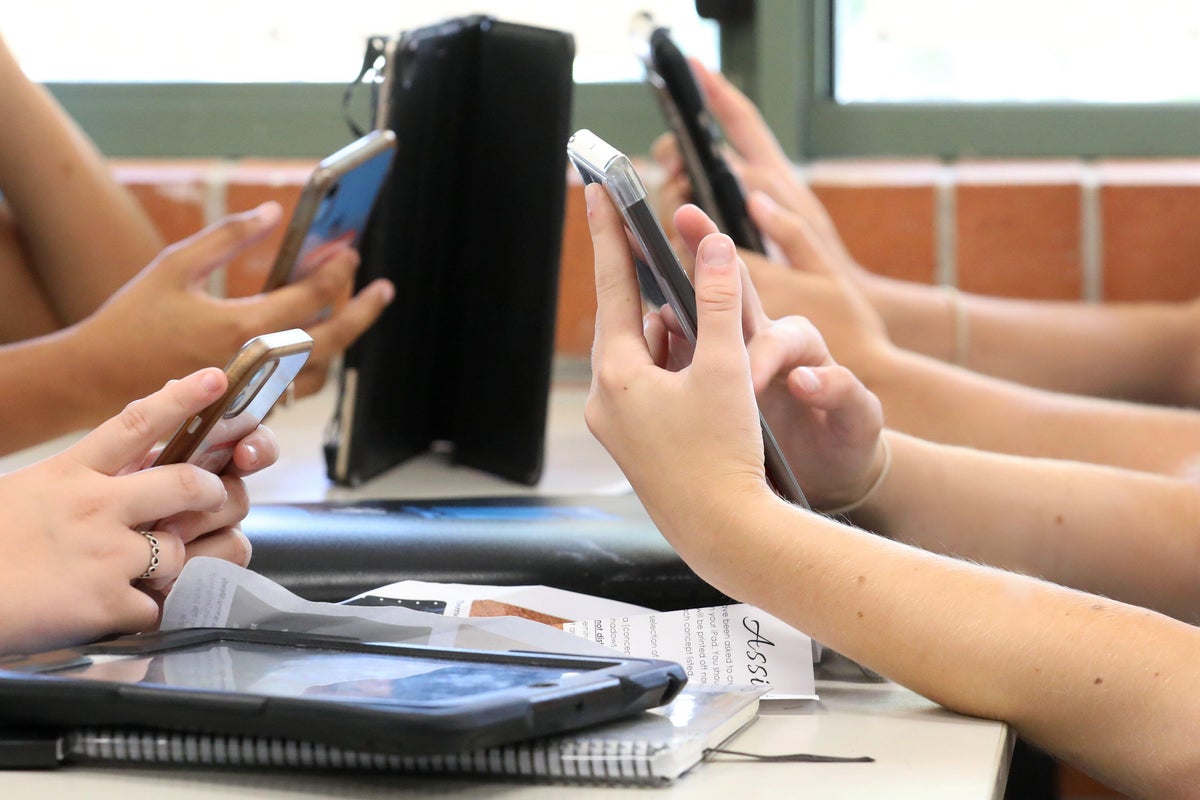
Sweden’s U-Turn: Banning Mobile Phones in Schools Amidst Global Digital Reckoning
Sweden, a country long hailed for its pioneering embrace of digital technology, is poised to implement a nationwide ban on mobile phones in schools from the upcoming academic year. This significant policy shift represents a broader, international re-evaluation of screen time’s role in the classroom, signalling a growing concern over its impact on student learning and well-being.
The centre-right coalition government in Sweden has been actively promoting a return to traditional learning methods since 2023. Their focus has been on increasing dedicated reading time and reducing overall screen exposure, particularly for preschool-aged children, by championing the use of books and other tangible educational resources.
Joar Forsell, a Member of Parliament and chairperson of the Swedish parliamentary education committee, has voiced concerns about a noticeable decline in general reading and writing proficiency among Swedish students, especially the younger cohorts. “We’re rolling the screens back because we believe that books and more traditional ways of learning are better for kids,” Forsell stated, underscoring the government’s conviction.
Sweden’s move is not an isolated incident but part of a global trend. Many nations that once enthusiastically equipped their campuses with laptops, tablets, and educational apps are now experiencing a “digital reckoning.” Classrooms have become saturated with screens, prompting a growing chorus of parents, educators, and school districts to advocate for a reduction in their use.
A Nordic Trend and Beyond
The Nordic region is clearly at the forefront of this educational recalibration. Denmark is reportedly considering a similar ban to Sweden’s, while Finland enacted a law restricting mobile device use in schools last August. This trend extends beyond Scandinavia, with countries like Spain and South Korea implementing a range of measures, from outright classroom bans on mobile phones to stricter limits on screen-based homework assignments.
In the United States, the Los Angeles Unified School District, the second-largest in the nation, has announced a ban on screens for students up to second grade. They will also enforce daily screen time caps based on grade level, prohibit YouTube, and conduct an audit of all educational technology contracts.
Backing Away from Screens: Sweden’s Rationale
Sweden, home to tech giants like Spotify and Ericsson, boasts one of the world’s most digitally advanced education systems. However, the impending mobile phone ban is intended to cultivate learning environments with fewer distractions. This initiative builds upon existing restrictions already independently adopted by numerous schools across the nation of over 10 million people.
In conjunction with the ban, the Swedish government has allocated 555 million Swedish krona (approximately $59 million) this year towards a new grant program aimed at purchasing textbooks and teacher’s guides.
The impetus for this “back-to-books” policy stems directly from observed declines in reading comprehension levels. The 2022 Program for International Student Assessment (PISA), a comprehensive study by the Organisation for Economic Co-operation and Development (OECD), revealed that a concerning 24.3 per cent of Swedish ninth graders failed to achieve a basic level of reading comprehension. This figure is only marginally better than the European Union average of 26.2 per cent.
Magnus Haake, an associate professor of cognitive science at Lund University in southern Sweden, highlights the cognitive benefits of engaging with physical learning materials. He explains that learning with tangible objects activates the motor sensory parts of a child’s brain, which “boosts the whole system.”
Sweden’s efforts to curb excessive screen time are also extending beyond school grounds. The country’s public health agency has issued guidance to parents, encouraging them to become better role models by establishing “screen-free zones” at home, mirroring the restrictions they expect their children to adhere to.
Mobile Phones Removed: A Catalyst for Focus
At Malmö Borgarskola, a high school in southern Sweden, mobile phones are already prohibited during class time. Students are required to deposit their handsets in a designated area, aptly nicknamed the “Mobile Hotel,” and retrieve them only after their lessons conclude.
Melina Sallahi, a 17-year-old student, commented on the impact of this policy: “When you have a phone, there’s always something to look at. It’s less of a distraction.”
Her classmate, Vasilije Stjepanovic, also 17, acknowledged that applications like games and social media are often “more fun than learning.” He believes that removing phones can significantly enhance students’ ability to learn effectively.
Despite the mobile phone restrictions, every student at Malmö Borgarskola is provided with a laptop computer. However, Deputy Headmaster Patrik Sander indicated that students are now actively discouraged from using these devices in class unless explicitly permitted by their teachers. “Nowadays, we see the push going in the other direction,” Sander observed. “We have pushed back, learning that writing with your hands and a pencil helps you remember.”
Since last summer, Swedish children under two years old are restricted to non-digital learning materials, such as books. For preschoolers in general, there is no obligation to use digital learning tools. A new curriculum designed to prioritise book-based learning is anticipated to be introduced in 2028.
Divisions Emerge Over the Digital Reckoning
Not everyone in Sweden’s tech-forward nation wholeheartedly supports this move away from digital learning. The Swedish Edtech Industry has published a report projecting that 90 per cent of future jobs will necessitate digital skills. The report warns that a deficiency in these competencies could lead to a skills shortage among young Swedes, stifle innovation within the public sector, and potentially increase unemployment.
Peter Carlsson, CEO of Imvi Labs, a Malmö-based startup that utilises virtual reality headsets for brain-eye coordination training in children and adults, argues that not all screens are detrimental to learning. He points out that certain software is “critical” for assisting children with learning or reading difficulties. “By having good tools, the teaching can become more efficient,” he stated.
However, at Malmö Borgarskola, concerns about students lacking digital skills appear minimal. During a recent morning observation, students were seen engrossed in textbooks, discussing Russian history as they prepared for their end-of-year examinations.
“Everyone uses digital devices during their free time, so I don’t think that’s something that should be taught in school,” student Melina Sallahi remarked. “It’s nothing I’m worried about.” Her classmate, Aslan Özhan Kilicasan, added, “We learn much more easily when we use books.”