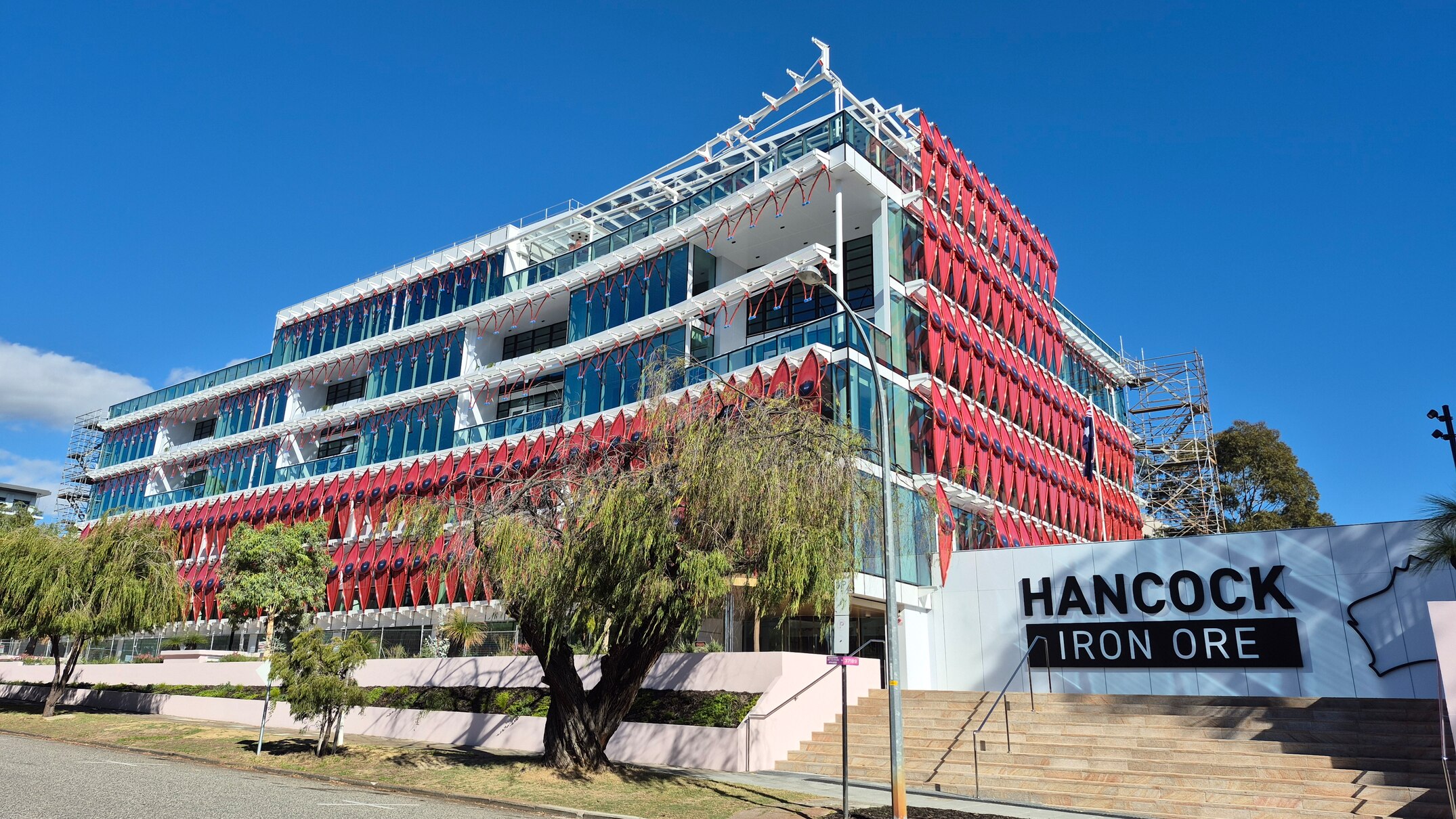
Job Cuts at Hancock Iron Ore
Mining magnate Gina Rinehart’s flagship iron ore mining company, Hancock Iron Ore, has confirmed that jobs will be cut from its Pilbara operations. However, the company has not disclosed the exact number of positions that will be affected.
In a statement provided to the ABC, Hancock Iron Ore mentioned that it had recently completed its “annual life of mine planning” and was working to optimise its processes. The company stated:
“We continuously look at optimising our mine plan. The latest iteration extends our life of mine by 10 years, maximising how much of the orebody we can turn into product and reduce the amount of waste we mine. The result is that we need to reduce our mining activity at the Roy Hill mine while still maintaining our production rate above 63MTPA for the Roy Hill system.”
Hancock Iron Ore said it would “work with all affected” by the job losses. Multiple reports from industry sources suggest that the number of jobs cut could be in the hundreds, with some media outlets estimating up to 500 positions. However, the ABC was unable to independently verify this figure.
Operational Changes and Industry Insights
Atlas Iron and Roy Hill operations were combined under the banner of Hancock Iron Ore last year. The operation produces more than 70 million tonnes of ore per annum.
Eric Lilford, deputy head of Curtin University’s WA School of Mines, estimated that Hancock Iron Ore had between 3,000 and 5,000 employees. He suggested that the job cuts could be as high as 10 per cent, which would equate to between 300 and 500 positions.
Dr Lilford described the cuts as an “inevitable outcome” driven by mechanisation, depleting operations, and the duplication of jobs since the Atlas Iron and Roy Hill merger. He explained:
“There is that scaling back of what is actually required … the overhang from the merger, looking at what positions now are duplicated and scaling back on those. You do not need to have shared roles. These are highly mechanised operations.”
Government Response
Federal Resources Minister Madeleine King expressed concern over the job cuts, calling them a “disappointing turn of events.” She said:
“First and foremost my thoughts — and thoughts of the government — are with the workers and their families who will be affected by these job losses. It’s a deeply stressful time when people’s jobs are changed or lost in that fashion and we would expect that those workers do receive, and receive promptly, all the entitlements that they have earned and truly deserve.”
Implications for the Workforce
The job cuts come at a time when the mining sector is undergoing significant changes. With the increasing use of automation and the need to streamline operations, companies are re-evaluating their workforce requirements. This shift is likely to affect not only the number of jobs but also the types of roles available in the industry.
For the workers impacted by the job cuts, the transition may be challenging. However, there is hope that the government and the company will provide support to help those affected find new opportunities. As the mining industry continues to evolve, it remains to be seen how these changes will shape the future of employment in the region.
Future Outlook
The decision to cut jobs at Hancock Iron Ore highlights the ongoing challenges faced by the mining sector. While the company aims to optimise its operations and extend the life of its mines, the human impact of such decisions cannot be ignored. As the industry moves forward, it will be important to balance efficiency with the well-being of the workforce.