
The Growing Issue of Media Use During Family Meals
A recent study has revealed that the use of electronic devices during family meals is becoming increasingly common, with both parents and children engaging in media consumption. According to the findings, approximately 70% of children are using electronic devices during dinner, while the number of parents doing the same is even higher. This trend highlights a growing concern about how technology is impacting family dynamics.
The study, published in JAMA Pediatrics, surveyed over 350 parents and found that more than 75% of them used media such as smartphones or TVs during dinner. Smartphones were identified as the most common form of distraction. Parents reported that their children, aged between four and 10 years old, were almost as likely to be engaged in media use as they were.
Cecilia Sada Garibay, a co-author of the study, emphasized the impact of this behavior on family relationships. She told CNN, “If you have your device and you’re constantly checking it at the table, it can affect a valuable moment parents have with their children in the day, and it can have some effect on the relationship they have with their children.”
Benefits of Uninterrupted Family Meals
Researchers suggest that families who make a habit of sitting down together for meals without distractions experience several benefits. These include better eating habits, higher emotional satisfaction, and a lower risk of substance abuse among teenagers. However, these emotional benefits do not stem from the food itself, according to Dr. Margie Skeer, a professor of public health and community medicine at the Tufts University School of Medicine.
“It’s that family meals can provide a built-in space for checking in, sharing feelings, emotions. It’s consistent family connection,” Skeer explained, noting that she was not involved in the research. She added that when parents make time to connect with their children during meals, it sends a message that the child is being prioritized.
The Shift from Shared to Individual Media Use
The new study examined the rates of media use among parents and children, as well as the types of media being used. It compared activities like watching a TV show together with individual smartphone use.
“What is changing is this fact that this shared experience, shared media use, is being substituted by individual media use,” Sada Garibay said. “Now each member at the table can be together, but each one is doing something absolutely different to the others.”
This shift diminishes the benefits of family meals, as both children and parents become absorbed in their own screens rather than engaging with one another.
Finding Ways to Connect
Experts recommend finding ways to incorporate family time, even if it’s just a short period. “If you’re a parent or guardian or caregiver, anyone who’s raising a child, and you had five minutes every day where you literally were sitting or standing and looking at each other and talking to each other and having a daily check-in, that would give a lot of benefit, too,” Skeer suggested.
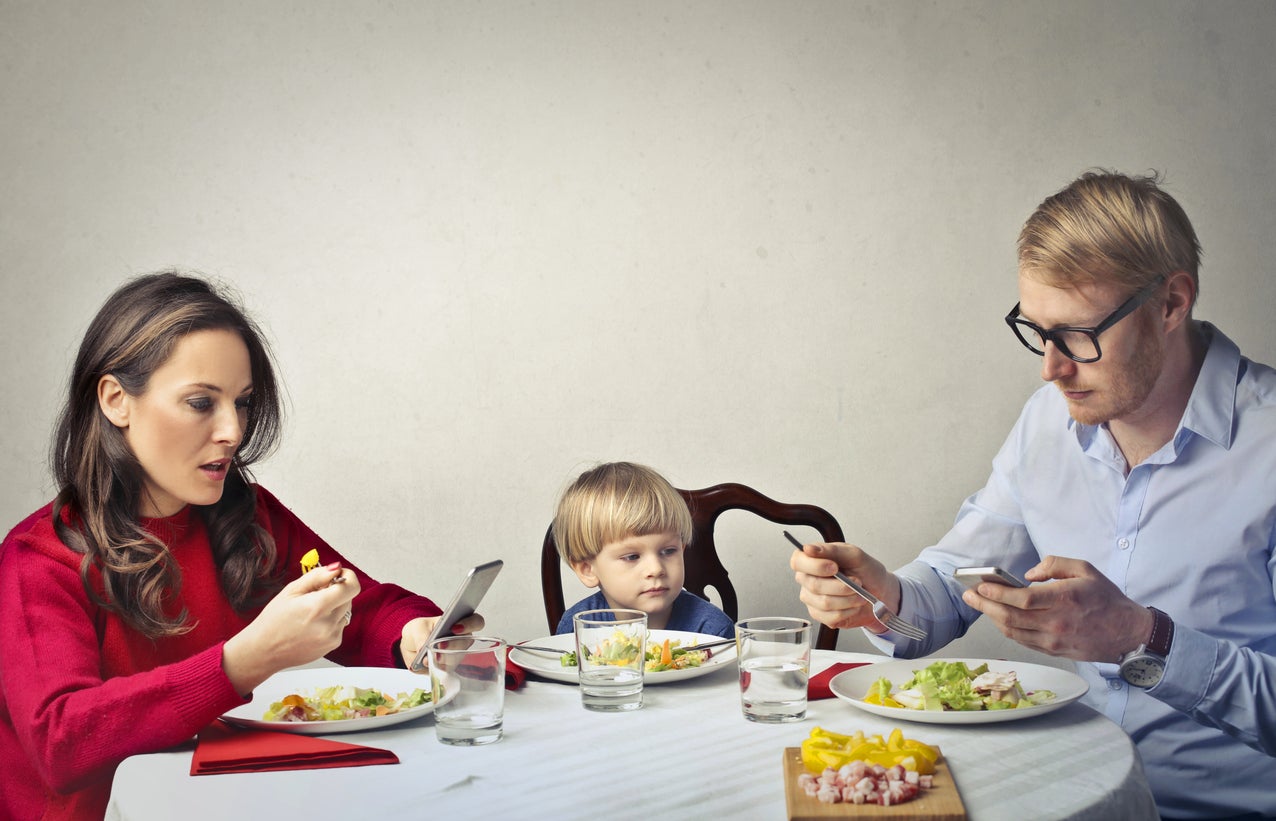
In today’s fast-paced world, maintaining meaningful connections with loved ones is essential. While technology offers many conveniences, it is important to be mindful of its impact on family interactions. By setting aside time for genuine conversations and shared experiences, families can strengthen their bonds and create lasting memories.