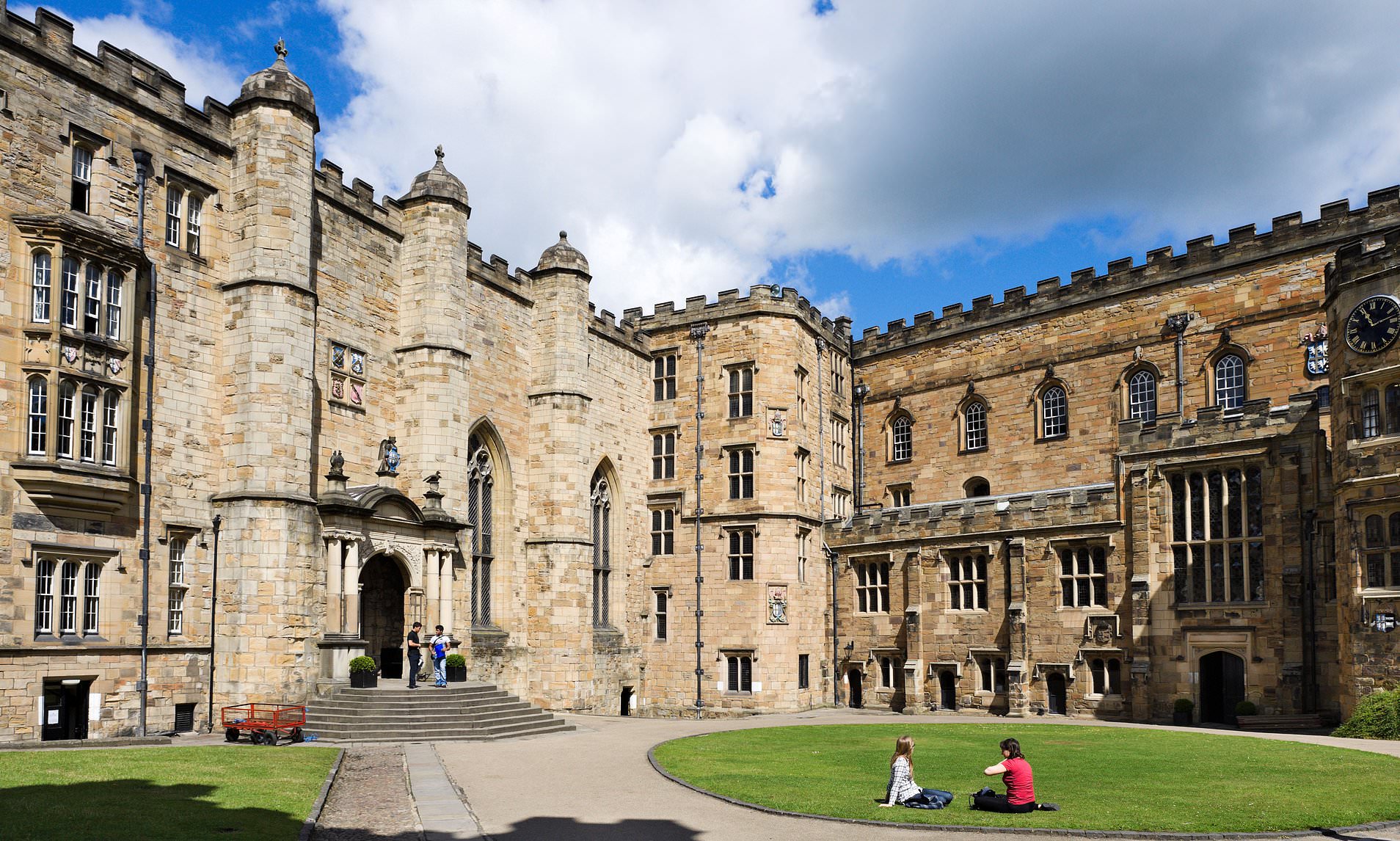
University of Durham Faces Criticism Over New Admission Scheme
The University of Durham has come under fire for a new admission scheme that is alleged to be discriminatory against white students. The initiative, known as the Asian Access programme, aims to provide lower entry requirements for British Asians in popular subjects such as psychology, law, and politics.
Under this scheme, students of Asian heritage who participate in a free summer school hosted by the university are offered a guaranteed alternative offer, typically two grades lower than the standard requirements. This includes accommodation, travel, and food provided at no cost. The university claims that the programme is designed to support students who are traditionally underrepresented in higher education, particularly at Durham.
However, critics argue that this approach is unfair, especially given the current statistics on university admissions. Official data reveals that 51.4 per cent of Asian state school pupils across England gained places in higher education in 2024, compared to only 29.8 per cent of white students. Chinese pupils had the highest acceptance rate at 66.1 per cent, followed by black pupils at 48 per cent.
Robert Jenrick, a Reform MP and former minister, criticized the scheme in the Daily Mail, stating it was “a blatant case of anti-white discrimination.” He argued that it was “bizarre” for Durham to lower the grades for British Asian students when they already outperformed their white counterparts. Jenrick vowed that a Reform Government would end such practices and restore meritocracy in university admissions.
A spokesperson for Durham University responded by emphasizing that the institution encourages applications from talented students of all backgrounds. They stated that admissions decisions are fair, non-discriminatory, and based on published criteria. The university also highlighted that the programme aligns with its access and participation plan, which aims to increase the number of British students of Asian heritage currently underrepresented at Durham.

The spokesperson added that students participating in the programme come from areas with low progression rates to university. They make contextual offers to applicants from various backgrounds who demonstrate high academic achievement and successfully complete an academic study programme at Durham.
Durham is not the first university to face scrutiny over its admission policies. Oxford was previously accused of “social engineering” after data showed that it accepted 16 per cent of black applicants who fell short of their required A-Level grades over the past five years, compared to just 6 per cent of white candidates.
Other institutions, including York and Bristol, also offer “contextual offers” to students from specific ethnic groups or those from deprived backgrounds. These practices have sparked debate among parents, who claim that admissions officers wrongly assume non-white candidates are disadvantaged.
“A lot of these students passed the 11+ entrance exam and have professional parents on high salaries,” one mother told The Times last year. This highlights the ongoing controversy surrounding the assumptions made about students’ backgrounds in the admissions process.
As universities continue to implement policies aimed at increasing diversity, the balance between fairness and representation remains a contentious issue. While some argue that such measures are necessary to address historical inequalities, others believe they undermine the principle of merit-based admissions. The debate over what constitutes fair and equitable treatment in higher education is likely to persist as more institutions adopt similar strategies.